
Instagram Automation Tools for DMs: The Direction of the Message Decides Everything
- Automated DMs split into replying to people who contacted you, and messaging people who did not. These are not variations — they are opposites.
- The reply direction has official support paths; the outbound direction relies on unsanctioned methods and generates recipient reports.
- Recipient reports outweigh any technical detection, because they are real humans declaring your message unwanted.
- A usable rule: automate the response, never the approach.
Google completes instagram automation tool with free, github, india, for followers, reddit — and dm.
That branch covers two activities that share a word and nothing else. One has official support. The other is the shortest path to a restricted account. Everything depends on a single question.
The question: who started the conversation?
| Inbound (they messaged you) | Outbound (you messaged them) | |
|---|---|---|
| Typical use | Auto-reply, FAQ, keyword triggers, away messages | Cold outreach, mass promotion, follower DMs |
| Platform stance | Supported through official business messaging paths | Unsanctioned; relies on unofficial methods |
| Recipient reaction | Usually fine — they asked | Reports |
| Risk | Low | High, and it compounds |
Automate the response. Never automate the approach. One rule, and it covers almost every case you will meet.
Why outbound is worse than it looks
People assume the danger in mass DMs is detection — that some system spots the pattern and acts. Detection exists, but it is not the main mechanism.
The main mechanism is reports. Send an unsolicited promotional message to two hundred strangers and some fraction will tap report. That is not a model inferring something about your behaviour; it is a human being stating that your message was unwanted.
No amount of rotation, spacing or message variation addresses that. You can make automation undetectable and still accumulate reports, because the recipients are responding to the message, not to how it was sent.
And reports compound in a way that is hard to unwind. They attach to the account, they inform later decisions, and there is no dashboard telling you how many you have.
What the supported route can do
Instagram provides messaging capabilities for business accounts through official channels — automated replies, keyword-triggered responses, away messages, and integrations built on its messaging APIs. Exact capabilities and eligibility change, so check Meta's current developer and business documentation rather than trusting any article's summary, including this one.
What matters here is the shape rather than the feature list: the supported route is built around responding. Someone messages you, a rule fires, a reply goes out. The platform is comfortable with this because consent is established by the inbound message.
That constraint is not an oversight. It is the design.
Why "just be careful with volume" does not work here
The standard advice for outbound DMs is to keep numbers low, vary the wording, and space the sends out. That advice is borrowed from a different problem and does not transfer.
Volume advice works against rate-based detection — systems that notice you doing something too fast. It does nothing against reports, because the report rate is a property of the message rather than of the pace. If one in twenty recipients finds your DM unwelcome, that ratio holds whether you send twenty a day or two hundred. Slowing down changes how long it takes to accumulate the same reports, not whether you accumulate them.
Message variation has the same flaw. Rewording a promotional message you sent to a stranger produces a differently-worded promotional message sent to a stranger. The recipient's reaction is to the fact of being messaged, not to the phrasing.
You cannot pace your way out of a consent problem. If the recipient did not want the message, sending it more slowly just delays the same outcome.
This is why the inbound/outbound split is the whole article rather than one section of it. It is not a spectrum where careful operators sit somewhere in the middle. The two directions have different risk mechanisms, and only one of them responds to caution.
Tools that ask for your password
A blunt filter for this category, because DM tools attract this pattern more than most.
Any tool that requires your Instagram username and password — rather than an official authorisation flow, or operating a browser you are already logged into on your own machine — is holding credentials you cannot supervise. Your account will be logged in somewhere you cannot see, doing things you cannot audit.
That is not a heightened risk. It is a different category of risk, and it sits above every other concern in this article. Meta's official routes do not work that way, which tells you something about which tools are using them.
The adjacent branches, briefly
The same autocomplete family carries instagram automation tool for followers and free. Those are worth a sentence because they share a failure mode with outbound DMs.
Follow/unfollow and mass-engagement automation generate the same thing cold DMs do: interactions the recipient did not ask for. Some fraction react negatively. The account absorbs that.
The engagement automation that survives is the kind where the recipient does not experience it as an imposition — a relevant comment on a video that is genuinely about your subject reads as a person participating. A generic comment on an unrelated video reads as what it is, and the person who sees it is the one holding the report button.
What responsible automation looks like here
If you want to reduce manual work without accumulating reports:
- Automate inbound replies through official paths. This is the safe, sanctioned win and most people never set it up.
- Automate comment replies on your own posts — again, these people came to you.
- If you automate outbound engagement at all, make it relevant: the action should read as participation, which means the content has to be read before the response is written.
- Never automate cold DMs. There is no configuration that makes this safe, because the risk is generated by recipients rather than by detection.
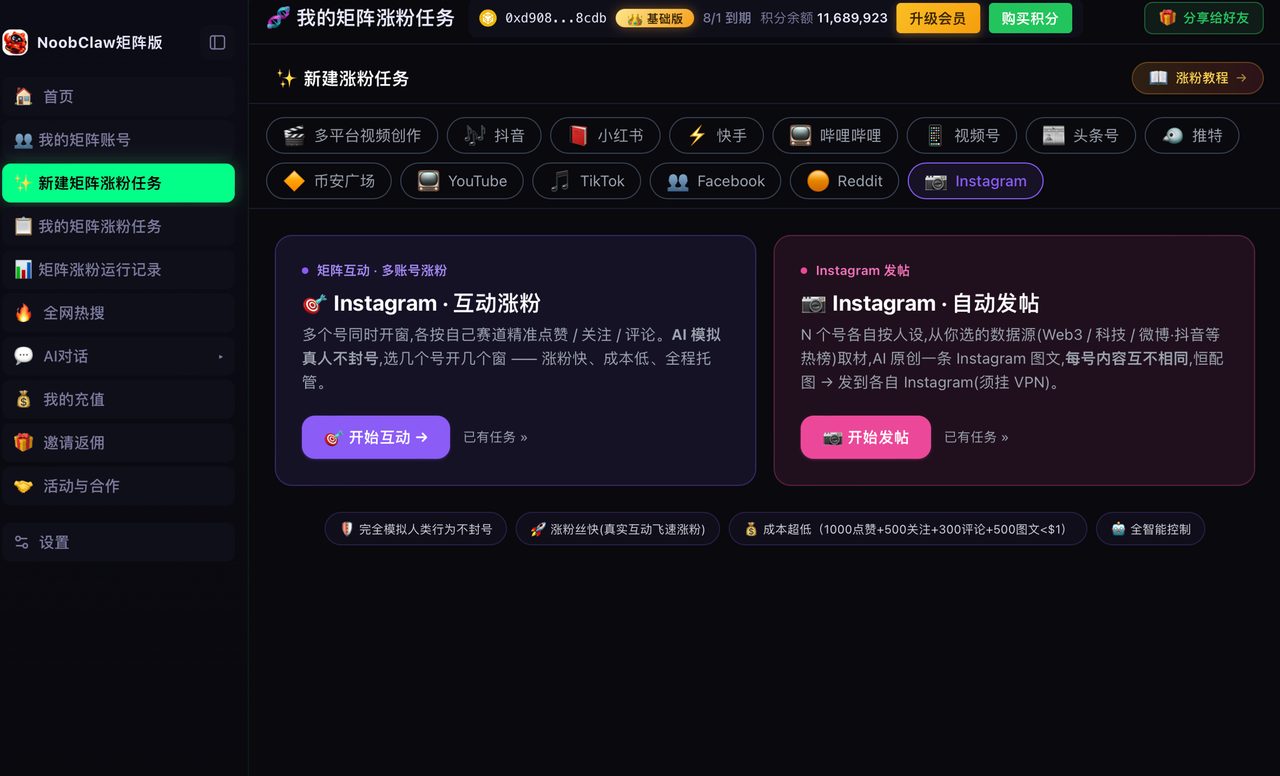
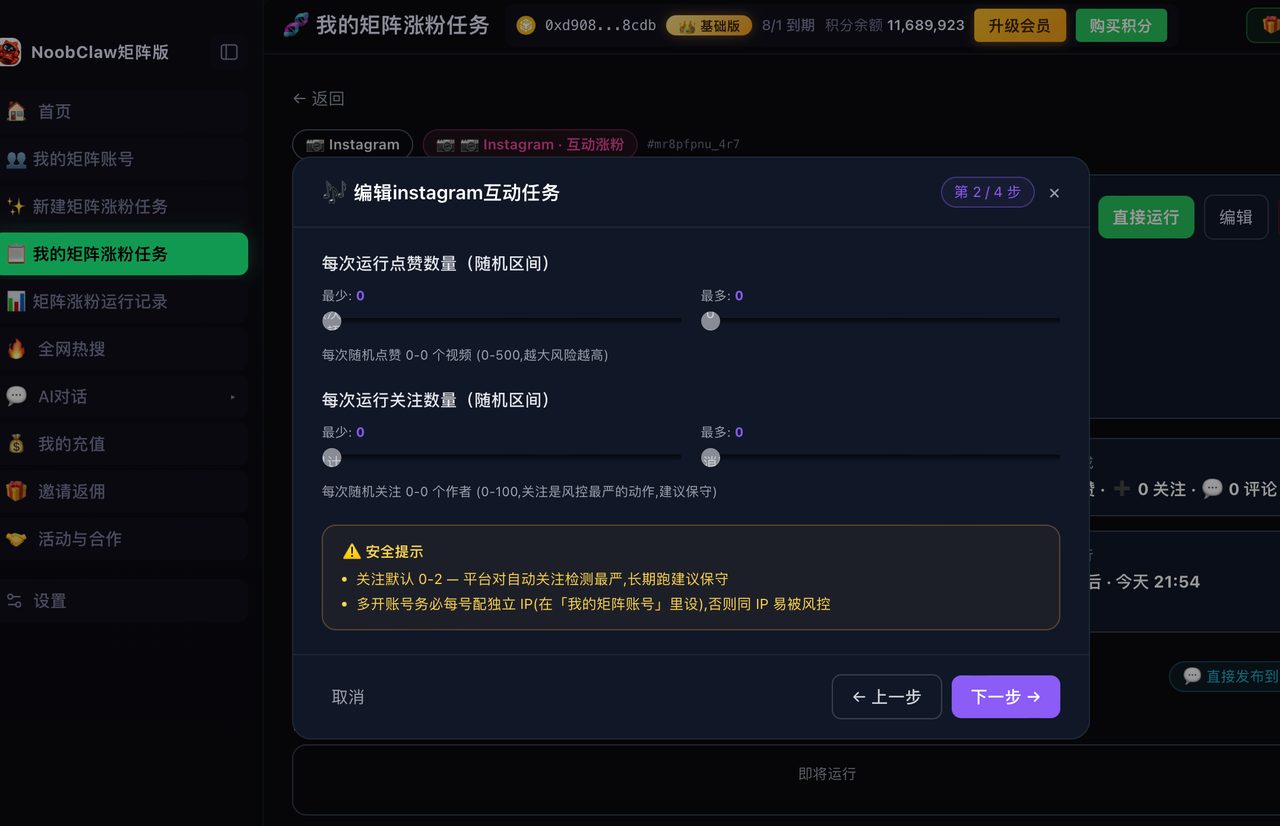
NoobClaw's approach on this follows the same line: its fan-reply feature reads comments left on your own posts and writes responses in that account's persona at a human cadence, skipping ones already answered and never commenting on your own work. Its engagement features act on public content with AI-written comments based on what the video actually says. There is no mass-DM capability, and that is deliberate — it is the one shape in this category where no amount of pacing makes the underlying activity safe.
FAQ
Are Instagram auto-replies against the rules?
Replying automatically to people who messaged you is a supported business capability through Meta's official messaging routes; the specifics of eligibility and features change, so check current documentation. The rules problem arises with unsolicited outbound messaging and with tools that operate outside sanctioned interfaces — which is a different activity wearing the same label.
What about automating comment replies instead?
Replying to comments on your own posts is the same shape as inbound DMs — the person came to you — so it carries the same low risk profile, and it is arguably the highest-value automation in this category because comment threads are where accounts build actual relationships. The one thing to get right is relevance: a reply that clearly has not read the comment is worse than no reply. We looked at how that plays out across platforms in this piece on which Instagram interactions carry weight.
What happens if I already sent mass DMs?
Stop first — nothing else helps while it continues. Then behave normally for a while: post, reply to genuine messages, engage as you would. Be aware there is no official "restriction status" page telling you where you stand, and no reliable timeline for recovery. Anyone promising a specific number of days is inventing it.
Can I automate DMs to my own followers?
Following you is not the same as asking you to message them, and recipients generally do not experience a bulk DM as consented just because they hit follow. The welcome-DM pattern is common and still generates reports. If you do it at all, make it genuinely useful to the recipient rather than promotional, and treat report rate as the number that decides whether to continue.