
Mobile Proxies for TikTok: What They Fix, What They Don't, and What They Cost You
- A proxy addresses the network layer only. Device fingerprint, behavioural pattern and content similarity are three other layers it cannot touch.
- Mobile proxies are trusted because their IPs are shared by thousands of real phone users — which is also why they're expensive and why sharing cuts both ways.
- Datacenter is cheapest and weakest; residential is the usual middle; mobile is strongest and priciest; your own connection is fine below a handful of accounts.
- The decision rule: buy the cheapest tier that covers your actual failure mode, then spend the difference on making your content genuinely different.
Ask anywhere how to run more than a couple of TikTok accounts and the first answer is always the same: get mobile proxies. It's said with such confidence that almost nobody asks the follow-up question — which specific problem does this solve, and which problems does it leave completely untouched?
Four layers of association, and a proxy covers one
When a platform links accounts together, it isn't reading a single field. There are roughly four layers:
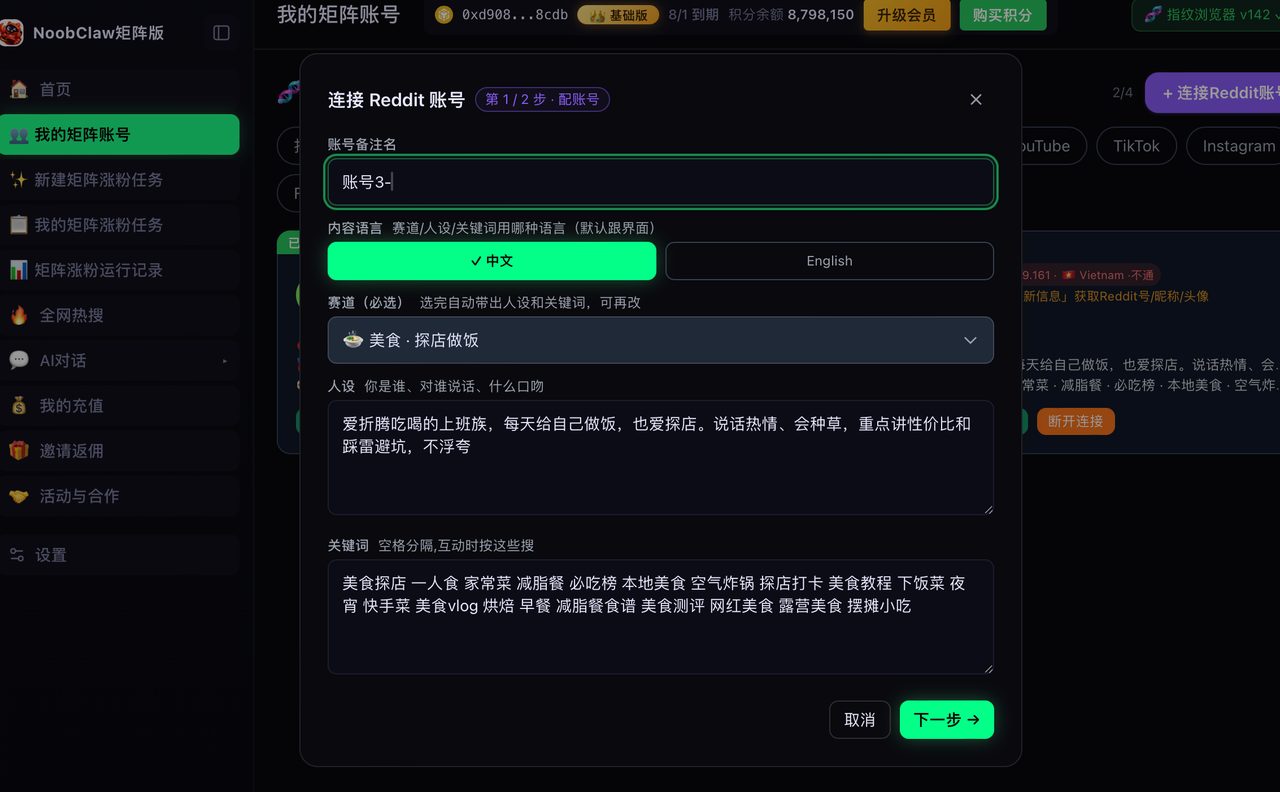
- Network. IP address, ASN, geolocation consistency, whether the address belongs to a datacenter range. This is the layer a proxy addresses.
- Device. Browser and device fingerprint — canvas, fonts, screen metrics, hardware hints, timezone. A proxy does nothing here; that's what an isolated browser profile is for.
- Behaviour. Timing patterns, session shapes, action intervals, typing rhythm. This layer is generated by how you operate, and no infrastructure purchase changes it.
- Content. Whether the accounts are posting recognisably the same thing. This is the layer that ends most matrices, and the one people spend the least on.
Buying mobile proxies to fix an account-association problem is like buying a better lock for a door you left open. Correct purchase, wrong wall.
The four proxy types, compared honestly
- Datacenter. Cheapest, fastest, and trivially identifiable as belonging to a hosting provider. Fine for scraping public pages; the weakest choice for anything tied to a logged-in consumer account.
- Residential. Addresses assigned to real home connections, usually rotating from a pool. The standard middle option: much better reputation than datacenter, materially cheaper than mobile. The catch is that pool quality varies wildly between providers and you generally can't audit it.
- Mobile. Addresses from carrier networks. Their reputation advantage is structural: carrier-grade NAT means one mobile IP is genuinely shared by a large number of real phone users, so the address itself carries little signal about any one user. That's the whole value proposition.
- Your own connection. Free, stable, and completely adequate below a handful of accounts. The common failure here is not the shared IP — it's every other layer being identical too.
Note the sting in the mobile story. The same sharing that makes a mobile IP look innocent means you inherit whatever else that IP has been doing. A cheap mobile pool that has been resold to hundreds of aggressive operators is not a clean address; it's a busy one.
Three things to check before you pay
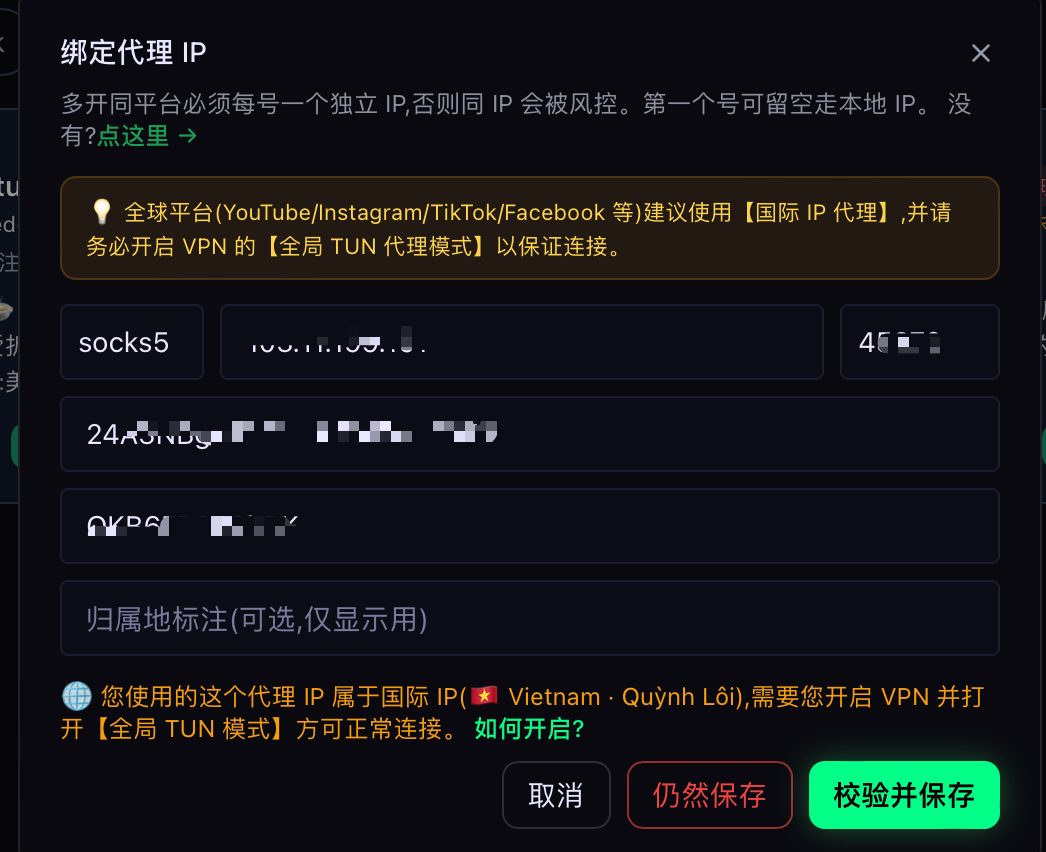
- Stickiness. Can a session hold one address for as long as you need it? An address that rotates mid-session produces a location change inside a single login — a worse signal than the one you were avoiding.
- Geographic coherence. The IP's country should match the account's stated location, its language, its posting hours and its content. An account that claims Berlin, posts at Berlin hours and connects from three continents is more suspicious with a proxy than without one.
- Concurrency limits and real cost per account. Mobile is usually sold by bandwidth or by port. Work out cost per account per month at your actual usage before comparing headline prices — that number frequently changes the decision.
Where the money should actually go
Here's the budget argument, and it's the reason this article exists. Suppose you run ten accounts. Spending heavily on mobile proxies while all ten post variations of the same video is paying to hide a connection between accounts that are advertising the connection themselves.
Platforms have made this explicit from several directions in 2026: Instagram's originality treatment evaluates an account on a rolling 30-day basis and drops accounts that mostly post unoriginal material out of recommendation surfaces — with watermarking, speed changes and credited screenshots explicitly not counting as original. TikTok's handling of mass-produced AI content operates at the account level, so deleting the offending posts doesn't lift the classification. Neither of those mechanisms cares about your IP at all. See the aggregator account rule and TikTok's account-level judgement.
So the practical order is: isolate the device layer first (a separate browser profile per account, with a fingerprint that stays fixed — drift is itself a signal, see the antidetect browser guide); fix the behaviour layer (ranges, not fixed quotas); then buy the cheapest network tier that covers your real exposure. Whatever's left goes into making the ten accounts actually different — which is the only layer with no infrastructure substitute at all. That argument in full: the social media matrix guide.
One boundary worth stating: none of this is about evading enforcement of platform rules. If ten accounts exist to amplify one message under fake identities, better infrastructure just makes the eventual loss larger. Proxies are hygiene for legitimate separate operations, not a workaround.
A decision table you can apply in five minutes
Rather than picking a tier by reputation, pick it by what you're actually exposed to. Answer these in order and stop at the first yes:
- Are your accounts operated by different people in different places? Then you may not need proxies at all — you already have genuine network diversity. Buying a proxy pool here can make things worse by routing a Berlin operator through a Manila address.
- Are you running a handful of accounts from one home connection, one machine, one person? The dominant risk is device and behaviour, not IP. Fix isolation and rhythm first; add residential later if you scale.
- Are you running accounts that must appear to be in a market you're not in? Now geography is load-bearing, and a sticky address in the right country matters more than which tier it comes from.
- Are you at a scale where one flagged account would tell you something useful about the others? That's the point where per-account sticky addressing earns its cost — not because it hides anything, but because it stops one problem propagating.
Notice what this table doesn't contain: a follower count, an account number, or a price. Those are the three things vendor comparison pages lead with, and none of them describe your exposure.
One last note on measurement, because this category is unusually resistant to it. If you change your proxy setup and nothing bad happens, you have learned almost nothing — the base rate of nothing happening is high. The only readable experiment is a single change held for several weeks against accounts you didn't change. Most people change four things at once after a scare, conclude that proxies fixed it, and pay for that conclusion monthly for two years.
FAQ
Do I need one proxy per TikTok account?
Below a few accounts, usually not — the marginal risk reduction is small compared to the cost and the added failure modes. At larger scale, one sticky address per account is the standard arrangement, mainly so a login session never changes apparent location mid-use.
Are free proxies ever acceptable?
For anything involving a logged-in account, no. Free proxies are free because someone else is monetising the traffic, and you are routing an authenticated session through infrastructure you cannot audit. The downside isn't a ban, it's credential exposure.
Will a mobile proxy stop my account from being shadowbanned?
No, and this is the most common misunderstanding of the whole category. Reduced distribution is overwhelmingly driven by content and behaviour signals, not by IP reputation. If reach dropped, diagnose it on those axes first — changing your network almost never changes that outcome.