
The First Hour on TikTok Decides Everything. Here Is What to Do With It
- The working model creators reverse-engineered in 2026: new videos go to your existing followers first, and interaction speed in the early window determines whether distribution expands.
- This makes posting time matter again — not for some universal best hour, but for when your specific followers are awake and scrolling.
- The highest-leverage first-hour action is replying to every comment immediately. It raises comment volume and keeps the video in active circulation.
- What hurts: begging for engagement (treated as engagement bait), deleting early if numbers look weak, and posting again too soon so two videos compete for the same seed audience.
For years the standard TikTok advice was that timing does not matter — the For You page will find your video whenever it is ready.
The 2026 working model says something different. Under the follower-first testing pattern creators reverse-engineered this year, new videos are shown to your existing followers first, and how fast that group interacts determines whether the video expands to anyone else.
If that is right, the first hour is not one of several factors. It is the gate. Everything after it is a consequence.
One caveat first, because it matters: this is a model inferred by creators and analysts from observed behaviour, not an official TikTok specification. The background is in the follower-first breakdown. Treat it as a working hypothesis worth testing against your own data.
Why speed, specifically
Not volume — speed. The distinction matters because it changes what you optimise.
A ranking system deciding whether to spend more distribution on a video needs an early read. Total engagement is a lagging indicator; it takes hours to accumulate and by then the decision window has passed. Rate of engagement is available almost immediately and predicts the total reasonably well.
Which produces a counterintuitive result: a video that gets 200 interactions in twenty minutes can outperform one that gets 500 over eight hours. Same audience size, different signal, different outcome.
It also explains a frustration a lot of creators report — the video that "did fine but never took off." Fine over a long period reads, to an early-signal system, as unremarkable. The videos that expand are the ones that spike.
The system is not asking how many people liked this. It is asking how quickly the first people did.
What to do in that window
Post when your followers are online, not at a "best time." Universal best-time charts are averages across millions of accounts and describe nobody. If the seed audience is your followers, the only relevant question is when they are scrolling. Your analytics has follower activity data; use that.
Reply to every comment as it arrives. This is the single highest-leverage first-hour action, for a reason that is mechanical rather than mystical: each reply is itself an interaction, replies prompt further replies, and comment threads keep the video in active circulation. Being present for the first hour beats any editing decision you could have made.
Be reachable, not just present. Replies that invite a response outperform acknowledgements. "Thanks!" ends a thread. "Which part were you stuck on?" continues it.
Do not post again immediately. If new videos seed to your followers, two videos posted an hour apart compete for the same seed audience, and both get a diluted read. Spacing is not about the algorithm being annoyed with you — it is about not splitting your own seed group. This is part of why several 2026 analyses recommend posting less often rather than more.
Three things that quietly hurt
Asking for engagement. "Comment below if you agree" and "share this with a friend" are engagement bait, treated as a negative signal on most major platforms. The workaround is not subtlety — it is designing content that produces the interaction without a request. A genuine question, a claim people want to correct, or a resource worth saving all generate the same behaviour without asking. Instagram's version of this is discussed in sends vs likes.
Deleting early. Weak first-hour numbers feel like a verdict, and the instinct is to remove the video before it embarrasses you. This is a mistake for two reasons: search traffic accumulates independently of feed performance and arrives over weeks (see the search freshness piece), and on some platforms deleting content actively subtracts from your monetization eligibility. A quiet video is not a costly one; deleting it can be.
Treating a bad hour as a bad video. Sometimes your followers were asleep. Sometimes the topic needed the right audience and did not get it in the seed group. One weak first hour is noise. A pattern across ten videos is signal — and diagnosing the pattern is worth far more than reacting to any single post.
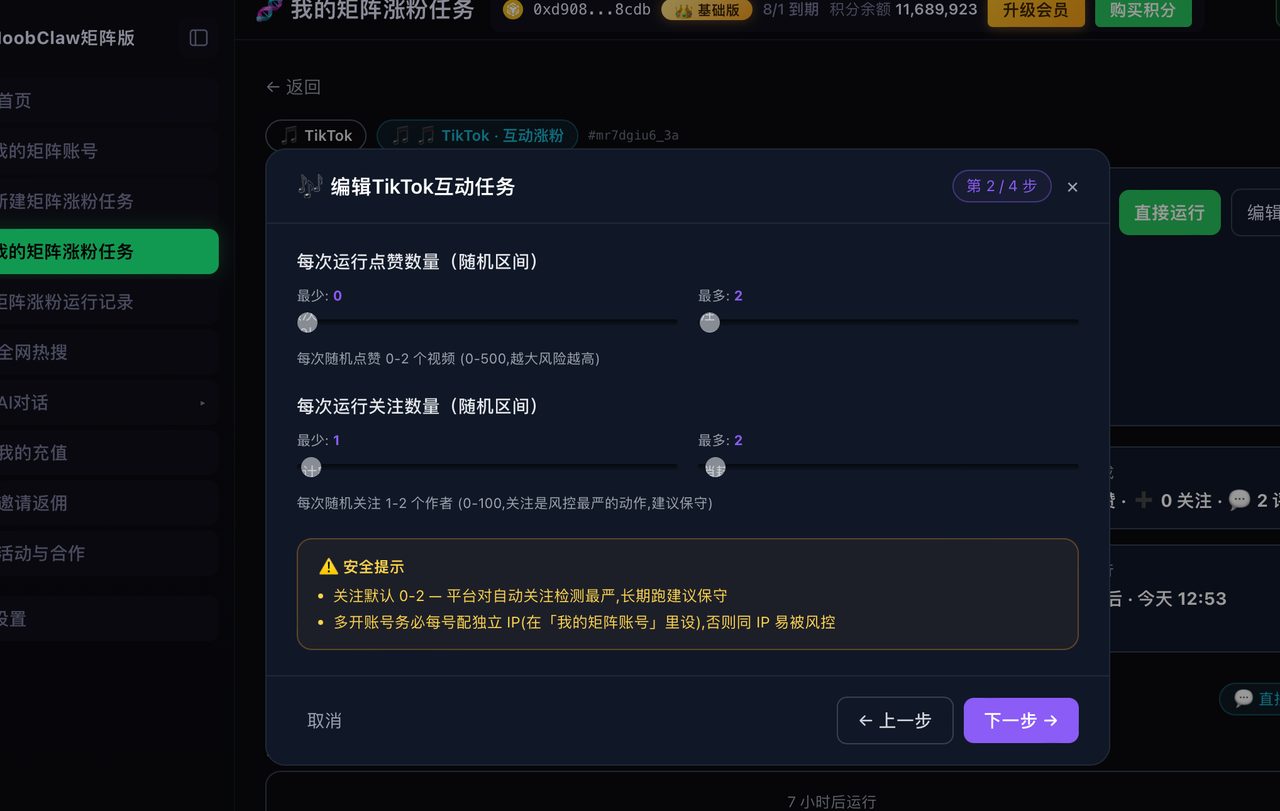
A note for anyone running several accounts: being present for the first hour on every account is where multi-account operations actually break. It is not the posting that consumes the day, it is the responsiveness — and responsiveness is exactly the thing that has to look human. This is the honest constraint on portfolio size, discussed in how many accounts one person can manage. Tools help unevenly here: NoobClaw can handle per-account comment replies at a human pace with each account's own persona, which keeps threads alive, but the judgement about which conversations are worth having is not something to hand off.
How to test whether this holds for your account
Since the model is inferred rather than documented, the responsible thing is to check it against your own data instead of taking it on faith. Your analytics contains enough to do that.
Look at where your early views come from. If the follower-first model describes your account, the first slice of views on a new video should skew heavily toward followers before the non-follower share climbs. If your early views are already mostly non-followers, the model does not describe your situation and the first-hour advice matters less.
Compare two posting times over several weeks. Pick one slot inside your followers' peak activity window and one well outside it, alternate them, and compare median performance across at least ten videos. Medians, not best cases — one viral outlier will tell you nothing.
Run the presence test. For two weeks, be available to reply for an hour after posting. For the next two weeks, post and leave. Compare comment counts and total reach. This is the single cleanest experiment available to you, because it isolates one variable you fully control.
Watch for the completion threshold interacting with it. Several 2026 analyses describe the completion bar rising from roughly 50% to 70%, which changes the length of video that can clear it (see the completion rate piece). A first hour that looks weak may be a length problem rather than a timing problem, and the fix is entirely different.
Whatever the result, you will end up with something more useful than a rule from an article: a read on how your own account's distribution actually behaves.
FAQ
How long is the first-hour window really?
Descriptions of the seed-testing phase in the follower-first model range from roughly 24 to 72 hours for the overall test, with the first hour mattering most for the initial read. Do not treat sixty minutes as a hard boundary — treat it as "be available shortly after posting rather than posting and walking away."
Should I schedule posts or publish manually?
Scheduling is fine for the publish itself. What is not fine is scheduling a post for a time when you cannot be around, because the value is in being present afterward. If you have to choose, post later and be there over posting on time and disappearing.
Does this apply to Douyin as well?
Partly, and the difference is instructive. Douyin's 2026 mechanism runs a seven-day, three-stage distribution cycle in which long-tail playback carries the majority of total views — so the early window matters less there and deleting early is even more costly. Same company, opposite direction. Do not assume advice for one applies to the other.