
TikTok Video Pre-Check: The Feature That Stops a Violation Before It Costs You Points
- TikTok regional seller documentation describes a Video Pre-Check feature: upload a video before posting to get alerts on possible policy issues.
- It matters because CHR recovery is rate-limited — quizzes give 10 points once per 30 days per violation type and orders are capped at 5 points a week.
- Deductions are not rate-limited. Prevention and recovery run at completely different speeds, which is what makes a pre-publish check disproportionately valuable.
- Availability appears to vary by market, so check your own Seller Center rather than assuming the feature is present.
Almost everything written about the TikTok Creator Health Rating is about recovery: which quiz to take, how many points come back, how long deductions last. Useful, but it is the expensive half of the problem.
The cheap half is a feature buried in regional seller documentation: run your video through the Video Pre-Check before posting to get alerts on possible policy issues.
Why prevention is worth so much more here
Look at the two sides of the CHR ledger and the asymmetry is stark.
| Losing points | Gaining points | |
|---|---|---|
| Rate limit | None — multiple violations can land in a day | Heavily limited |
| Speed | Immediate | Quiz: +10, once per 30 days per violation type |
| Ceiling | Down to 0, which is permanent | Orders capped at 5 points per week |
| Effort | Zero — it happens to you | Deliberate action, repeatedly |
Put concretely: a bad afternoon can cost more points than a disciplined month recovers. The full mechanics are in how to raise your Creator Health Rating, but the summary is that recovery is rate-limited and damage is not.
When damage is instant and repair is rationed, the highest-return activity is not repair. It is the check you run thirty seconds before publishing.
What the pre-check does
TikTok's regional documentation describes it plainly: upload your video to the Video Pre-Check feature before posting to get alerts on possible policy issues. It sits alongside the Creator Health Rating material in Seller Center education, which tells you what it is for — reducing the violations that drive the score down, rather than improving reach.
Two things to be clear about, because over-claiming here would be exactly the mistake:
- A pass is not a guarantee. Nothing in the documentation promises immunity. It flags likely issues; enforcement happens on the live video.
- Availability appears to vary by market. The description appears in some regional seller universities and not others. Check your own Seller Center rather than assuming.
The pre-publish checklist for markets without it
If the feature is not in your Seller Center, the same job can be done manually. The categories that generate commerce violations are well documented across TikTok's policy material, and most deductions come from a short list:
- Product claims. Health, weight, income, and results claims are the highest-risk category in every market. If a sentence promises an outcome, it needs to be supportable — and in some categories it is not permitted regardless of evidence.
- Restricted and prohibited products. Check the category before you produce the video, not after. This is the cheapest possible check and the one most often skipped.
- Misleading presentation. Before-and-after footage, staged demonstrations, or edits that overstate what the product does.
- Third-party material. Music, footage, and other creators' content carry their own exposure. If you produce with AI-generated visuals or voice, the same question applies — provenance rules and disclosure requirements are tightening, which we covered in TikTok's account-level AI spam detection.
- Disclosure. Commercial relationships need declaring, and the requirement is independent of whether the platform prompts you.
Run those five before publishing anything commercial. It takes under a minute per video once it is habit, and it is the same minute you would otherwise spend on a policy quiz thirty days from now.
Making this work at volume
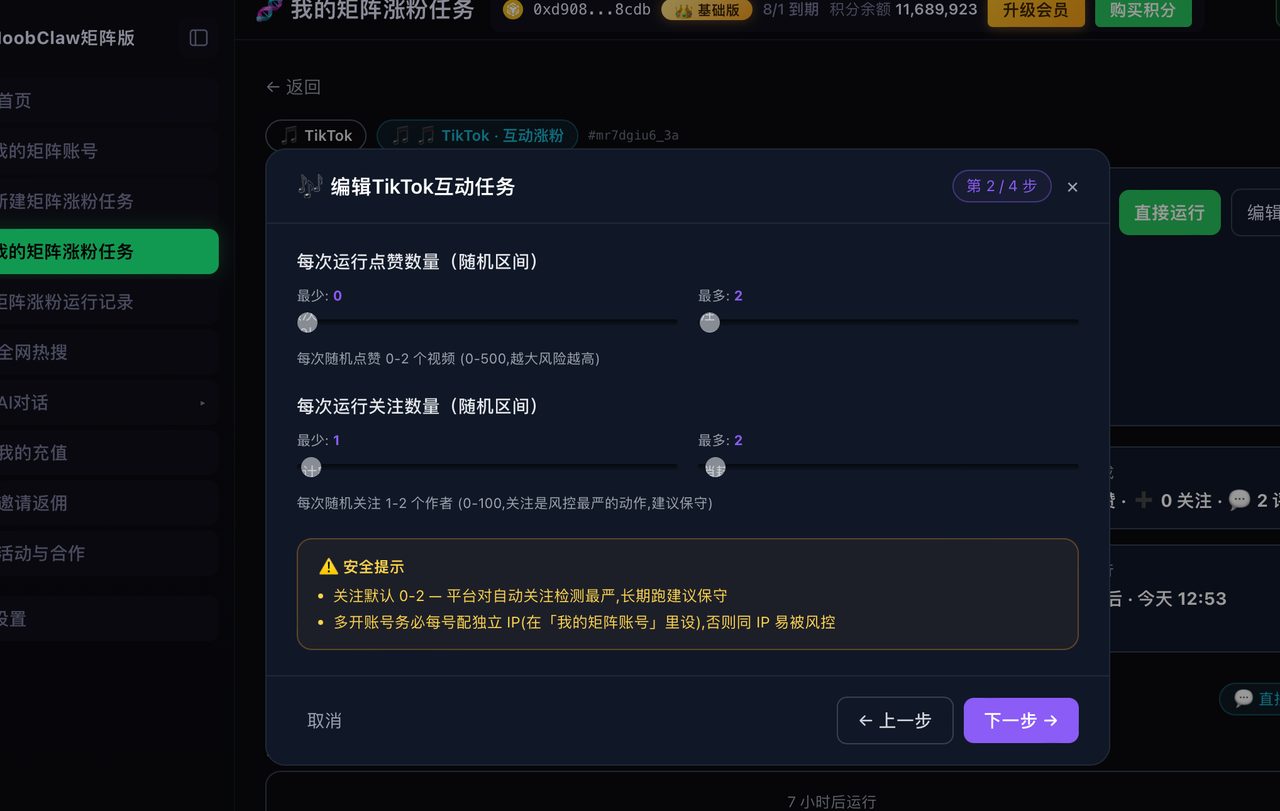
A pre-publish check is trivially easy for one video a week and quietly impossible for forty. If you are publishing at volume — across products, across accounts — the check has to be structural rather than an act of attention.
Three things that make it survive scale:
- Move the check upstream to the script. Most violations originate in the copy, not the footage. Reviewing claims at the script stage catches them before production cost is sunk. This is the same argument as reviewing AI content at scale: check the input, not the output.
- Maintain a banned-phrase list for your category. Every vertical has ten phrases that reliably cause problems. Written down once, it is a find-and-replace instead of a judgement call.
- Never let one template carry risk across accounts. A claim that is fine in one market and not in another becomes forty violations when the same script runs on forty accounts. This is the specific failure mode of one-script-many-accounts workflows, and the reason tools built for multiple accounts — NoobClaw included — generate each account's content independently rather than cloning it. The honest limit: independent generation stops the copy-paste failure, it does not review your claims for you.
FAQ
Does passing the pre-check mean my video is safe?
No. The documented function is to alert you to possible policy issues before posting. Enforcement decisions are made on the published video, and a pre-check result is not a commitment. Treat it as a filter that catches the obvious problems, which is still worth a great deal given how slowly points come back.
Where do I find it?
It is described in TikTok Seller Center education material alongside Creator Health Rating documentation, and its presence varies by region. Search your own Seller Center for the feature name before concluding it does not exist for you — regional rollouts of this kind are uneven and rarely announced.
Is this the same as the violation appeal process?
No, and the difference is the point. Appeals are retrospective, they run against a specific deduction, and they are limited — typically one appeal per violation within a fixed window. A pre-check runs before anything has happened. See TikTok Shop violation points for how the appeal side works.