Threads Shadowban Tests: Visibility Checks and Limitations
- Every shadowban checker that has ever worked did the same thing: query a public search surface as an anonymous visitor and see whether you appear. It is not privileged access — it is a logged-out look
- Threads exposes a much thinner set of those surfaces than Twitter did, which means a "Threads shadowban tester" has far less signal to work with and more room to guess.
- You can run the meaningful checks yourself in about five minutes with a logged-out browser, and the results will be at least as reliable as any tool's.
- No platform has an official concept called shadowban. What exists is reduced distribution, which is real, gradual, and not a binary state a green tick can confirm.
Search threads shadowban test and the autocomplete fills in: <code>threads shadowban checker</code>, <code>check threads shadowban</code>, <code>threads shadowban test online</code>, <code>does threads shadowban people</code>. Ten variations of the same hope — that somewhere there is a button that returns a verdict.
Here is the part nobody selling one of those buttons will tell you: a shadowban checker has no special access. It does exactly what you can do, which is look at your account the way a stranger does. On Twitter that used to reveal a lot, because Twitter exposed several public surfaces where absence was meaningful. Threads exposes far fewer. Same technique, much less to look at.
How every checker that ever worked actually worked
Strip away the interface and the mechanism is identical across all of them:
- Make an anonymous, logged-out request for a public surface — search results, typeahead suggestions, a profile page, a thread's replies.
- See whether your account or your post appears in it.
- Report absence as a "ban" of some named flavour.
That is the whole trick. It is a real signal — absence from a public surface genuinely means strangers cannot find you there — but it is inference from the outside, and its quality is entirely determined by how many public surfaces the platform exposes.
A shadowban checker is a stranger looking at your profile very quickly. On a platform with few public surfaces, that stranger has almost nothing to report.
Why Threads gives a checker less to work with
The Twitter-era checkers could distinguish several named states because there were several distinguishable surfaces: search results, typeahead, reply visibility in a thread, and a few more. Each absence had a different signature, which is where terms like "search ban" and "reply deboosting" came from.
Threads is a much thinner public surface by comparison. There is less anonymous search to interrogate, less typeahead to probe, and less structured reply hierarchy to inspect from outside. A tool that names four distinct ban types on Threads is, in most cases, reusing a Twitter-shaped taxonomy on a platform that does not produce those distinctions.
That does not mean reduced distribution is not happening to you. It means the tool cannot see it, so it is telling you something it inferred rather than something it measured.
The checks you can run yourself, in about five minutes
Open a private browser window. Log out of everything. Then, in this order:
| Check | How | What absence means |
|---|---|---|
| Profile reachability | Load your profile URL logged out | If it does not load, this is not a shadowban — it is an account state. Check your account status screen |
| Post reachability | Load a specific post URL logged out | Post visible = it exists publicly. Whatever your problem is, invisibility is not it |
| Handle lookup | Search your exact handle from a logged-out or unrelated account | Missing on an exact-match handle search is the strongest single signal available |
| Reply visibility | Reply to a large account, then view that thread logged out | Your reply present for strangers = replies are being served. Absent = worth investigating |
| Views vs followers | Compare a post's views to your follower count | Views far below follower count, repeatedly, is a distribution signal — not a visibility one |
Run all five and you will know more about your account than any checker will tell you, because you tested the specific surfaces you care about rather than whichever ones a tool happened to script.
The distinction that makes the whole question tractable
There are two very different situations, and they are constantly conflated:
- Invisible. A stranger loading your URL cannot see the thing. This is binary, it is checkable in thirty seconds, and it is rare.
- Not distributed. The thing is perfectly visible to anyone who goes looking, and the platform is not showing it to anyone who was not already looking. This is a matter of degree, it is common, and no logged-out check will ever detect it.
Almost everyone searching "shadowban test" is in the second state and testing for the first. That is why the tests come back clean and the feeling does not go away — the test was answering a question you did not have.
If the tests come back clean and reach is still down
Then it is distribution, and distribution responds to different things than a ban does. In rough order of how often each turns out to be the cause:
- You changed subject. The audience the platform had built for you does not want the new thing yet. This looks exactly like suppression and is not.
- Format shift. A surface that favoured one post shape stopped favouring it. Reach moves before anyone announces anything.
- Frequency change in either direction. Posting far more or far less than your baseline both reset expectations.
- Link and outbound behaviour. Consistently pushing people off-platform is the most reliably reach-reducing habit on every network, and it never produces a notification.
- Actual enforcement. Real, but it leaves a paper trail in your account status. Check there before assuming.
Notice that four of the five are things you did, none of them are punishments, and all of them are reversible without appealing to anyone.
What "safe" actually means for anyone running more than one account
The reason people reach for shadowban checkers is usually not curiosity — it is that they are running several accounts and want an early-warning system. Fair enough. But the useful early warning is not a green tick from a third party. It is your own baseline:
- Know each account's normal views-to-followers ratio. A change is only detectable against a baseline you recorded.
- Change one variable at a time. If you shift subject, cadence and format in the same week, no diagnosis is possible afterwards.
- Keep accounts genuinely separate — separate sessions, separate content, separate posting rhythms. Accounts that behave identically get evaluated as one operation, and that is a real risk that no checker will report.
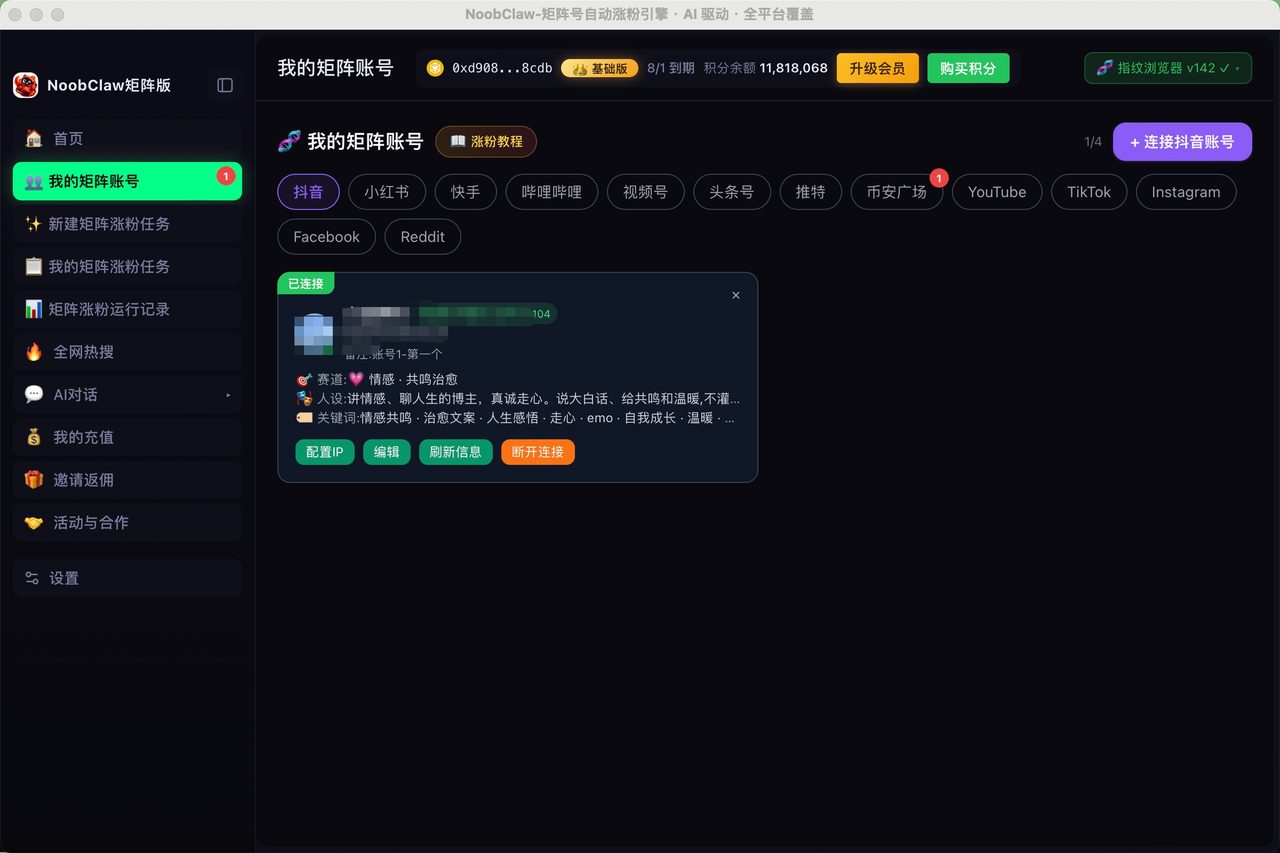
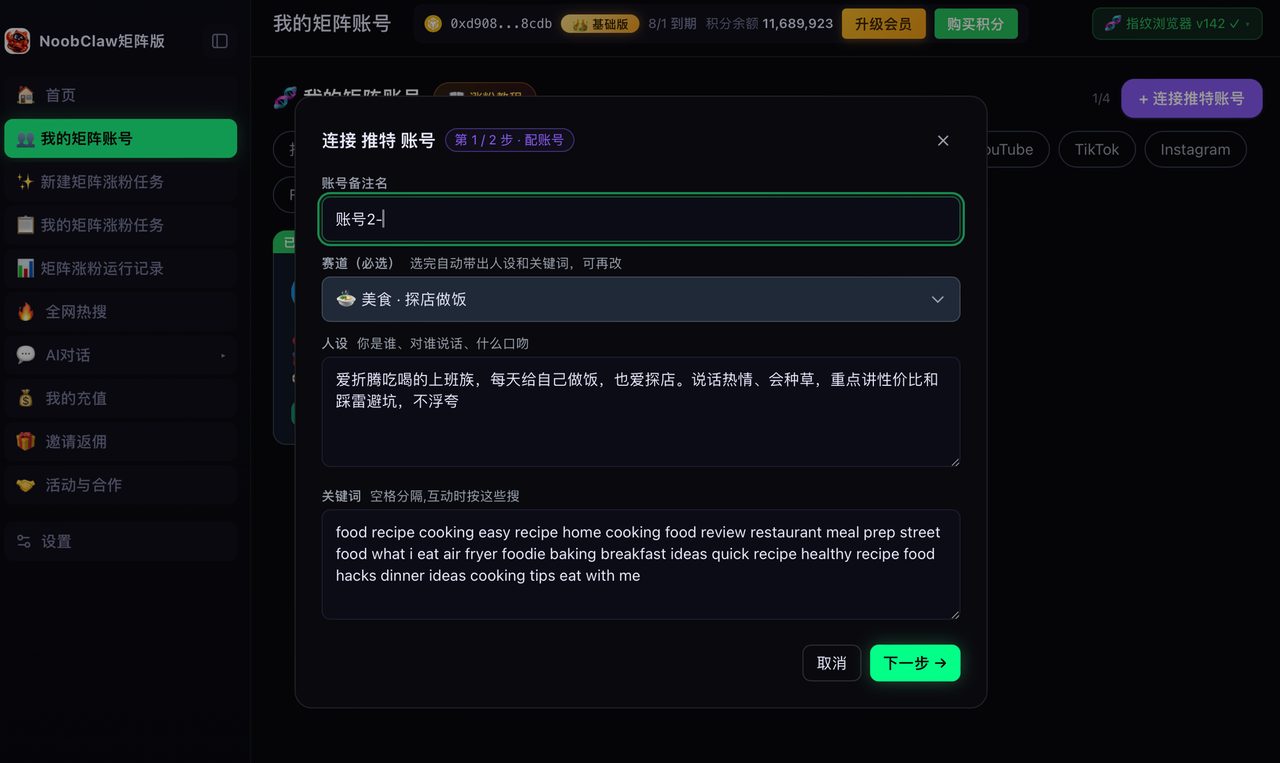
That last point is the one tools can help with structurally. Running each account in its own isolated browser profile with its own pacing is not about evading anything; it is about not accidentally presenting five accounts as one. It is the design NoobClaw is built around, and it is also just good operating practice whether or not you use any tool at all.
FAQ
Does Threads have shadowbans?
No platform, Threads included, publishes a feature called shadowban. What exists is reduced distribution, which is real and continuous rather than a switch. The absence of an official name is why every "test" is an inference, and why a clean result never quite reassures anyone.
Are Threads shadowban checkers accurate?
They are as accurate as the surfaces they can query, and Threads exposes few of them. A checker that reports several distinct ban types is describing a taxonomy borrowed from another platform. Run the logged-out checks yourself; you will get the same information without the confident vocabulary.
How do I know if it is a ban or just bad reach?
Load the post URL in a logged-out browser. Visible to strangers means nothing is hidden and your problem is distribution. Not visible means check your account status screen, where real enforcement leaves a record. Those two branches need completely different responses.
Related: What shadowban tools can actually detect on each platform · Why the Twitter checker result keeps changing · What "Other" means in Threads views · Threads vs Bluesky: what each costs you to run