Warm Leads vs Cold Outreach: Intent, Workflow and Measurement
- A warm contact shows relevant interest; following or liking alone does not establish consent to sales messages.
- Choose the workflow by audience intent, offer and operator time, rather than universal response-rate claims.
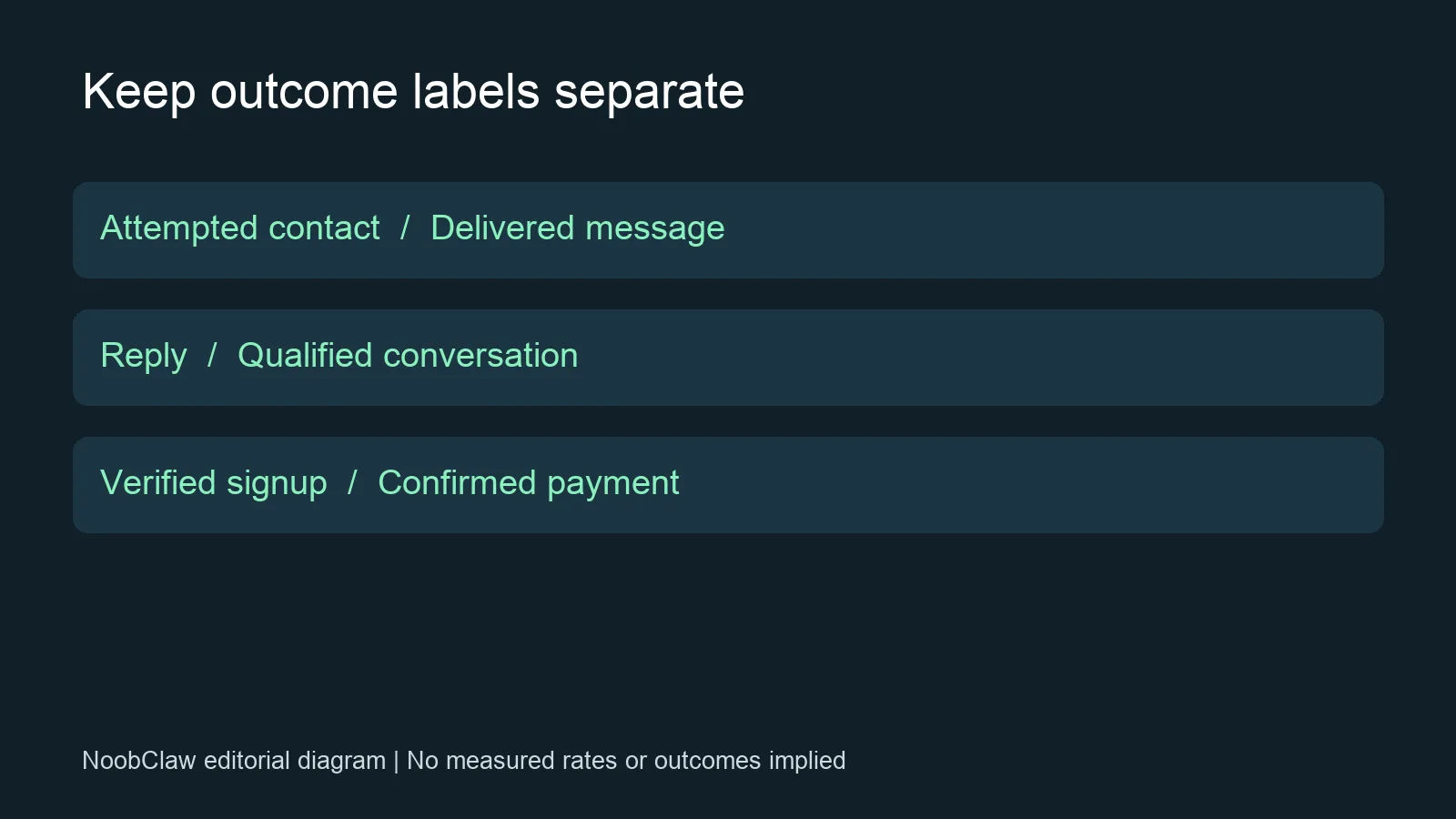
- Record replies, qualified conversations, verified signups and confirmed payments as separate outcomes.
Warm leads vs cold outreach comes down to demonstrated interest. A person who asks for help with a problem gives you more context for a useful conversation than a stranger whose address appears on a list. That does not establish a universal reply rate or prove that commenting first produces more sales. Choose the workflow by audience intent, the offer and the time required to serve it.
Correction, 9 October 2026: an earlier version presented reply and conversion percentages and a first-person outreach test without supporting records. Those claims have been removed. This article is a practical planning framework, not a report of measured NoobClaw customer results.
A useful reply, a qualified conversation and a paid customer are three different outcomes. Record them separately.
What makes a lead warm?
For this workflow, call a contact warm when there is an explicit signal of interest relevant to your offer: they ask a product question, request a resource, book a conversation or explain a problem you can address. Record the signal and its date. A follower count, a profile view or a generic like is weaker context and should not be treated as an invitation to a sales message.
Cold outreach starts without that expressed interest. It may still fit a carefully selected prospect with a relevant business problem, but you have less information about timing and willingness to engage. Explain why the message is relevant, identify yourself and respect a request to stop. Calling an unsolicited message “warm” because you liked a post does not change the recipient's expectations.
A studio looking for an editor might explicitly ask about turnaround time. A creator might ask how to organize several publishing accounts. Those questions can guide a response. They do not prove purchasing intent: the person may want advice, may already have a supplier or may have no budget. Keep the next step proportional to what they actually requested.
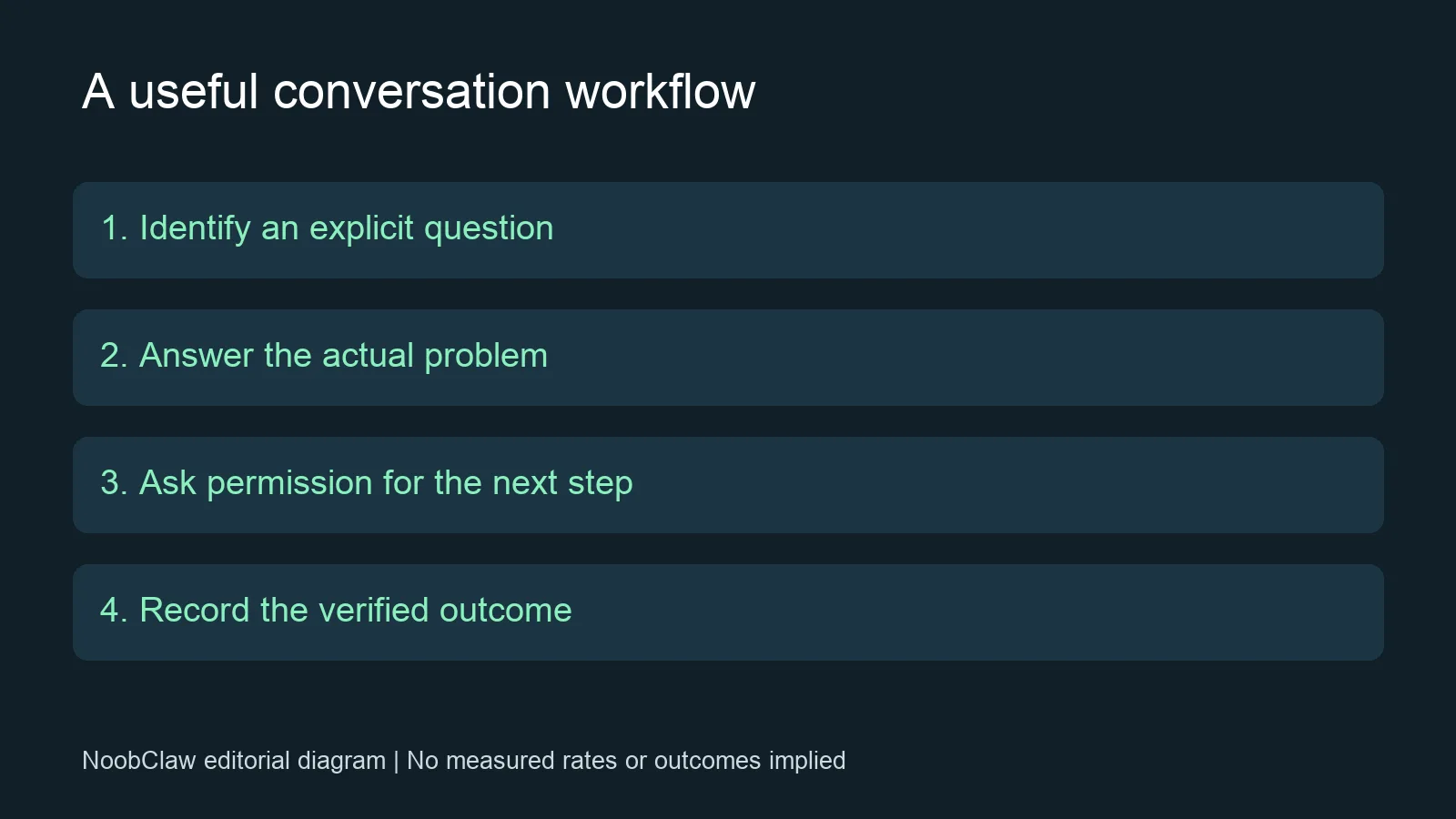
Choose the route by intent and available time
Use engagement-first work when the audience already discusses a problem you understand and you can contribute a specific answer. A useful public response might explain a setting, identify a missing input or link to a relevant guide. It should remain useful even if the reader never buys from you. Avoid turning every discussion into the same product pitch.
Use a direct introduction when you have a concrete reason to contact a specific person and can explain that reason briefly. Keep the first message focused on the problem and a small next step. If there is no response, do not interpret silence as permission for an escalating sequence. Decide the contact process before starting, rather than increasing message volume to compensate for weak fit.
Both routes consume operator time. Public research and thoughtful replies can take longer than composing one short introduction. Compare total time spent on research, drafting, review and follow-up, not just the time required to press Send. A workflow with more replies can still be less useful if those conversations do not match your offer.
A documented operating example comes from Buffer's March 2026 Sapphire Social case study. Alexandrea Browman's agency manages more than thirty client social accounts and describes centralizing comment and message handling in Buffer. The case illustrates a real team organizing existing conversations. It does not compare cold outreach with warm leads or report a sales conversion rate, and it is a vendor-published account rather than a NoobClaw test. The useful lesson is to make replying manageable before adding more channels.
A practical workflow for a small account team
- Define one audience and problem. Write a sentence describing who you can help and what task they need to complete. Keep different audiences in separate notes so that results remain interpretable.
- Record the original context. Save the relevant question, source link and date. Summarize the problem without collecting unnecessary personal information.
- Draft a useful response. Answer the question first. If a product guide helps, explain which part answers it rather than dropping an unexplained link.
- Review before sending. Check the facts, tone and destination. Confirm that a generated draft does not invent personal experience, a customer result or a promised outcome.
- Let the person choose the next step. Offer a relevant resource or conversation. Treat a request for a resource as that request, rather than automatic agreement to ongoing promotional messages.
- Record what happened. Separate a sent response, a reply, a qualified conversation, a completed signup and a payment. Include unresolved and negative outcomes when evaluating the workflow.
Make ownership explicit when several people handle one account. Assign the conversation to one operator and keep a short history of what was promised. That helps prevent duplicate answers or a follow-up that ignores the person's previous response. An AI draft can help with wording, but the operator still needs to check the underlying context.
Measure outcomes without inventing a benchmark
There is relevant evidence for replying to existing comments, but it answers a narrower question than outreach conversion. Buffer's November 2025 analysis covers nearly two million posts from more than 220,000 accounts. It reports about 21% higher engagement for Instagram posts with replied-to comments, using an account-level fixed-effects model. On X it reports an approximately 8% association, with only about 2,100 replied-comment posts in the relevant subset and marginal statistical significance (p approximately 0.097).
These are observational engagement results, not lead, signup or purchase rates. Buffer notes that successful posts may attract more replies, so the direction of causality is uncertain. Replying to comments on your own content also differs from approaching strangers in their comment sections. Use the research as a reason to examine existing conversations, not as a forecast of what an engagement-first sales campaign will produce.
Start with counts that your team can verify. For direct messages, choose a denominator such as delivered first messages and keep it consistent. For public replies, keep a separate record; a public comment and a delivered private message are different exposures. If delivery is unknown, label it unknown instead of quietly including every attempted send as delivered.
Define a qualified conversation before reviewing results. For example, it might require a stated need, a relevant use case and agreement to discuss a solution. That definition is a team decision, not a standard conversion rate. A polite reply alone should not qualify. Record signups or purchases only when your actual account or payment system confirms them.
Compare similar audiences, offers, dates and channels, and report the sample size. A small observational test can help you choose a next step, but different audiences or changing content make it difficult to isolate the effect of engagement-first work. Keep those limitations with the result. Do not turn a handful of conversations into a percentage that appears to apply to every creator.
Where NoobClaw fits
NoobClaw can help with specific AI content and connected-browser workflows. The X Auto Post guide describes Web3 news drafting with an explicit draft-only or publishing choice. The scenario directory is the place to check the task you actually need. Neither establishes an automated sales process or an assured lead rate.
If you need a cloud publishing and comment-management workspace, compare the current tools in Postiz vs Mixpost and Metricool free alternatives. Review the current NoobClaw plans and credits before running a task. A free download does not mean unlimited generation, and task completion does not prove a business conversion.
FAQ
Does engagement-first outreach always beat cold messages?
No. This article has no controlled evidence for a universal ranking. Intent, audience fit, the offer and operator time determine which route is useful. Measure the outcomes you can verify.
Does following an account give permission for automated DMs?
Do not assume it does. X's automation rules distinguish the ability to receive a message from intent to receive automated contact. Check the applicable platform's current rules and the recipient's expressed request.
Can a reply rate be reported as a conversion rate?
Only if “conversion” is explicitly defined as a reply; it still would not be a sale. For business reporting, label replies, qualified conversations, verified signups and confirmed payments separately.
Sources
- X automation rules: recipient expectations and automated message requirements, checked 9 October 2026.
- Buffer Community: current comment management and assisted replies.
- Buffer's comment-reply analysis: observational engagement data, published November 2025 and checked 9 October 2026.
- Sapphire Social case study: vendor-published agency workflow, March 2026; not a NoobClaw test or conversion benchmark.