
TikTok’s API Says Out Loud That It Is Not for Posting to Your Own Accounts
- TikTok’s developer guidelines name "a utility tool to help upload contents to the account(s) you or your team manages" as a counter-example under Intended Use — fetched 19 Sep 2026.
- The same page: "Unaudited API Clients can allow up to 5 users to post in a 24 hour window" and all posting accounts "must be set to private at the time of posting".
- That leaves three possibilities for any scheduler: it is an audited public app, it is unaudited and crippled, or it is not using the API at all.
- The boundary is TikTok’s. What you do with it is a design choice — some products moved the posting step into a local browser instead.
You have six TikTok accounts. You want one screen that posts to all of them. So you go looking for a tool that plugs into TikTok’s official API, on the reasonable assumption that the official route is the safe one.
Then you open TikTok’s own developer documentation and find that exact use case printed on the page as an example of what the API is not for — with a cross next to it.
The counter-example, in TikTok’s own words
We fetched developers.tiktok.com’s content sharing guidelines on 19 September 2026. Its Intended Use section sets out two requirements, each with an example of compliance and a counter-example. The second requirement reads:
"API Clients must not be limited to test applications and should be intended for a wide audience, not limited to internal groups/private use."
And the counter-example it prints underneath, marked with a cross:
"A utility tool to help upload contents to the account(s) you or your team manages."
Read that twice, because it is unusually direct. It is not describing scraping, or spam, or fake engagement. It is describing a tool that posts to accounts you legitimately own, built for you or your team to use. TikTok has named that as outside the intended use of its posting API.
The first requirement in the same section is worth having alongside it, because it explains the logic: "API Clients should facilitate authentic creators to post original content to TikTok," with "an app that copies arbitrary contents from other platforms to TikTok" as its counter-example. Put the two together and the principle is coherent. The API exists to be a public product that creators use to post their own work. It does not exist to be private plumbing for an operator’s account roster.
Most category boundaries are drawn by commentators. This one is printed on the platform’s own documentation, with a cross next to it.
The two ceilings that bite before you ever pass an audit
The same guidelines page carries the constraint that decides whether an unaudited integration is usable at all:
"Unaudited API Clients can allow up to 5 users to post in a 24 hour window. All user accounts using the API client to post must be set to private at the time of posting."
TikTok’s Content Posting API getting-started documentation, fetched the same day, says it a second way: "All content posted by unaudited clients will be restricted to private viewing mode," and "Once you have successfully tested your integration, to lift the restrictions on content visibility, your API client must undergo an audit to verify compliance with our Terms of Service."
So an unaudited client is not a smaller version of an audited one. It is a sandbox wearing the same name. Five posting users a day, and everything that goes out is private — which is to say, nothing that goes out is a post in any sense you care about.
And this is not a TikTok eccentricity. YouTube does the same thing, in almost the same words: uploads through videos.insert from unverified API projects are forced to private until the project passes an audit. We took that apart separately in why YouTube API uploads come out private. Two large platforms independently arrived at the same design: unaudited means your uploads are invisible. If you have ever wondered why a small integration "worked" and got zero views, that is usually the whole story.
So what is every scheduler you can buy, actually?
Hold the Intended Use sentence next to the audit gate and there are only three honest possibilities for any product that posts to TikTok on your behalf. This is a useful lens to take shopping.
| What it is | What that means for you | How to tell |
|---|---|---|
| An audited API client, sold as a public product | You are a user of a general-purpose app, not the owner of a private tool. Posts publish normally. The app’s rate limits and account ceilings are the vendor’s, not yours. | It has public pricing, a public signup, and a TikTok connect flow that names the app |
| An unaudited client | Five posting users per 24 hours, everything private at the time of posting. Not a workable pipeline. | Posts land as private; connect flow shows a sandbox or test warning |
| Not using the posting API at all | It is driving a browser session, or it wants your login. These are very different things and the difference matters enormously. | Ask where the session lives, and whether it ever asks for a password |
That third row is where the real risk sorting happens, and the cleanest statement of the principle comes from a different platform. X’s developer policy, fetched today, says:
"You may not store X passwords, or request that people provide their X password, account credentials, or developer application information (including consumer key) to you directly."
Different company, same instinct: a tool that wants your password is the problem, not the solution. Any product asking you to type an account password into its web form has already failed the test the platforms themselves wrote. The open-source end of this has a related failure mode — the exported cookie file, which is a password with extra steps — covered in the real risk in TikTok auto-uploader repos.
What the boundary implies about where the posting step should run
We are not going to tell you TikTok approves of any particular product, including ours. What we can do is state the boundary the platform drew and describe what a different architecture does, and let you do the arithmetic.
TikTok’s position, as documented: the posting API is meant to be a public product used by creators, not private plumbing for an account roster. Nothing in that says a person may not operate their own accounts in their own browser. It says the API is not the pipe for it.
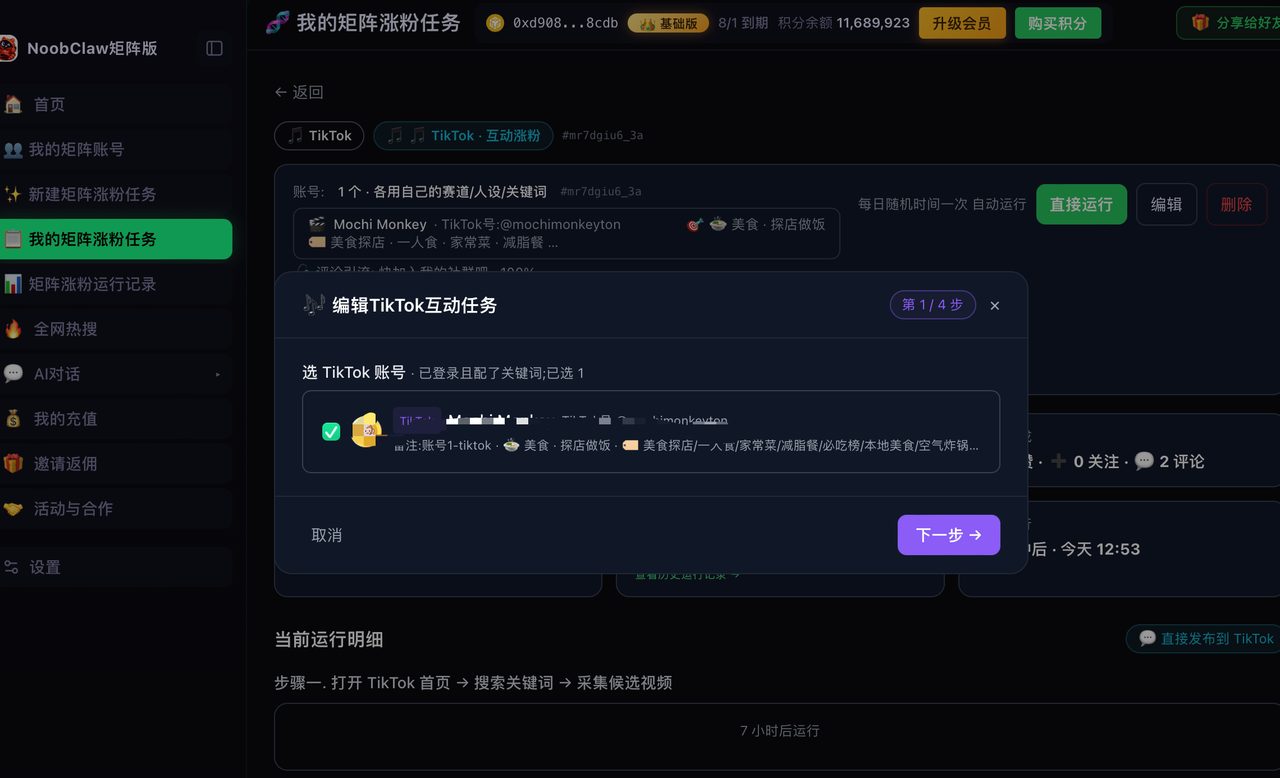
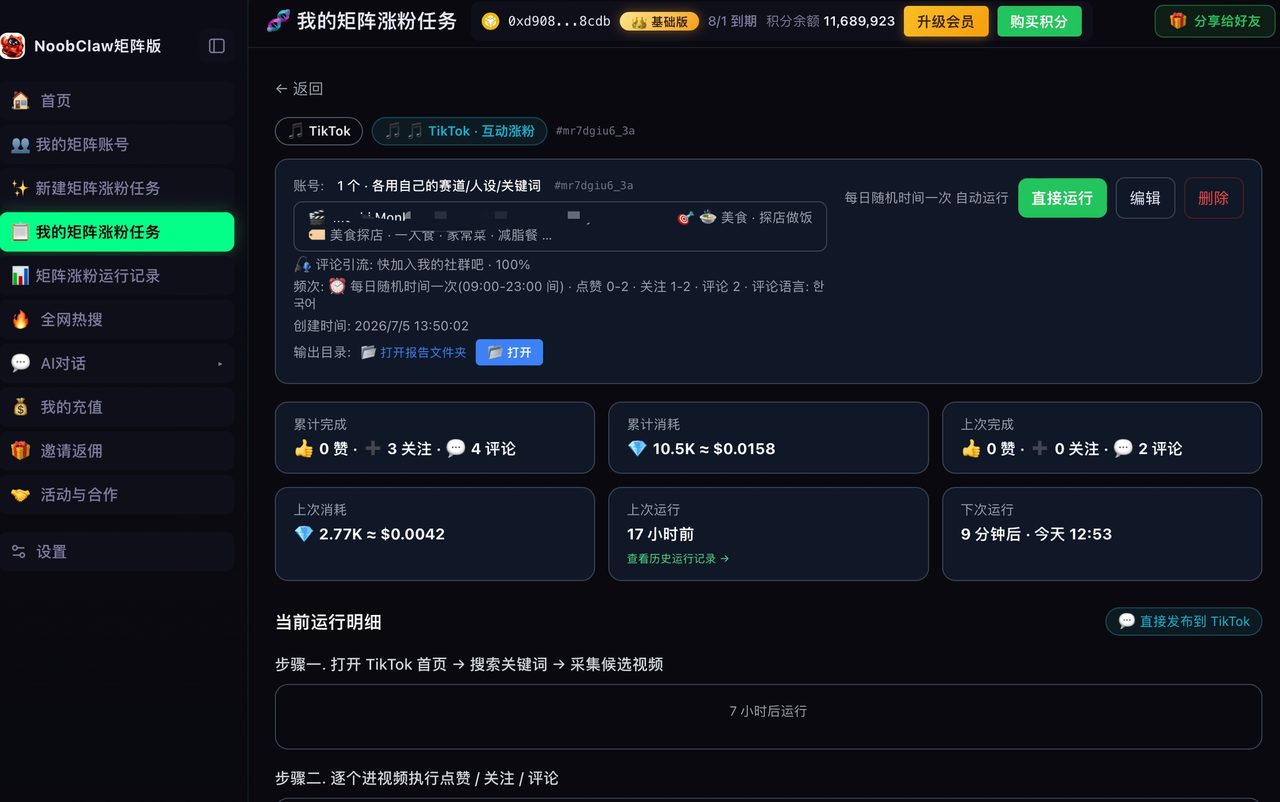
Which is why some products stopped trying to be that pipe. NoobClaw runs as a desktop app: it opens a local browser, you sign in to your own accounts exactly as you would by hand, the session stays on your machine, and you never hand over a password to us or anyone else. Each account in a matrix generates its own content from its own niche, persona and keywords rather than one file being copied across them. Pacing is randomised rather than clocklike, and every account keeps a human review step before anything publishes — that last part is not optional and not a formality. An unreviewed pipeline is how identical uploads end up on accounts that were supposed to be distinct, which is the outcome both the originality rule and the intended-use rule exist to prevent.
Two more pieces of the same picture, both worth having before you buy anything: TikTok publishes two different official rate limits that are both correct, unpicked in 600 per minute and 6 per minute; and the audit itself is the hidden schedule item, which one vendor finally put a number on in how long social app approval takes.
FAQ
Does this mean using a TikTok scheduler breaks the rules?
No — and it is important to read the sentence precisely. The Intended Use section governs who may build and operate an API client. Its counter-example is aimed at an application whose audience is you and your team. A scheduler sold publicly to many customers is a different animal, and passing TikTok’s audit is how it becomes one. Using such a product is not what the counter-example describes.
Can I build my own tool for my own TikTok accounts using the API?
That is exactly the shape TikTok’s documentation names as a counter-example under Intended Use, and the practical numbers close the door anyway: unaudited clients are capped at 5 posting users per 24 hours with all posts private at the time of posting, and lifting that requires an audit of a client that is supposed to serve a wide audience. A private tool for your own roster has nowhere to go in that process.
What does "unaudited API client" actually change?
Visibility, and scale. TikTok states that content posted by unaudited clients is restricted to private viewing mode and that no more than 5 users may post in a 24 hour window. So an unaudited integration can prove it works technically and cannot do anything useful publicly. YouTube applies the same idea to its Data API, which is why "it uploaded successfully and nobody saw it" is such a common complaint on both platforms.