
Hootsuite Price Increase in 2026: Why It Hit Small Accounts Hardest
- Hootsuite runs four tiers: Standard $99, Professional $199, Advanced $399 per user per month on annual billing, plus custom Enterprise.
- According to third-party spend data, SMB Hootsuite pricing rose roughly 67% year over year while enterprise pricing was essentially flat — the increase landed on small customers.
- Monthly billing costs roughly 20-25% more than annual, and each additional seat adds about $199-249 with no bundled discount.
- Per-seat billing is structurally wrong for solo operators running many accounts: you are one person, so you pay for headcount you do not have or hit account caps you do.
If you opened your renewal notice this year and had a physical reaction, you are not imagining it and you are not alone.
According to aggregated spend data from contributing companies, SMB Hootsuite pricing rose about 67% year over year, while enterprise pricing rose about 0.4%.
Sit with those two numbers next to each other. The increase did not land on the customers with procurement departments and negotiated contracts. It landed on everyone else.
The current tier structure
| Plan | Price (annual, per user/month) | Social accounts |
|---|---|---|
| Standard | $99 | 10 |
| Professional | $199 | Unlimited |
| Advanced | $399 | Unlimited |
| Enterprise | Custom | Custom |
Two details that do not appear on the pricing page but change the real number:
- Monthly billing runs roughly 20-25% higher than the annual rate shown.
- Each extra seat adds about $199-249, with no bundled discount. Team costs scale linearly and fast.
All tiers include Wisdom, Hootsuite's AI assistant, with AI post and image generation from Standard up.
Why per-seat billing is the wrong shape for creators
This is the structural point, and it matters more than the specific numbers.
Hootsuite's pricing axis is headcount. That is a sensible model for a marketing department where five people collaborate on three brand accounts — the cost tracks the value.
Now invert it. You are one person managing twenty accounts. Under per-seat pricing you either pay for a single seat and hit the account cap, or you upgrade to unlimited accounts at $199-399 for capacity you are using alone. Either way the model bills you for a dimension you do not have and ignores the one you do.
Per-seat pricing assumes your constraint is people. If you are a solo operator running a matrix, your constraint is accounts — and you are paying for the wrong axis.
What the cheaper alternatives actually give you
The obvious move is to price-shop, and there is a real market below $99:
- Buffer — $5 per channel/month (Essentials) or $10 (Team) on annual billing, with per-channel rates decreasing as you add more. AI Assistant on every tier including free, but text only — rewrites and tone shifts, no image or video generation.
- Publer, Metricool, SocialPilot, Later, Pallyy — roughly the $12-30/month band, varying by analytics depth and visual planning.
But price-shopping only works if scheduling is genuinely your bottleneck. Every tool above is fundamentally a scheduler. If your actual problem is "I do not have enough content to schedule" or "I post consistently and nobody sees it," moving from a $99 scheduler to a $12 scheduler saves $87 and solves nothing.
Honest framing: for a solo creator with a handful of channels who already produces content, Buffer is genuinely sufficient and cheap. See NoobClaw vs Buffer and the broader Hootsuite alternatives roundup.
Calculate what you are actually paying per useful action
Before switching, do a five-minute exercise that usually settles the question faster than any comparison table.
Open your billing page and your analytics side by side. Take last month's total spend and divide it by the number of posts the tool actually published for you. That is your real cost per published post.
Now do it again, but only count posts that got meaningful reach. For a lot of people this second number is somewhere between four and ten times the first, because most scheduled output goes nowhere. That gap is the honest measure of whether your bottleneck is scheduling.
If the two numbers are close, your content is landing and you are genuinely paying for distribution logistics — a cheaper scheduler is a clean win. If the second number is many times the first, you have been paying a premium to reliably publish things nobody sees, and changing vendors will not touch that. The problem is upstream, in what you are publishing and who is being reached.
It is a slightly deflating calculation. It also prevents the most common outcome of a price increase, which is switching tools, saving eighty dollars, and having exactly the same results three months later.
Diagnose before you switch
Ask which sentence describes you:
- "I have content, I just need it posted on time." → A cheaper scheduler. Genuinely, just switch and pocket the difference.
- "I need approval flows, team roles, and client reporting." → Stay on an enterprise-grade tool. This is what Hootsuite is actually good at, and the alternatives are noticeably thinner here.
- "I cannot produce enough content to fill the calendar." → Your bottleneck is production, not scheduling. A scheduler at any price is the wrong purchase.
- "I post consistently but reach is flat." → Your bottleneck is distribution and engagement, not publishing.
- "I run 15+ accounts alone and every tool charges me per seat or caps my accounts." → You need a tool whose pricing axis is not headcount.
Only case 1 and 2 are actually about Hootsuite's price. The rest are about buying the wrong category.
If you are in case 5
Multi-account operators are the group most poorly served by the whole scheduling category, because the category was designed around brand accounts and teams.
What that group actually needs looks different: per-account isolation so accounts are not linked, independent content generation per account rather than one post syndicated everywhere (which in 2026 is also a compliance risk — see why separate IPs are not enough), and engagement that runs on human-like pacing rather than a fixed schedule.
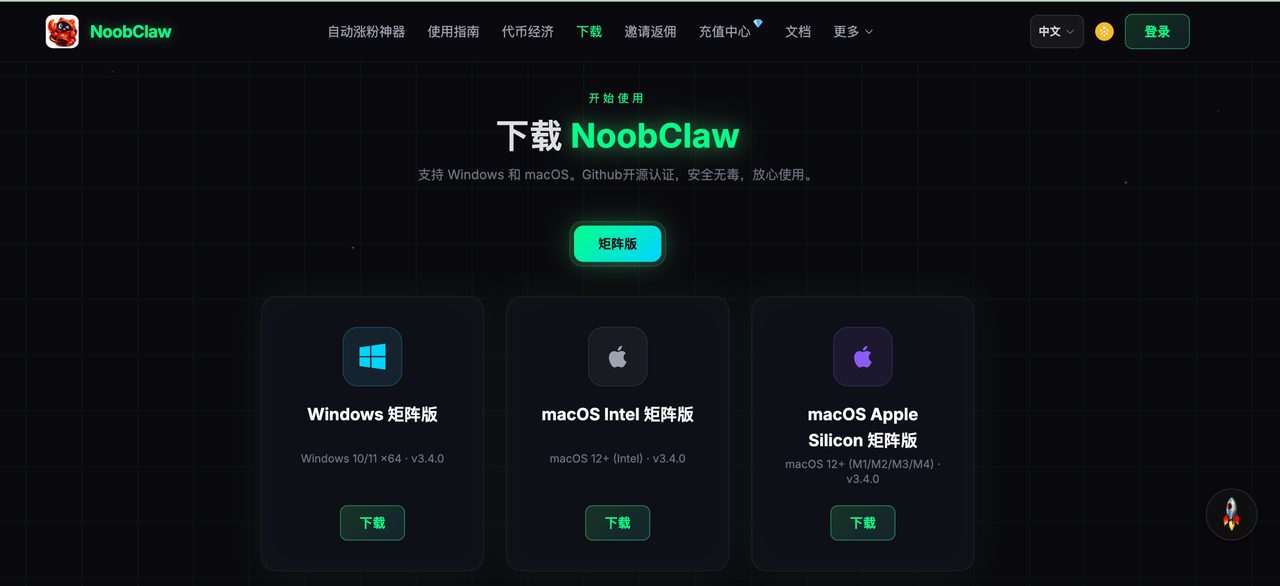
That is the category NoobClaw sits in — accounts run locally in isolated browser profiles under your own logins, each generating against its own niche and persona, with randomised pacing rather than clockwork scheduling. It is not a cheaper Hootsuite; it is a different axis, and worth understanding as such rather than as a like-for-like swap.
FAQ
Can I negotiate Hootsuite pricing?
Enterprise contracts are negotiable; published SMB tiers generally are not. Given that enterprise pricing stayed flat while SMB rose sharply, the leverage is clearly concentrated at the top of the market. Annual billing is the main discount available to smaller customers.
Is Hootsuite still worth it at $99?
For a team that needs approvals, role permissions, and client-facing reporting, yes — that infrastructure is genuinely hard to replace at $12/month, and the cheap alternatives are thin there. For a solo creator using it as a scheduler, you are paying for a governance layer you never open.
What is the actual cheapest path for one person, few accounts?
Buffer's free tier covers 3 channels, and Essentials at $5/channel is hard to beat for straightforward scheduling. Only move up when you hit a specific wall you can name — "it feels limited" is not a wall, "I cannot schedule carousels" is.
Should I switch mid-contract?
Rarely worth it. Annual plans are usually non-refundable, so switching early means paying twice for overlapping months. The better play is to pick your replacement now, run it in parallel on a free tier for a few weeks to confirm it actually fits, and cut over cleanly at renewal. That also gives you time to export your queue and history before you lose access.
The short version
A 67% increase aimed at small customers is a message about who a product is for. That is worth taking at face value rather than personally.
Before you shop for a replacement, name your bottleneck. If it is not scheduling, no scheduler at any price is going to fix it.