
Instagram Flag for Review: Should It Be On or Off? What Happens Either Way
- Instagram flags followers that show signs of spam, low quality or inactivity. With the setting on, those accounts need manual approval before following you, even on a public account.
- The setting lives under the profile menu in Follow and invite friends. Turning it off does not always stop filtering entirely, so periodic review is still worth doing.
- Being flagged is not a penalty against your account. It is a filter applied to accounts trying to follow you.
- Whether to leave it on comes down to one trade-off: a cleaner follower base that helps under 2026 quality-weighted distribution, versus friction that can block legitimate new followers.
Somewhere in your Instagram settings there is a list of accounts that tried to follow you and were held at the door. Most creators have never opened it. Some have never been told it exists.
It matters more in 2026 than it did in 2024, because the thing it filters — low-quality followers — stopped being harmless.
What the flag actually is
Instagram identifies accounts showing signs of spam, low quality or inactivity and marks them as flagged for review. With the review setting enabled, a flagged account cannot simply follow you: it lands in a queue and needs your approval, even if your profile is public.
Three clarifications, because this setting gets misread constantly:
Being flagged is about them, not you. It is a judgement about the account trying to follow you. It is not a penalty applied to your profile, it does not indicate a violation, and it does not affect your reach.
It applies to public accounts. This is the surprising part. Normally "public" means anyone can follow without approval. The review filter creates an exception for accounts the system distrusts.
Turning it off does not guarantee zero filtering. Reports consistently note that disabling automatic review does not always fully stop the filtering, which is why periodically checking the list and approving legitimate accounts is worth doing either way.
It is not a mark against you. It is a bouncer that Instagram put on your door without telling you.
Where to find it
Open your profile, tap the three horizontal lines in the top right, and go to Follow and invite friends. The automatic follower review control is in that section, along with the list of accounts currently held for approval.
When you open the list for the first time, read it before you act. It tells you something useful: the composition of what is trying to follow you. If it is full of accounts with no posts, generic usernames and thousands of followings, that is a picture of your inbound traffic quality. If it is full of accounts that look like real people in your niche, the filter is being over-cautious and you should approve them.
Do not bulk-approve without looking, and do not bulk-reject either. The list is small enough to scan, and the information in it is the actual value of the feature.
One thing to check while you are in there: whether the queue has been silently accumulating for months. Because the filter runs whether or not you look at it, accounts can sit unapproved indefinitely — which means some real people who tried to follow you never did. If you have never opened this list and you have been wondering why follower growth feels slower than your reach suggests it should be, that is worth ruling out before you go looking for algorithmic explanations.
Why this got more important in 2026
In a world where follower count is a display number, filtering followers is cosmetic. In 2026 it is not cosmetic, for two reasons.
Follower quality became a distribution input. Across platforms, engaged followers now carry weight that passive ones do not. Instagram's ranking leans on watch time, sends and saves; TikTok's testing pattern routes new videos to followers first, making cold followers actively counterproductive (see do followers matter on TikTok). A follower who will never interact is not neutral inventory anymore.
Meta demonstrated it takes this seriously. The May 2026 cleanup removed large numbers of accounts tied to click farms, growth services and coordinated inauthentic behaviour, with visible effects on follower counts. The review filter is the preventative version of the same policy: stop them at the door instead of removing them later. The aftermath is covered in the 2026 purge piece.
Put together: leaving the filter on means fewer accounts in your denominator that will never be in your numerator.
It is also worth noting what the filter is not. It does not stop the accounts it flags from viewing your public content, and it does not remove followers you already have. It only governs new follows. So it is a slow-acting tool: it improves the composition of your audience going forward, and does nothing about the composition you already have. If your existing base is the problem, the answer is activation — waking up real followers who stopped interacting — not filtering. That distinction is the same one that makes mass-unfollowing a bad idea, discussed in the buying followers piece.
Should you leave it on? The honest trade-off
There is a genuine cost, and articles that only list benefits are not being straight with you.
The case for leaving it on. Your follower base stays closer to real people, your engagement rate stays honest, you are less exposed to a future cleanup, and you get visibility into what is trying to follow you. For accounts that work with brands, the honest ratio is worth money.
The case for turning it off. Automated classification is imperfect. New accounts, accounts that lurk without posting, and people who use Instagram passively can all look "low quality" to a filter — and passive followers are still real humans who might buy something. If you are in a growth phase and every new follower counts, friction at the door is a real cost. It also adds a small recurring task, which multiplies if you run several accounts.
A reasonable default: leave it on and check the queue weekly. You get the filtering benefit and correct the false positives yourself. If the queue is consistently full of accounts that look legitimate, turn it off — the filter is not calibrated for your audience.
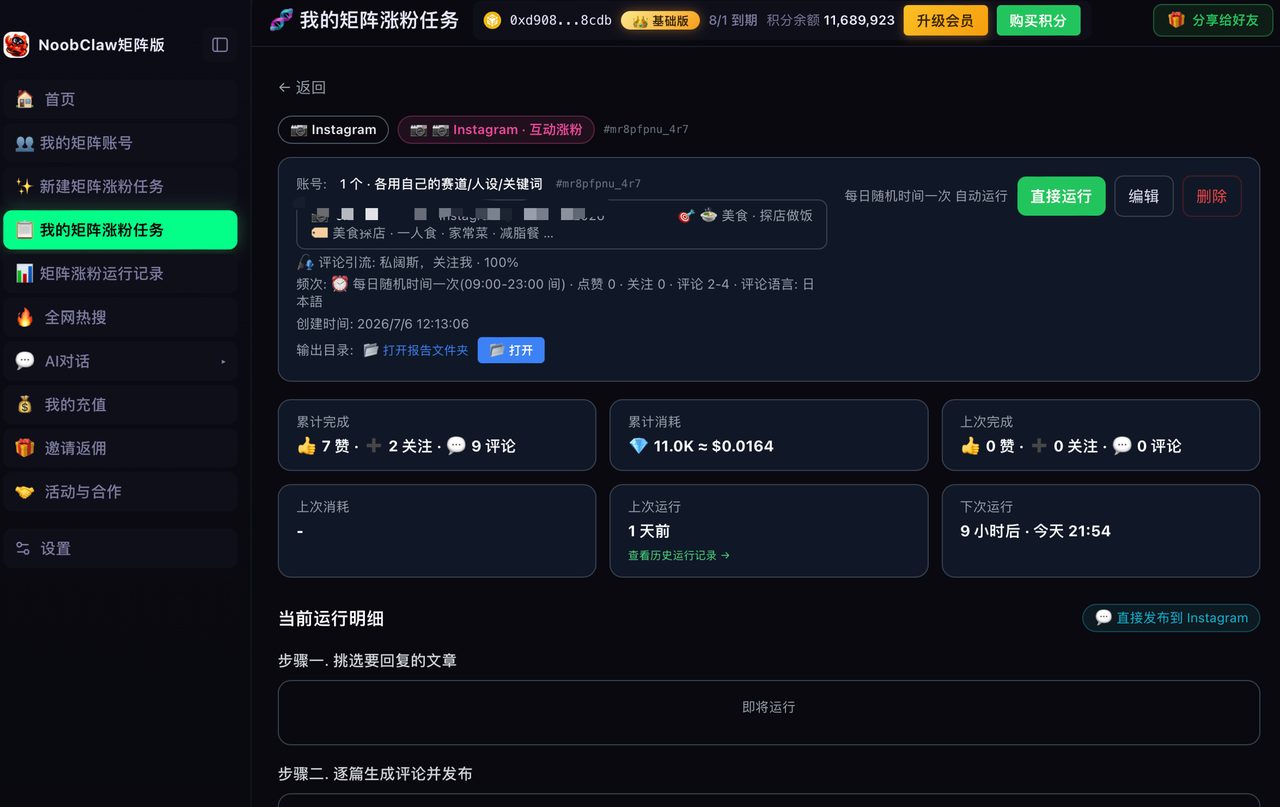
If you manage a portfolio of accounts, the weekly-check version stops being reasonable somewhere around the fifth account. Two practical options: turn review off on accounts where inbound quality is visibly fine and leave it on for the ones attracting spam, or fold the check into whatever routine already touches each account. Local-first tools like NoobClaw open each account in its own fingerprint browser profile with its own login session, which at least means checking five queues does not require logging in and out of five accounts in one browser — though the approving is still a human judgement call and should stay one.
FAQ
Does having flagged followers hurt my reach?
The flag itself is a judgement about the other account and does not penalise you. The indirect effect is real though: if large numbers of non-engaging accounts do follow you, your engagement rate falls, and engagement rate feeds distribution. That is the argument for filtering, not for panicking.
I turned the setting off and accounts are still being held. Is it broken?
No. Disabling automatic review is widely reported not to stop filtering completely — some screening continues regardless. The practical response is to check the list periodically and approve the accounts you want, rather than assuming the switch handles everything.
Should I go through and remove existing followers that look fake?
Generally no. There is no reliable evidence that manually removing inactive followers improves reach, a sudden large drop in follower count can itself look anomalous, and most bulk-removal tools require account access — which is the behaviour most likely to cause real problems. Filtering new followers at the door is low-risk; mass-purging existing ones is not.