
Platforms Do Not Ban AI Writing. They Ban Machines Doing the Social Part
- The pattern across platforms: what gets flagged is not AI-written text, it is machine-performed social actions and frequency.
- X reportedly permits solutions that automatically broadcast helpful information in posts, but prohibits automated replies based on keyword searches alone — and OAuth consent alone is not sufficient co
- Meta's Platform Terms reportedly contain no anti-automation clause. The limit lives in Community Standards, on frequency, applied identically to manual and automated activity.
- Caveat you should carry: these are compiled from a third-party roundup. X's own automation rules page returned 403 on our verification attempt, so read the source policies yourself before building any
Ask ten creators what gets an automated account banned and nine will say "using AI to write the posts." That answer is almost exactly backwards.
Read what the platforms actually restrict and a different line appears — and it runs through the middle of the workflows most people are building.
A caveat, up front and unhidden
What follows is compiled from a third-party roundup of platform policies. We tried to verify X's automation rules against its own help page and received a 403. So the quotes below are second-hand.
That is not a reason to ignore them — the language matches what has long been in X's automation policy — but it is a reason to read the primary sources before you build a system on them. Policies change, and a compilation is a snapshot of somebody else's reading.
X: publishing is fine, replying is where it breaks
X reportedly updated its automation rules in April 2026. Three provisions are worth knowing:
- Publishing is permitted. The policy language allows you to "build solutions that automatically broadcast helpful information in posts."
- Keyword-triggered replies are not. "Sending automated replies to posts based on keyword searches alone is not permitted."
- OAuth is not consent. Granting an app access "does not by itself constitute sufficient consent to take automated actions."
You may automate the megaphone. You may not automate the conversation. That is the entire distinction, and it does not care who wrote the words.
Notice what is absent from all three: any restriction on how the text was produced. Writing your posts with Claude or GPT is not the regulated activity. The regulated activity is a machine deciding, on its own, to talk to a specific stranger.
Meta: no anti-bot clause at all — it measures speed instead

This one surprises people. Meta's Platform Terms reportedly do not enumerate bots, programmatic posting, or agents as prohibited. The constraint lives elsewhere — in Community Standards, which prohibit "posting, sharing, engaging with content or creating accounts...at very high frequencies."
And critically: that applies to manual or automated activity alike. Meta is not asking whether a human or a script did it. It is measuring the rate.
Which reframes the whole compliance question. On Meta you do not become safe by doing things by hand. You become safe by doing things at a human pace — and a human clicking very fast is in the same category as a script.
For the other two:
- TikTok's constraints are procedural rather than prohibitive: unaudited clients can only post privately, rate limits are reported at around 6 requests per minute per token, with error codes like <code>spam_risk_too_many_posts</code> and daily caps reported around 15 posts per day.
- LinkedIn is the strictest on engagement — Section 8.2 prohibits bots or unauthorized automated methods to "like, share, or re-share posts, or otherwise drive inauthentic engagement" — while offering a sanctioned publishing API.
Two implications follow that are worth stating explicitly, because they cut against how most automation is designed.
The first: manual is not automatically safe. If the standard is frequency rather than mechanism, a person clicking follow two hundred times in an evening is in the same territory as a script doing it. Plenty of people believe they are being careful because they are doing it by hand.
The second: consent is a live question, not a checkbox. "OAuth does not by itself constitute sufficient consent" is a demanding standard — it means the person whose account is acting needs to understand and agree to what will happen, in specific terms, and be able to withdraw. Any tool that treats a one-time authorization as blanket permission to act indefinitely is on the wrong side of that sentence.
What this means if you are building an automated workflow
Put the four together and the design constraints are not the ones most tutorials optimize for:
- Generating text with AI is not the risk surface. Disclose where platforms require it, keep a human editorial pass, and move on. This has been the consistent finding since we looked at whether platforms still promote AI content.
- Automated engagement is the risk surface. Keyword-triggered replies, mass following, bulk liking — this is what the rules name explicitly, on the platforms that name anything.
- Pacing is a first-class variable, not a nicety. Meta measures frequency directly. Anything that fires in tight, regular intervals is the pattern being described.
- Credential handover is its own category of risk. Related but separate: the account-level penalties documented elsewhere tend to target patterns pointing clearly at the account owner — including handing credentials to third-party growth services. See the follower-buying piece.
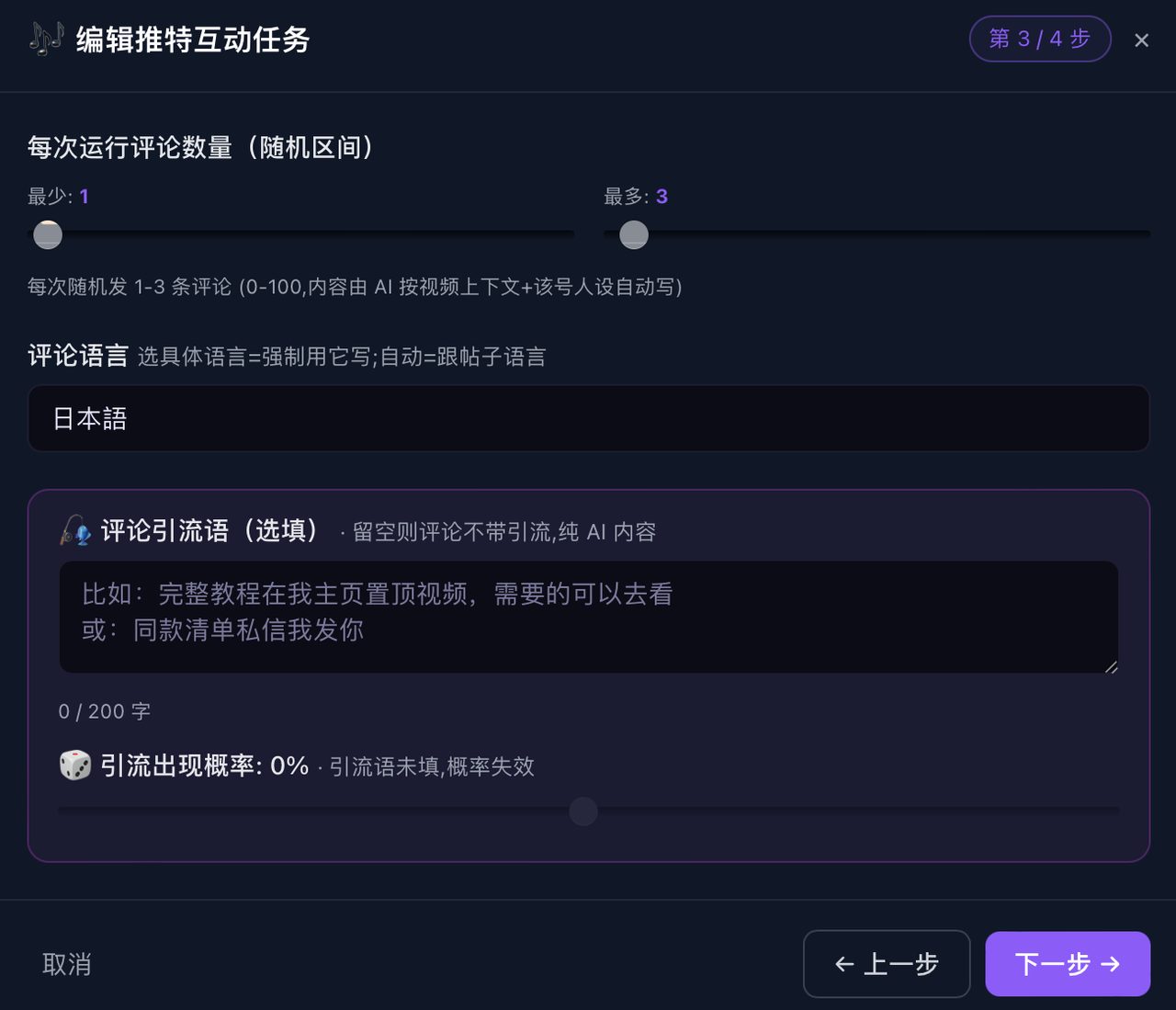
This is, candidly, why NoobClaw is built the way it is. Actions run in a local fingerprint browser on your own machine, logged into your own accounts — you never hand over credentials — and every quota is a randomized range rather than a fixed interval, with comment spacing measured in tens of seconds rather than milliseconds. Not because randomization is clever, but because pacing and credential custody are the two things the rules actually measure. Any tool that gets those wrong has a compliance problem no amount of better writing fixes.
For the adjacent question of what AI agents can technically reach, see can AI agents post to social media.
It is worth noticing what this framing does to the "is automation allowed" question that people keep asking in the abstract. There is no general answer, because the platforms are not regulating a general thing. They are regulating specific actions at specific rates, and each one draws its own boundary: X separates broadcasting from replying, Meta ignores the distinction entirely and measures pace, TikTok governs through API mechanics, LinkedIn names engagement explicitly. A workflow that is entirely compliant on one of these can be squarely offside on another, using identical code. Which means the only workable habit is to check the specific action against the specific platform — and to be suspicious of any tool, ours included, that answers "is this allowed?" with a single yes.
FAQ
So can I have an AI reply to comments on my own posts?
Replying to people who engaged with your own content is a different situation from X's prohibited case, which describes automated replies to strangers' posts found via keyword search. But treat "different" as "less clearly prohibited," not "explicitly allowed" — and note LinkedIn's language is broader. Check the specific platform's terms rather than generalizing from X.
Does disclosing that a bot runs the account make it compliant?
Disclosure addresses a different requirement — labeling, which several platforms and the EU AI Act's transparency rules impose. It does not exempt you from automation rules or frequency limits. These are separate obligations that stack rather than substitute.
How current are these rules?
The compilation is dated 2026 and we recorded it on 2026-08-16, but we could not verify X's page directly (403). Platform terms change without announcement. If you are building something that depends on this, read the primary policy pages yourself and re-check them periodically — that is not boilerplate caution, it is the difference between a compliant system and one that was compliant last quarter.