
X Shipped an Official MCP Server. Here Is What It Changes and What It Does Not
- X launched an official hosted MCP server on June 30, 2026, reported to expose over 200 API endpoints to MCP clients including Claude, Cursor and Grok.
- This is the second major social platform to ship an official MCP after Buffer in May 2026, and it puts X alongside GitHub, Slack, Notion and Stripe in the official-MCP tier.
- What it changes: connecting an AI assistant to X is no longer a DIY integration project. What it does not change: your API tier still governs what you can call and how often.
- MCP solves the interface problem, not the permission problem. An assistant with perfect access is still bounded by rate limits and by what the platform allows an account to do.
In May 2026, Buffer shipped an official MCP server and it read as a curiosity — one scheduling tool making itself addressable by AI assistants.
On June 30, 2026, X shipped one too. Reportedly exposing over 200 API endpoints to MCP clients including Claude, Cursor and Grok. That is a different kind of event: not a tool wrapping itself for AI, but a platform doing it.
(One sourcing note: the endpoint count comes from press coverage rather than a page we could verify directly, so treat the specific number as reported rather than confirmed.)
What an official platform MCP actually gives you
Before this, connecting an AI assistant to X meant building an integration: register an app, handle OAuth, wrap the endpoints you needed, manage tokens, maintain it when things changed. Every person doing it built roughly the same thing, badly, in isolation.
An official MCP server collapses that into a connection. The platform maintains the surface, the client speaks a standard protocol, and the endpoints are exposed in a form an assistant can discover and call without a custom adapter per capability.
Three consequences worth naming:
The integration tax goes to roughly zero. The weekend of plumbing that used to gate "can my assistant read my mentions" is gone.
Breadth arrives at once. A DIY integration covers the handful of endpoints you bothered to wrap. An official server exposes the platform's surface, so capabilities you did not think to build are simply present.
It is maintained by the party that changes the API. The most tedious failure mode of DIY integrations — silent breakage after an API change — becomes the platform's problem.
X joined GitHub, Slack, Notion, Stripe and Salesforce in shipping an official MCP. Social platforms are now in the same category as developer infrastructure.
What it does not change
This is the part that decides whether the announcement matters for you, and it is the part the launch coverage skipped.
Your API tier still governs everything. MCP is a protocol for exposing an API. It is not an exemption from that API's access tiers, rate limits or pricing. If your tier permits a limited number of posts or reads per window, an MCP client hits exactly the same ceiling — it just hits it more conveniently. This is the same catch we flagged with Buffer's MCP, where the plan tier determined the AI agent's request budget (see the Buffer MCP piece).
The endpoint surface is not the same as the product surface. APIs expose what the platform chose to expose. Actions available in the app are not automatically available through the API, and the gap tends to sit exactly where the interesting automation is.
Nothing about MCP changes what an account is allowed to do. Platform rules on automated behaviour, spam and engagement patterns apply identically whether an action came from a browser or an assistant. An assistant with excellent access and a bad posting cadence is still an account behaving badly.
Which brings back the framing that has held since Buffer's launch: connection was never the hard part. Permission is. That argument is developed in can AI agents post to social media.
Who this is actually for
Three profiles, three honest answers.
Developers and technical operators. Clearly worth it. If you were going to build against the X API anyway, an official MCP removes a layer of work and gives your assistant a coherent view of the platform. This is the population the launch was for.
Single-account creators. Marginal. The bottleneck on one X account is deciding what is worth saying, and MCP does not touch that. It can help with reading — pulling your mentions, summarising a thread, checking what performed — which is real but modest.
Multi-account operators. The most nuanced case. MCP gives an assistant a clean path to one authenticated context. Running many accounts through one API integration raises a separate question that has nothing to do with protocol design: platforms scrutinise multiple accounts operated from one place, and API-mediated operation is a very legible place. It is the same underlying issue as behavioural correlation across accounts, documented most thoroughly on Reddit (see behavioural fingerprinting).
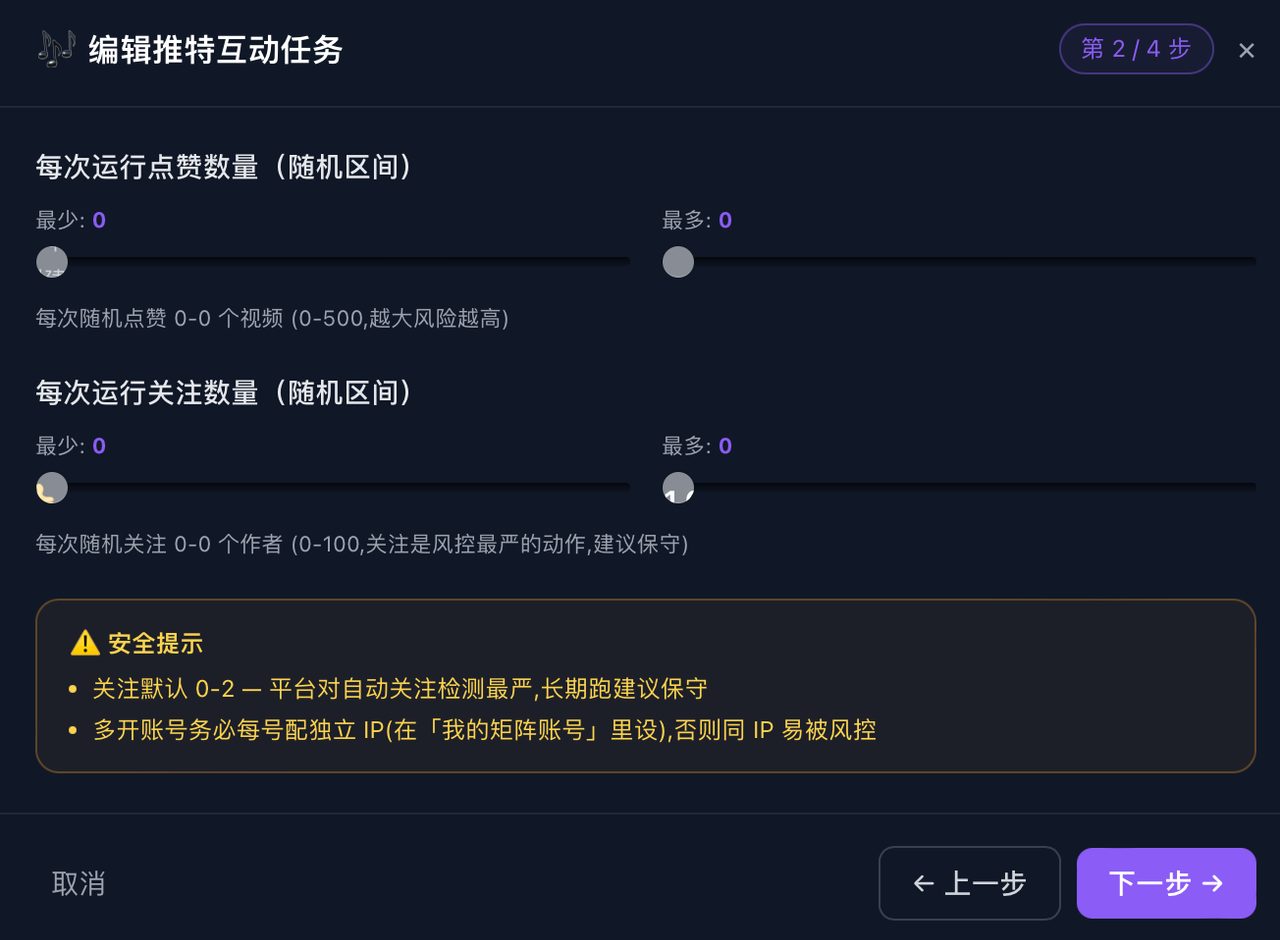
This is the structural reason the local-browser approach exists alongside the API approach. Tools like NoobClaw run each account in its own fingerprint browser profile on your own machine, using the session you logged in with — the account behaves like a person using a browser because that is literally what is happening, and no credentials leave your machine. The trade-off is real and worth stating plainly: browser automation is more fragile than an API and slower to adapt when interfaces change. API-mediated and browser-mediated automation are different tools with different failure modes, and X shipping an MCP makes the API side considerably more attractive for the cases it fits.
What to verify before you build on it
Four checks, in the order that will save you the most wasted work.
Confirm the access tier you need and what it costs. This is where enthusiasm most often meets an unwelcome number. Establish the tier, the rate limits and the price before you design a workflow around any of it, because the design changes completely depending on whether you can make a hundred calls a day or a hundred thousand.
Check that the specific actions you want are exposed. "200+ endpoints" is a headline, not a guarantee that your particular action is among them. List the three or four things you actually want an assistant to do and verify each one individually.
Decide what the assistant is allowed to do unsupervised. Reading is low-risk. Drafting is low-risk. Publishing without review is where automation projects generate their worst outcomes, and it is worth having an explicit answer rather than discovering yours by accident. Most production-grade setups keep a human approval gate on anything that posts publicly.
Understand that convenience raises volume, and volume is what gets noticed. The failure mode with a frictionless interface is not that any individual action is problematic — it is that removing friction makes it easy to do far more of something than a person would, and machine-uniform volume is exactly the pattern platforms watch for. That risk is created by how you use it, not by the protocol.
FAQ
Do I need a paid X API tier to use the MCP server?
Access to the underlying API is governed by X's tiers, and the MCP server is a way of reaching that API rather than a separate free channel. Check X's current developer pricing before planning around it — this is the single most likely place for the announcement's excitement to meet an unwelcome number.
Can I use it to run several accounts at once?
Technically the API supports authenticating as different accounts. Whether operating many accounts through one integration is wise is a different question, and it depends on X's rules for your use case plus how similar the resulting behaviour looks across accounts. Same-shaped activity across accounts is a recognisable pattern regardless of what produced it.
Is this better than using a scheduling tool's MCP?
They do different things. A platform MCP gives you the platform's own surface for one platform. A tool MCP (Buffer, and now several others) gives you that tool's capabilities across every platform it supports — broader coverage, narrower depth, and bounded by what the tool itself can do. Which is better depends entirely on whether you need depth on X or breadth across networks.