
AI Comment Bots: What They Actually Do, and the Three That Get Accounts Killed
- Three architectures sit behind "AI comment bot", and they carry completely different risk: API-based, cloud-browser, and local-browser. The label on the marketing page rarely tells you which you're bu
- The reliable failure signal is not the comment text — it is the rhythm. Fixed intervals, identical lengths and 24-hour activity are what get flagged, and better AI writing does not fix any of them.
- Anything that asks for your username and password is a category to avoid outright, regardless of how good the output looks.
- Commenting on other people's content and replying to your own audience are different jobs with different risk profiles, and tools that blur them are a bad sign.
Search "ai comment bot" and the autocomplete splits by platform — Instagram, TikTok, Reddit, X, YouTube — as if these were five versions of the same product.
They're not. Underneath the identical marketing pages sit three genuinely different architectures, and the difference between them decides whether you're taking a manageable risk or handing over your accounts.
This is a category breakdown, not a ranking. The goal is that you can look at any tool and work out which kind it is.
The three architectures
| API-based | Cloud browser | Local browser | |
|---|---|---|---|
| How it acts | Official developer API | Vendor's servers drive a browser | Browser on your own machine |
| Credentials | OAuth token | Often your password | You log in yourself |
| Where traffic comes from | Vendor's servers (declared) | Vendor's datacentre IPs | Your IP / your proxy |
| Main risk | Rate limits, narrow scope | Shared infrastructure fingerprints | Your own pacing mistakes |
| Platform coverage | Reddit, X, LinkedIn (partial) | Anything, in theory | Anything you can log into |
API-based is the cleanest where it's available, because you're using a sanctioned path. Reddit's API is the strongest example. The limitation is scope: most consumer platforms simply don't expose commenting to third parties, so "we use the official API" often means "for one of the five platforms we advertise."
Cloud browser is where most of the risk concentrates. Your actions originate from the vendor's infrastructure, alongside every other customer's. When a platform associates a range of datacentre addresses with automated behaviour, you inherit the consequences of strangers' usage. You did nothing wrong and there's nothing you can adjust.
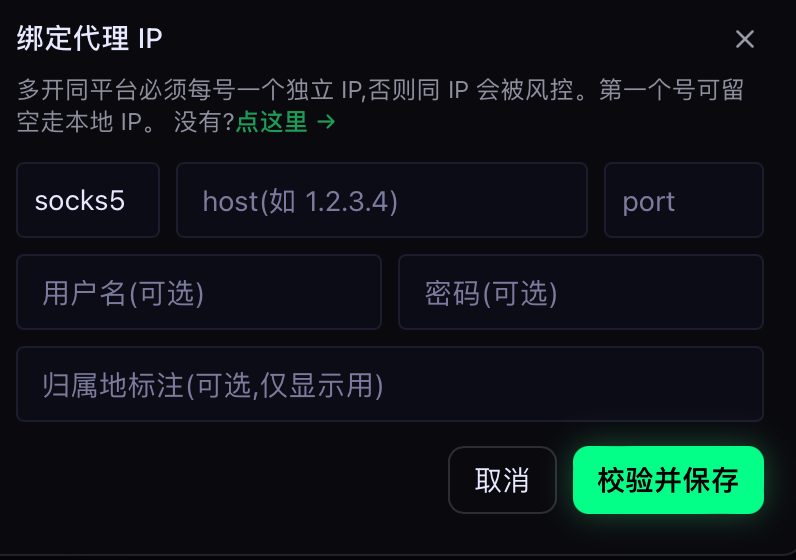
Local browser puts the traffic on your own connection and keeps credentials on your machine. The trade is that pacing is now your responsibility — which is fine, because pacing is the part that actually matters.
Ask one question before anything else: where does the click physically happen? Everything else about a comment tool follows from that answer.
The three patterns that get accounts flagged
Here's the counterintuitive part, and it's the reason most buyers evaluate these tools on the wrong axis.
Detection rarely starts with the text. Platforms have limited appetite for judging whether a comment was written by a person. What they can measure precisely, cheaply and at scale is rhythm. So that's what gets measured.
1. Fixed intervals
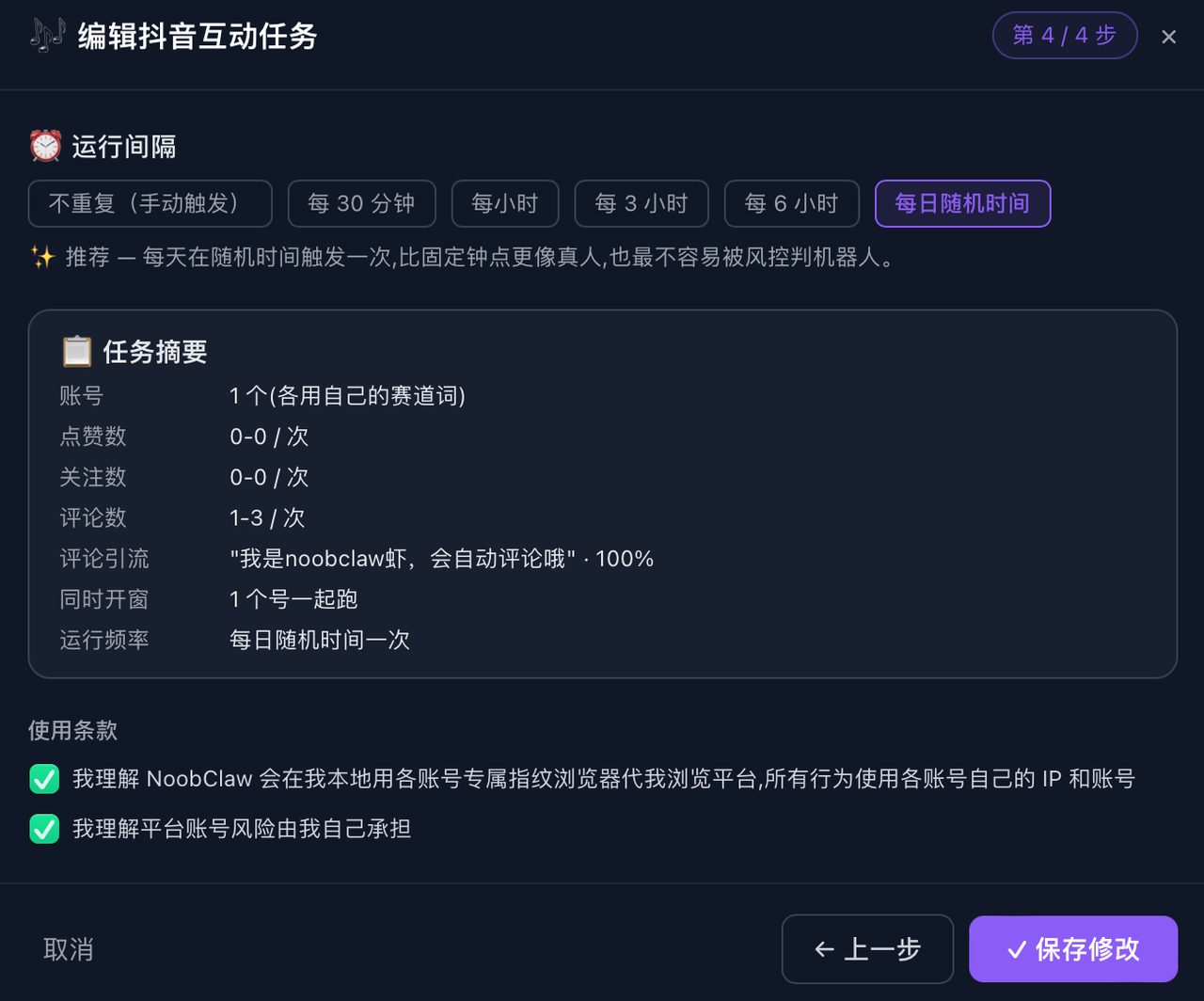
A comment every 45 seconds, all day. No human does this. It's the single most legible automation signal there is, and no amount of AI writing quality obscures it. Real intervals are irregular — sometimes 20 seconds, sometimes four minutes, sometimes a gap because someone got up.
2. Uniform output shape
Every comment 12–15 words. Every one ending in a question. Every one structurally identical even though the words differ. Real people write a two-word reply and then a paragraph. Variance in shape matters as much as variance in content.
3. Round-the-clock activity
Accounts that comment at 3am, 9am and 3pm at consistent volume are declaring that nobody sleeps behind them. Human activity has a shape over 24 hours — and it's a shape platforms can see.
All three are about timing, not language. Which means a tool with mediocre AI writing and good pacing survives longer than a tool with brilliant writing that fires on a cron job. If a vendor's marketing is entirely about output quality and says nothing about pacing, they've optimised the wrong variable.
Two different jobs that get sold as one
Worth separating, because the risk profiles are not comparable.
Commenting on other people's content — reaching new audiences by appearing under posts in your niche. You're a stranger arriving; the platform is watching for exactly this pattern because it's what spam does. Higher risk, and it's where volume ambitions cause damage.
Replying to your own audience — answering comments on your own posts. Structurally different: expected behaviour, on your own content, with people who chose to engage. Much lower risk, and arguably higher value, since it feeds engagement signals on content you already own.
A tool that treats these as one feature with one setting hasn't thought about it. In our own product the second is a separate module with its own constraints — it reads follower comments inside the creator dashboard, writes per-account replies in that account's voice, skips anything already answered, spaces sends by an irregular interval, and never comments on the post itself. That's not a feature list so much as an admission that the two jobs need different rules.
The questions to ask any vendor
- "Do you need my password?" If yes, stop. There is no answer that makes this acceptable — we've written about why at length.
- "Where does the browser run?" Your machine or theirs. This determines whose IP reputation you're borrowing.
- "Are intervals randomised, and in what range?" A vendor who can't answer this precisely hasn't built for it.
- "What happens when one account fails?" Correct answer: that account is skipped and the rest continue. Wrong answer: the run stops, or worse, it retries in a loop.
- "Do different accounts produce different comments on the same post?" If five of your accounts post near-identical comments under one video, you've built a detectable cluster — the comments are the least of it.
Question five is where most multi-account setups actually break. It's the same issue we see in every category: identical output across accounts is a stronger signal than any single account's behaviour. The reach restrictions people call shadowbans frequently trace back to it.
When a comment tool is the wrong purchase entirely
Two cases.
If your content isn't landing yet. Comments bring people to your profile; what happens next depends on what's there. Driving traffic to a profile with nothing worth following converts nobody and burns the visibility. Fix the content first — commenting amplifies whatever already exists, including zero.
If you're buying it to fake social proof. Bot comments on your own posts to look busier is a different product with a different risk, and it's the one platforms have gotten decisively good at catching. It also poisons your own signals: engagement that never converts teaches the system your content underperforms.
FAQ
Are AI comment bots against platform rules?
It depends on the platform and the method, and the honest answer is that "automation" is not one category in any major policy. Some platforms sanction API-based activity while prohibiting browser automation; others restrict automated engagement generally. LinkedIn's position is a useful case study in how legal risk and account risk are enforced by completely different bodies — and only one of them can take your account.
Will a good AI comment bot get detected?
Assume any automation is detectable in principle and that what varies is whether it looks like a problem worth acting on. That reframes the goal usefully: you're not trying to be invisible, you're trying not to look like spam. Irregular pacing, varied output, and human-shaped daily activity do more for that than any writing model.
Instagram AI comment bot vs TikTok AI comment bot — is one safer?
The platform matters less than the architecture. The same tool running locally with randomised pacing behaves similarly on both; the same tool running from shared datacentre infrastructure carries similar risk on both. Pick on how it works, not on which logo is on the landing page.
One thing to take away: open whatever tool you're evaluating and find the interval setting. If it's a single fixed number rather than a range, you've learned more about that product in five seconds than the entire homepage told you.