Free AI Video Generators Without Watermarks: Limits and Costs
- Text generation is nearly free to serve; video generation is not even close. The watermark on free tiers is not meanness — it is the business model making expensive output traceable and upgrade-worthy
- "Free without watermark" therefore almost always means one of: a trial allowance, a heavily limited export (resolution/length), or a tool where video is assembled from stock clips rather than generate
- That third category is the honest loophole: assembly-based video (script + voiceover + stock footage + subtitles) is cheap enough to offer cleanly, and for talking-content formats it is usually what y
- Takeaway: a decision path — generate vs assemble — plus the four-line spec that gets usable video out of any tool, free or not.
Every list of "free AI video generators" ends the same way: you make the clip, you go to export, and there is the watermark — with an upgrade button where the download button should be. Search "without watermark" and you get another list of the same tools, reviewed more optimistically.
One piece of economics explains all of it, and once you see it, you can stop tool-hopping and route around the problem instead.
Why video is where free stops
We made this point about caption tools in free AI post generators: text is so cheap to generate that free tiers can be genuinely free forever. Video is the opposite end of the scale — generating video burns orders of magnitude more compute per second of output than text does per paragraph. A free tier that exported clean, full-resolution generated video would be a charity.
So the watermark does two jobs at once: it makes the expensive output traceable (free tiers are where abuse lives), and it makes the upgrade legible — you got the capability for free; you pay to make it yours. Understanding this reframes the search: you are not looking for the one generous tool the others hid from you. You are looking for output cheap enough that clean export is rational to give away. That exists — it is just a different kind of tool.
The watermark is not on the video. It is on the compute bill.
What "free without watermark" actually resolves to
Every genuine instance falls into one of three buckets — knowing which one you are looking at tells you the catch in advance:
- A trial allowance. A handful of clean credits to hook you. Fine for a one-off; not a workflow. The catch arrives on video eleven.
- A crippled export. No watermark, but 720p-or-less, short caps, or no commercial use. Read the export screen before you invest an evening.
- Assembly instead of generation. The tool does not dream up frames — it writes a script, synthesises a voiceover, pulls licensed stock footage or your own media, and cuts it together with subtitles. Because the per-video compute is modest, clean export is economically sane to offer. This is the honest loophole.
Generate or assemble: the decision that beats tool-hopping
The question that actually routes you is not "which tool" but "does anything in this video need to be imagined?"
- Yes — impossible shots, characters, worlds. You need true generation, it is expensive, and clean output will cost money somewhere: accept a trial, a paid tier, or a per-second price. No free lunch exists here, only free samples.
- No — you are explaining, listing, reacting, narrating. The overwhelming majority of social video: tips, product talk, news reaction, top-fives, story time. Assembly covers all of it — script, voice, footage, subtitles — and does it without the watermark tax, because nothing needed imagining.
Most people searching this keyword are in the second group without realising it, paying (in watermarks and frustration) for generation they do not need. The comparison shopping that actually matters for them is between assembly pipelines, not between generation models — a distinction we also draw in best AI video generator for TikTok and choosing an AI UGC video generator.
The four-line spec that fixes output quality everywhere
Watermark aside, most disappointment with these tools is under-specification — same disease as caption generators, same cure. Before generating, pin down:
- Audience and platform: "for TikTok, people who trade crypto casually" beats "make a video about crypto".
- The one takeaway: a single sentence the viewer should retain. Multi-point videos are how AI output turns to mush.
- Tone and pace: two adjectives and a length cap ("dry, fast, under 40 seconds").
- The don'ts: no emoji subtitles, no stock-footage handshakes, no "in today's video".
Four lines, any tool, visibly better output — and on assembly tools it also slashes the regeneration loop, which is where free credits actually go to die.
The other free lever nobody prices in: your own footage
One more route deserves naming, because it beats both buckets on quality and costs nothing at export: assembly over your own media. The phone in your pocket has hours of b-roll on it — your desk, your commute, your product, your screen recordings. An assembly pipeline that cuts AI script and voiceover over your footage instead of stock produces something no generation model can: video that looks specifically like you, with zero licensing questions and zero watermark, because every frame was already yours.
This flips the usual quality hierarchy. People assume generated > stock > "just my camera roll", but for trust-based formats — product talk, tutorials, personal brand — it runs exactly backwards: recognisable real footage outperforms both, and the AI's job shrinks to the parts it is genuinely good at (script, voice, subtitles, pacing). If your camera roll is empty, stock assembly remains the free path; but check the roll first.
Where this lands in practice
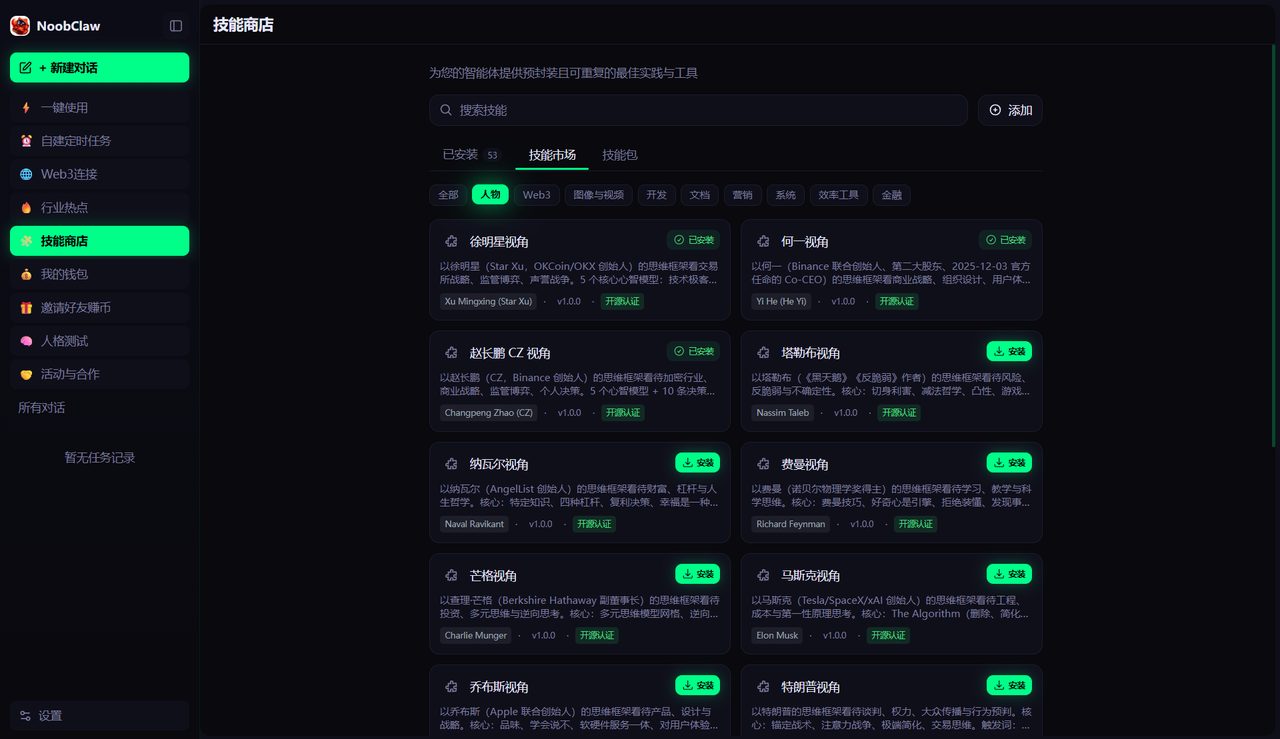
NoobClaw sits squarely in the assembly camp, so it is fair to say exactly what that means: its video engines write the script, synthesise the voiceover (dual-engine), pull visuals from licensed stock or your own local footage, burn subtitles, add BGM, and publish — with no watermark at any tier, because assembly economics do not need one. Billing is per-video/per-material, not a monthly seat. It also has a true generation engine (cinematic AI, priced per second) for the cases that genuinely need imagining — the honest split described above, priced like it. Everything runs on your own machine, publishing through your own logged-in accounts; current prices live in the app, not in this article.
FAQ
Can I just crop or blur the watermark off a free AI video?
Corner watermarks tempt the crop, but you lose framing, and many tools stamp centre-field or moving marks precisely to prevent this. More to the point, removing a tool's watermark generally violates its terms — the watermark is the licence condition of the free tier. Route around it with assembly tools instead of fighting it.
Are watermark-free "cracked" or mirror versions of AI tools safe?
No — treat them as malware distribution with a video feature. They also solve nothing long-term: the compute still costs someone money, so these mirrors rot, rate-limit, or harvest whatever they can from you. The legitimate free path is assembly-based tooling; use it.
Is AI-assembled video treated differently by platforms than AI-generated video?
Labelling rules vary by platform and jurisdiction, and several tightened through 2025–2026 — check the current requirements where you publish rather than assuming assembly is exempt. Voiceover synthesis in particular may trigger disclosure expectations even when every frame is real stock footage.