How Many X Accounts Can You Have? Rules and Account Checks
- X sits in a fourth category: multiple accounts are openly supported (the app has a built-in switcher), and no meaningful ownership cap is published.
- The real rules are behavioural: coordinated amplification — multiple accounts boosting the same content, circumventing suspensions, or faking consensus — is what gets networks of accounts actioned tog
- Identifiers still matter: each account needs its own email (or phone-based path), and accounts sharing recovery details are trivially linkable to each other.
- Takeaway: the four-platform constraint map completed, plus the three behaviours that turn a legitimate multi-account setup into a "network" in the platform's eyes.
If you have read our Instagram, YouTube and Facebook versions of this question, you already know each platform draws the line in a different place. X draws it in the most interesting place of all: almost nowhere on the count — and very firmly on the behaviour.
Where X sits on the four-platform map
The comparison is worth laying out, because X completes the picture:
- Instagram: a visible session queue (the switcher) plus a hard identifier rule — one email, one account. See how many Instagram accounts you can have.
- YouTube: identity is not the bottleneck at all — Brand Accounts let one Google account hold several channels. See how many YouTube channels you can have.
- Facebook: the outlier that genuinely polices the count — one personal account per person, as an identity requirement. See how many Facebook accounts one person can have.
- X: multiple accounts are openly supported — the app ships with an account switcher, and running a personal account alongside a project or brand account is normal, documented use. What the rules police instead is what the accounts do together.
Numbers do circulate — "five in the app switcher", "ten per phone number" — but these are third-party reports of app behaviour and legacy limits rather than help-centre policy, so treat them as "what the app currently tolerates" and check yours.

The rule that actually bites: coordination
X's platform-manipulation rules are aimed at a specific shape: multiple accounts operated to amplify the same thing, fake independent agreement, or evade an enforcement action. The classic tripwires:
- Cross-amplification. Your accounts retweeting, liking and replying to each other's posts to simulate organic traction. This is the most common way legitimate setups drift into violation territory — it feels harmless, and it is precisely the pattern the rules name.
- Duplicate posting. The same or substantially similar content pushed from several accounts, which reads as one operation wearing several masks.
- Ban evasion. Using account two to continue what account one was suspended for. This is the behaviour most reliably enforced across the whole network of linked accounts, not just the new one.
On X, five accounts doing five different things is a portfolio. Five accounts doing the same thing is a network — and networks get actioned as a unit.
Which leads to the practical inversion most people miss: the safety of a multi-account setup on X depends on how little the accounts have to do with each other. Different topics, different audiences, different content. The moment they start working as a team on the same material, the count you were worried about becomes the least of it.
Identifiers: looser than Instagram, but linkage still counts
Each account needs its own email address (or a phone-based signup path), and the practical email-uniqueness logic works the same way it does everywhere: one address, one account, and recovery paths you genuinely control. Widely-reported legacy limits allow one phone number to verify several accounts — but note the flip side: shared recovery details are exactly how accounts get linked to each other when one of them attracts enforcement.
So the identifier plan for X is less about "can I register" (you usually can) and more about blast radius: if the accounts matter independently, give them independent identifiers, so one account's problem does not become everyone's problem.
Why X's line is drawn there (and what it predicts)
The behavioural line is not arbitrary, and understanding the logic makes the rules easy to predict instead of memorise. X's feed is a consensus machine: what spreads is what appears to be independently endorsed by many people. Multiple accounts under one hand are harmless to that machine right up until they pretend independence — at which point they are counterfeiting the exact signal the platform sells. That is why a personal account plus a brand account is documented, normal use, while three anonymous accounts boosting one link is a named violation: the count is identical; the counterfeit is not.
This also predicts the edge cases people ask about. Quoting your own brand account from your personal one, visibly, under your own name? Transparent — the association is declared, nothing is counterfeited. The same quote from an account pretending to be an unrelated fan? That is the violation, regardless of how few accounts are involved. When you are unsure which side of the line something falls on, ask the counterfeit question: would this look different to a viewer if they knew one person ran both accounts? If yes, do not do it.
Running several X accounts without drifting into "network"
- Give each account a lane and keep it there. A crypto commentary account, a build-in-public account and a meme account can coexist forever. Three accounts all pushing the same links cannot.
- Never use them on each other. No self-retweets across accounts, no reply chains between your own identities. If a post deserves amplification, it earns it or you pay for it — routing it through your own accounts is the named violation.
- Desynchronise the rhythm. Accounts that all post at the same minute, follow the same accounts in the same order, and go quiet at the same hours are trivially clusterable — no content analysis required.
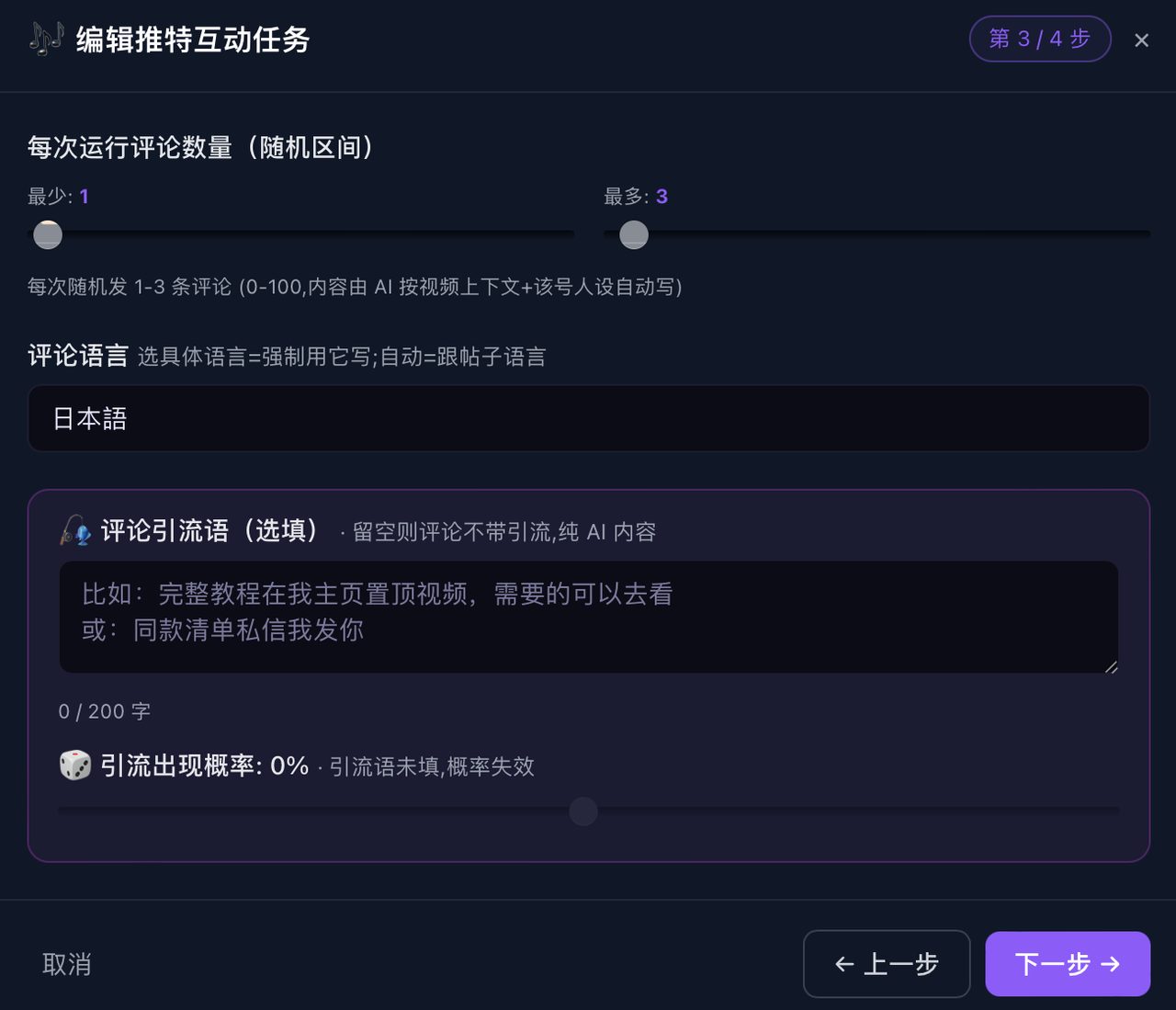
That third point is an infrastructure problem as much as a discipline problem, and it is where tooling either helps or actively hurts. NoobClaw approaches it the only way we think is defensible: it runs on your own machine, each account signs in inside its own fingerprint browser profile (no passwords handed to a server), each account generates its own content from its own niche, persona and keywords — including a web3 news commentary mode for X — and actions run on randomised intervals rather than a shared clock. It is built to keep accounts independent, not to coordinate them; a tool that offers to cross-boost your accounts is selling you the violation, packaged. Our long-run field notes on exactly this are in running six X accounts for 90 days.
FAQ
How many X accounts can you have with one email?
One account per email address — the uniqueness rule works the same as on other platforms. Each additional account needs its own address, and keeping recovery details separate also keeps the accounts from being trivially linked to each other.
Can I run a personal account and a brand account on X?
Yes — this is ordinary, supported use, and the app switcher exists for exactly this. The line is behavioural: the trouble starts when your accounts start amplifying each other or pushing identical content, not when the second account is created.
Will X ban all my accounts if one gets suspended?
If the suspension is for platform manipulation, or you use another account to continue the suspended activity, enforcement across linked accounts is the documented pattern. Accounts with genuinely separate purposes, identifiers and behaviour have much less linkage surface. This is the strongest argument for keeping them truly independent from day one.