How to Build an X Audience With Useful Content
- Explain one relevant question with an original example and a verifiable fact.
- Use preparation tools for a defined deliverable; verify publication separately.
- Followers, impressions, clicks, inquiries and sales are different observations.
A practical plan for building an X audience starts with a reason for the right reader to follow: useful explanations that answer a recurring question and make their sources clear. Preparing more posts is not evidence that the audience will grow. This article offers an editorial framework, with hypothetical examples, rather than a recorded follower experiment. It has no evidence of three accounts lost in a week, an account-recovery mechanism or a lazy automation method that guarantees growth. Start with the content question, choose a permitted publishing method separately and keep the observed response at its actual scope.
Explain a real task clearly; keep audience results in their own record.
Give the intended reader a specific reason to follow
A hypothetical developer selling a content application might repeatedly answer how to turn an idea into an accepted draft. A useful first post could show the actual input, the local output and the review still required. That is more specific than a claim that the application saves time for everybody. Describe the reader and the problem before choosing a format. A broad topic such as AI is not yet an editorial brief.
Choose one point you can substantiate. If the product has a documented output, show the properties recorded for that output. If a limitation matters to the buyer, describe it with the example rather than hiding it in a footnote. An honest explanation can help the reader decide whether the product fits the intended task. It does not need a fabricated personal trial, a dramatic account story or a predicted commercial result to be concrete.
Keep an inventory of recurring questions from real sources you are entitled to use. Record where a question came from and avoid attributing a hypothetical question to a customer. Group similar questions by the decision they require, then prepare the best available answer. More variants of the same generic statement do not create more expertise. A question about output quality should lead to an example and review criteria; a question about a plan limit needs the current product offer.
Before publication, have an editor unfamiliar with the draft identify the main point and the evidence behind it. If the point is hard to find, revise the opening. If the evidence concerns a different task, narrow the claim. If the explanation requires a source that has not been read, leave that statement unresolved. These checks improve the content itself without promising a particular follower count or implying that editorial quality overrides the destination's conditions.
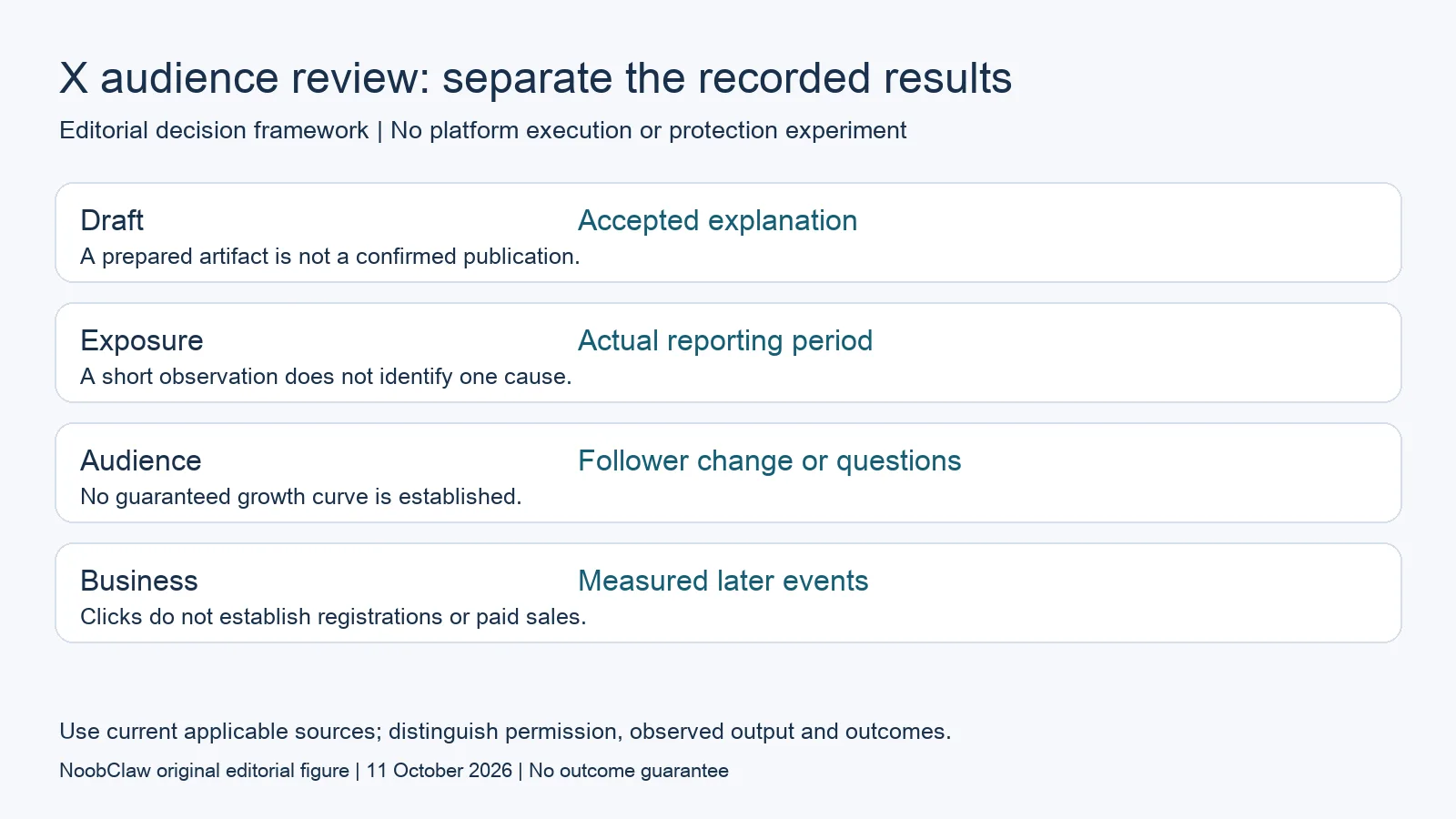
- Draft: Accepted explanation. A prepared artifact is not a confirmed publication.
- Exposure: Actual reporting period. A short observation does not identify one cause.
- Audience: Follower change or questions. No guaranteed growth curve is established.
- Business: Measured later events. Clicks do not establish registrations or paid sales.
Separate useful content preparation from account operations
The creation stage can include a brief, candidate wording, a sourced explanation and a local media draft. Each needs its own review. A tool can complete one of these tasks while leaving scheduling or publication unresolved. Choose it for the deliverable that is actually missing. Do not treat an account count, a browser-session label or an advertised natural pace as proof that an operation is approved or that readers will respond.
X's current automation rules prohibit non-API website automation and automated likes, and restrict bulk, aggressive or indiscriminate following. They distinguish permitted uses from prohibited behavior and apply other conditions to specific actions. Read the current requirements for the proposed operation. A slower setting does not replace that check. This framework makes no prediction about a particular penalty and offers no account restoration timetable.
For a hypothetical small team, content can be prepared while the publishing method is being verified. Keep the approved version with its source and reviewer, then confirm the later destination result separately. An upload response, a visible post and a report of audience response are different records. If an attempt has no confirmed result, describe it as unresolved. Do not count a prepared draft as a publication or a publication as a new customer.
Chrome profiles organize browser information such as settings, history and passwords; its documentation notes that a person with device access can switch profiles. That can help a team label work contexts, with limits. It does not demonstrate account protection or a distinct physical identity. Keep access ownership and operational approval visible instead of turning a convenience feature into an audience-growth or platform-permission claim.
Learn from observed response without inventing causality
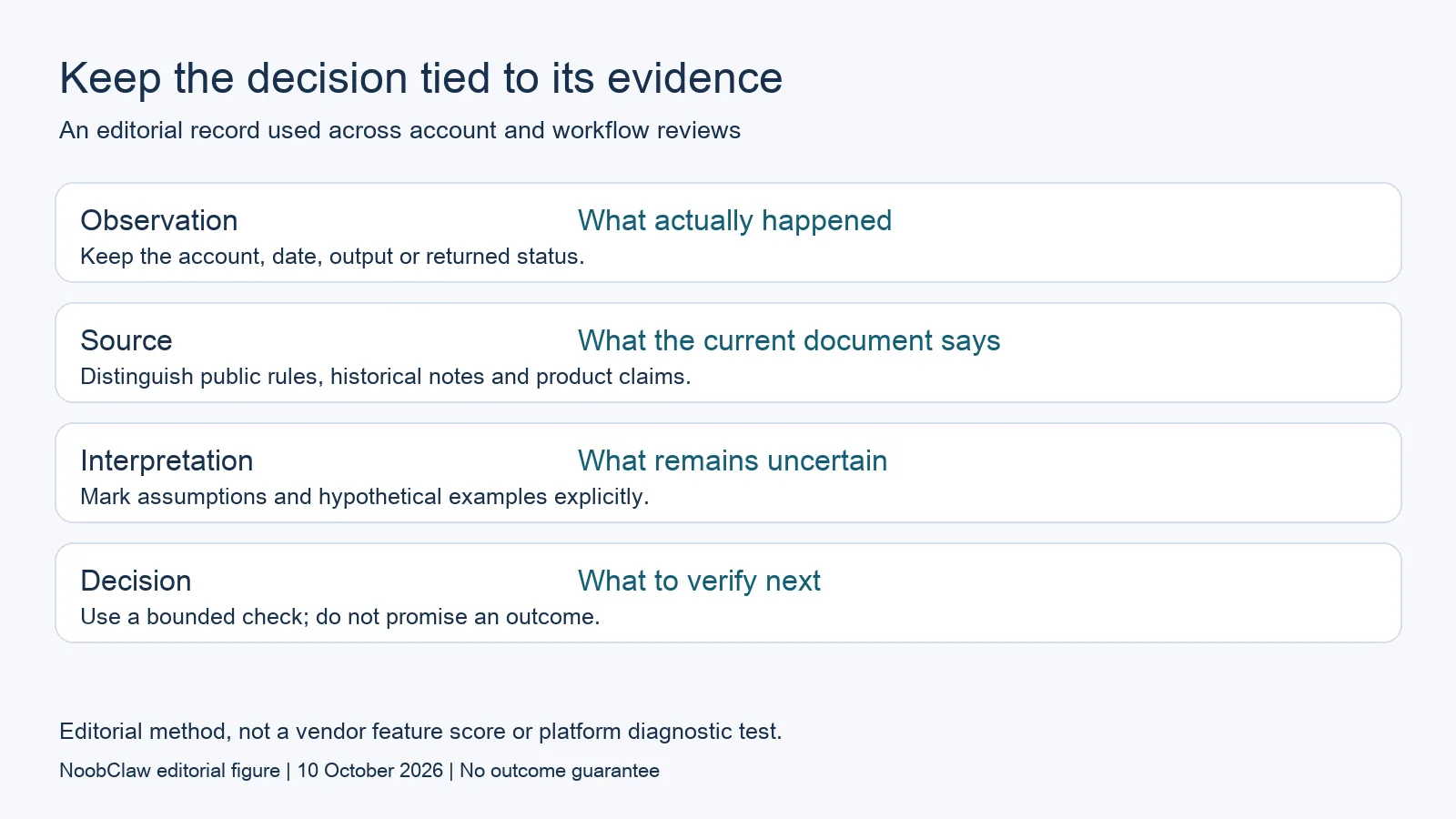
A hypothetical content review can record each accepted version, publication date and the question it addresses. Where actual measurements are available, preserve the period and sample. Look for useful reader questions as well as counts. A request for clarification may show that the explanation needs a better example. A silence over a short period does not identify a single cause. The next editorial action should follow the evidence you actually have.
Treat audience measures separately. Impressions describe exposure under the reporting system's definitions; a follower change describes a different outcome. A link click does not show that the reader registered, completed a task or paid. If those later events are not measured, say so. Do not construct a sales result from a click count. A content plan can still improve the answer while the business needs a separate, correctly configured measurement process.
For a hypothetical comparison between two introductions, keep the topic, audience and timing differences visible. A higher response on one post does not isolate the opening's effect. Different followers, distribution conditions and competing posts can change what happens. Describe the comparison as an observation unless the design actually supports a stronger conclusion. A precise-looking average based on undocumented follower gains is not a substitute for a record.
Use the review to choose the next missing explanation. If readers ask about output quality, improve the example. If they ask about supported workflows, publish the current conditions and boundaries. If the claimed task has not been demonstrated, request a relevant record before asserting it works. This is a practical way to make the content more useful. It does not establish a guaranteed growth curve, a recovery mechanism or a promise that a content tool independently causes a commercial return.
For the related content and workflow decisions, read AI Content Generation for Social Media: Drafts to Video and TikTok Caption vs Hook vs Script: Choose the Right Draft. Each review has its own evidence and scope.
A concrete example can support an explanation without proving growth
NoobClaw publishes this article and sells content tools. Its public execution record shows one supplied 441-character script producing a 32.6-second local MP4 at 1080 by 1920 and 30 frames per second. It records sampled subtitle checks and limitations: some stock visuals did not closely fit the meaning, and full audio and visual review remained necessary. The example can support a post explaining that creation task and its review needs. It contains no X upload, follower observation, registration or paid result. An interested reader can inspect the artifact and operating guide before deciding whether the stage fits their own brief. That is the contribution the evidence supports. A different production format or destination operation needs a corresponding record; the existing case does not certify everything a buyer hopes to automate.
Inspect the public script-to-video execution record and the script-to-video operating guide. Check the current product offer against the task you need.
Frequently asked questions
Can AI content guarantee follower growth?
No such guarantee is established here. A prepared output can be reviewed for usefulness, while audience changes require separate observations and interpretation.
Does slower automation restore an account?
This article establishes no restoration mechanism or timetable. Preserve actual notices and use the appropriate current official process.
Are clicks the same as customers?
No. Link clicks, registrations, completed tasks and purchases describe different events. Do not report an unmeasured later event as a result.
Sources
Official material reviewed on October 11, 2026. Document conditions apply to their stated service and scope; the editorial examples are explicitly hypothetical.