
Faceless YouTube Automation with n8n: What It Removes, and What It Only Moves
- A workflow builder does not change what YouTube rewards. It changes who owns the breakage — and after you build it, that is you.
- The trap most tutorials skip: videos uploaded via videos.insert "from unverified API projects created after 28 July 2020 will be restricted to private viewing mode". Lifting it needs a Google audit.
- The "6 uploads per day" figure comes from old maths (10,000 units over 1,600). Current docs give videos.insert its own bucket: 100 calls per day, 1 unit each. Google's summary box still says 1,600.
- The Spam Policy section "Automated or synthetic mass-production" gives as its example a channel with the same background music, repetitive AI imagery and an AI-read script: the default n8n build.
The pitch is genuinely attractive, and it is not a scam. Wire up an n8n canvas: a trigger, a script node, a voice node, a stock-footage node, a render step, then the YouTube upload node. Press activate. A channel that posts itself.
It does work. The part nobody says out loud is which problem it solved. A workflow builder does not change what the platform rewards. It changes who owns the breakage. Before you built it, when the pipeline broke, that was a vendor's problem. After you built it, at 2am on a Tuesday, it is yours — worth knowing before you spend the weekend, not because the weekend is wasted but because it buys something other than what the tutorial promised.
The upload step, where most builds quietly die
Start at the end of the pipeline, because that is where the surprises are concentrated. From YouTube's own API reference for Videos: insert (developers.google.com/youtube/v3/docs/videos/insert, read 18 September 2026), at the very top of the page:
All videos uploaded via the videos.insert endpoint from unverified API projects created after 28 July 2020 will be restricted to private viewing mode. To lift this restriction, each API project must undergo an audit to verify compliance with the Terms of Service.
Your automated uploads land as private. Not failed — private, which is worse, because the workflow reports success and the videos are invisible. Getting them public requires a compliance audit of the Google Cloud project you created for your n8n credential. That is a queue you join, not a setting you flip, and it is the single most common reason a working n8n build produces no views.
Then there is the quota, a small case study in why you should read primary docs. The same page says: "Quota impact: 100 calls per day. A call to this method has a quota cost of 1 unit in the Video Uploads quota bucket." The Quota Calculator page agrees: "The search.list and videos.insert methods have their own quota buckets. Each of these methods has a default daily limit of 100 per day."
Now compare that with the number every tutorial repeats: six uploads per day. Where does six come from? From dividing the general 10,000-unit daily allowance by an old 1,600-unit cost for videos.insert. And here is the genuinely odd part — Google's own auto-generated summary box at the top of the Quota Calculator page still says "methods like videos.insert have the highest cost of 1600 points", while the table below it on the same page says 100 per day at 1 unit per call. Two numbers, one page, read on 18 September 2026. The table is the specification; the summary is stale. But you can see exactly how an entire genre of tutorials inherited a figure that the documentation no longer supports.
Plan against 100 uploads per day in a separate bucket, and against the private-by-default restriction as your real gate. Neither of those is the number in the video you watched.
Which steps n8n really de-labours, and which it just relocates
This is the honest accounting. n8n is a good tool; it is good at a narrower set of things than the thumbnails suggest.
| Step | Does n8n remove the work? | What actually happens |
|---|---|---|
| Triggering on a schedule | Yes, genuinely | Cron, webhooks and queueing are what workflow engines are for. This is real, permanent labour removal. |
| Fetching sources and fanning out | Yes | Pulling a feed, splitting items, looping over them, keeping state between runs — all removed, and reliably. |
| Retries and error branches | Yes, once configured | Retry logic you would otherwise hand-roll. Note "once configured": the default is no retry. |
| Writing the script | No — moved | Prompt-writing becomes node configuration. The work is identical; it now lives in a JSON field instead of a chat window. |
| Deciding a clip is good | No — moved to you | Nothing in the graph watches the output. Either you review every video or nobody does. |
| Credentials and API access | No — added | OAuth apps, the compliance audit, token refresh, quota buckets. This is work that did not exist before you automated. |
| Model churn | No — added | Providers retire models on their own schedule. OpenAI's deprecations page lists the Videos API, sora-2 and sora-2-pro as removed from the API on 2026-09-24, with no replacement named. Six days from today, and your canvas will not tell you. |
| Being interesting | No | The one that decides whether any of it earns. See the next section. |
Read the table as a trade rather than a disappointment. You are swapping recurring content labour for one-off engineering labour plus permanent maintenance labour. If you enjoy the engineering and publish at volume, that trade is good. If you were hoping to stop working on the channel, it is not the trade you were offered. Our audit of where these templates break is in the reality behind n8n social media templates, with the structural limits in n8n automation limitations.
The two policies that decide whether any of it pays
YouTube's Spam Policy (support.google.com/youtube/answer/2801973, read 18 September 2026) has a section titled Automated or synthetic mass-production. Its definition: "Using automated tools or AI to churn out high volumes of similar content with minimal changes. While testing out new creation tools or posting a few variations of a video is ok, we don't allow use of these tools to flood our platform with repetitive content." Then its example:
Channels that use the exact same background music and repetitive AI generated imagery across many videos, with each video reading out an AI-generated script.
Read that against the template you were about to build. Same background music: yes, it is a constant in the render node. Repetitive AI imagery: yes, same generator, same prompt shape. AI-generated script read aloud: yes, that is nodes three and four. YouTube did not describe a hypothetical. It described the default n8n faceless pipeline, and then said it is not allowed.
The monetization side (answer/1311392) closes the other door. Not eligible to monetize: "AI-generated content made with generic or unoriginal templates giving the impression of mass production without adding the creator's original, authentic insights or perspective"; and content that "exclusively features readings of other materials you did not originally create, like text from websites or news feeds" — which is the RSS-to-voiceover workflow by name. There is also a distinct policy on AI Personas Related to Sensitive Topics: channels using AI-generated personas to give advice on health, legal issues, finances or politics are not allowed to monetize. A large share of faceless finance channels sit squarely inside that.
The page also tells you what reviewers look at: main theme, most viewed videos, newest videos, biggest proportion of watch time, metadata, and the About section. Newest videos being on that list is the operationally important part — a good back catalogue does not protect you from what your automation shipped last week.
One line from the same policy is the whole solution, though, and it is oddly cheering: "Same intro and outro for your videos, but the bulk of your content is different" is explicitly allowed. Templates are fine. Interchangeability is not. Which tells you exactly where to spend the hours you saved.
So what does work
Keep n8n for exactly what it is excellent at and take the rest back.
- Automate ingest, scheduling, fan-out, retries and state. Real, permanent, unglamorous labour removal. This is the part worth the weekend.
- Do the audit before you build the rest. Get your API project verified so uploads are not private, or upload through a path that does not need it. Discovering this after you have 40 private videos is the standard order of events and it does not have to be yours.
- Put a human gate on the last step. Have the workflow produce drafts and stop. One pass of review per video is the cheapest insurance against a channel-level penalty, and it is the step the policy is actually testing for.
- Make each video differ in substance, not skin. Different source material, a script written against that source, and something you added. A shared intro and outro is explicitly fine.
- Write down which model generates what, and check the deprecation pages monthly. Sora leaves the API on 24 September with no named replacement. That will happen again with something else.
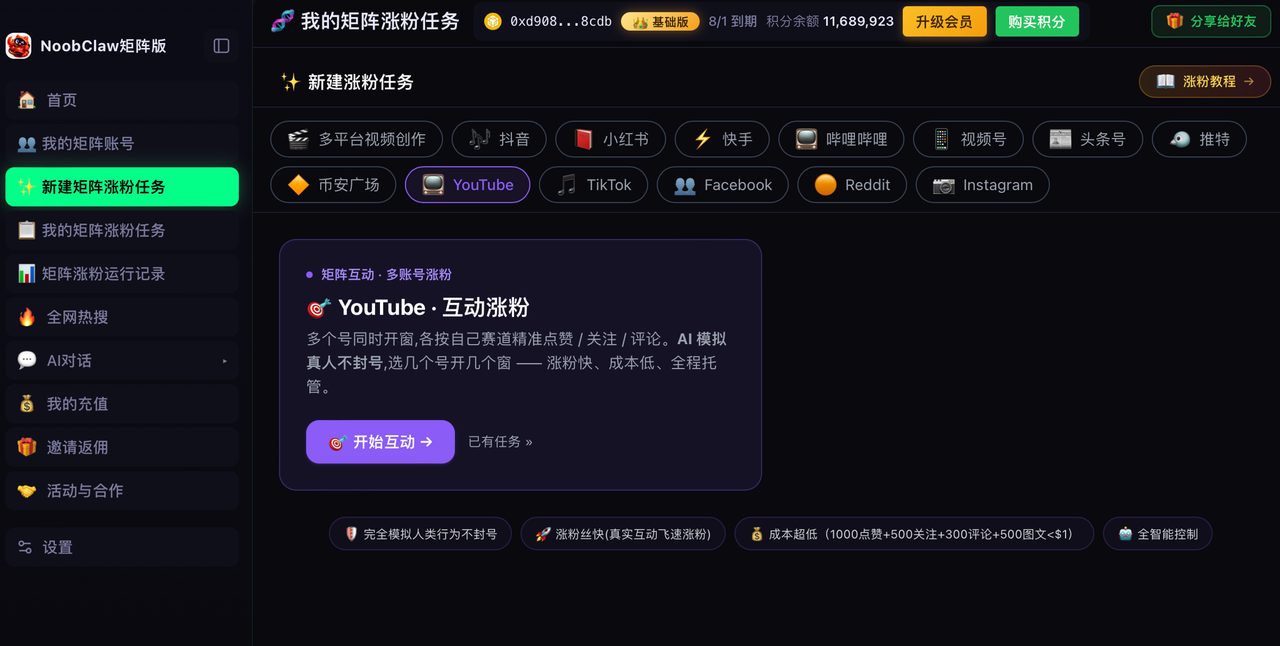
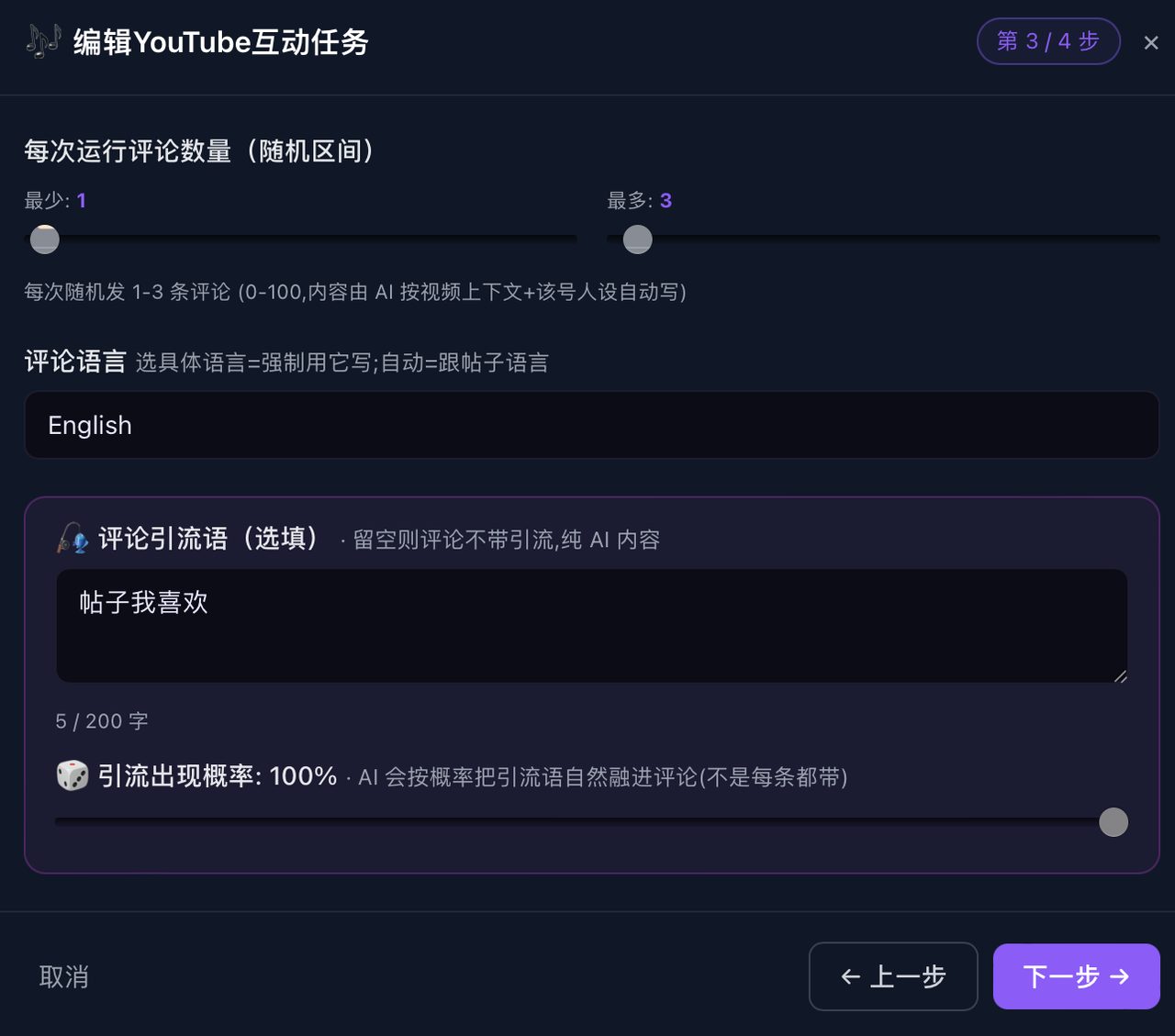
If you reached for n8n because you are one person running several channels rather than because you enjoy building pipelines, the maintenance burden is the thing to design away. A desktop app that logs into your own accounts locally, gives each one its own isolated browser profile, and generates each account's content from its own source material answers the same problem differently — NoobClaw is one of those, and the difference that matters is that the breakage stays with the vendor rather than migrating to your canvas. For the wider landscape see the best tools for a faceless YouTube channel and faceless channel automation after the crackdown.
FAQ
How many videos can I upload per day through the YouTube API with n8n?
The current documentation says videos.insert has its own quota bucket with a default limit of 100 calls per day at 1 unit per call. The widely repeated "6 per day" comes from dividing the 10,000-unit general allowance by an old 1,600-unit cost — and confusingly, Google's own summary box on the Quota Calculator page still repeats that 1,600 figure while the table beneath it states the 100-per-day bucket. Both were on the page on 18 September 2026. Plan against the table.
Why are my n8n YouTube uploads private?
Because of a documented restriction rather than a bug: videos uploaded via videos.insert from unverified API projects created after 28 July 2020 are forced to private viewing mode, and lifting it requires a Terms of Service compliance audit of your API project. The workflow will report success the whole time. Check your project's verification status first; it is the fastest fix available and there is no workaround in the node settings.
Can a faceless YouTube channel built with n8n get monetized?
It can, but not in its default form. YouTube's Spam Policy names "automated or synthetic mass-production" and gives as its example a channel using the same background music, repetitive AI imagery and AI-read scripts across many videos. The monetization policy separately excludes generic-template AI content and content that exclusively reads material you did not create, such as news feeds, and bars AI personas giving health, legal, financial or political advice. What passes is a channel where each video's substance genuinely differs — the shared intro and outro are explicitly allowed. Our honest take on the economics is in whether faceless YouTube is still worth it.