
Social Media Scheduler Price Comparison: You Cannot Compare Them Until You Fix the Unit
- These tools meter six different things: channels, accounts, brands, profiles, credits, and posts per account per day.
- Ranking by monthly price is guaranteed to be wrong, because the cheapest headline often buys the smallest unit.
- Two units are traps: a "profile" that spans 14 networks, and a "from" price hiding sub-steps inside one tier.
- Every figure here was pulled on 16 September 2026. Anything older than that should not go in your table.
Every scheduler comparison you have read sorted by monthly price. That sort is meaningless, and here is the one-line proof: the same $29 buys 5 channels at one vendor and 20 accounts plus 1,250 AI credits at another, while $149 elsewhere buys a single "profile" that reaches 14 networks.
Those are not different prices for the same thing. They are different things.
Everything below was pulled from vendor pricing pages on 16 September 2026. Our rule: if a number goes into a comparison table, it gets re-fetched that day. Anything we could not fetch is marked as such rather than filled in from memory.
Step one: what does each one meter?
| Tool | Meter | Entry price | What entry includes |
|---|---|---|---|
| Buffer | Channel | $5/channel/mo | One channel; free tier = 3 channels, 10 queued each |
| Postiz | Channel (bundled) | $29/mo | 5 channels, unlimited posts, 3 AI videos |
| Blotato | AI credits | $29/mo | 1,250 credits, 20 accounts, 1,000 contacts |
| RecurPost | Posts per account per day | $9/mo | 2 accounts, 10 posts each daily |
| Metricool | Brand | €16/mo | Up to 5 brands (€29 for up to 10) |
| Ayrshare | Profile | $149/mo | 1 profile = up to 14 accounts across 14 networks |
Six tools, five genuinely different units. No sort order over that table means anything.
Step two: normalise where you can
Price ÷ account, at each vendor's own definition of account, using published mid-tier figures:
| Tool / tier | Price | Accounts | $ per account |
|---|---|---|---|
| Postiz Pro | $49 | 30 channels | $1.63 |
| Postiz Ultimate | $99 | 100 channels | $0.99 |
| Blotato Starter | $29 | 20 accounts | $1.45 |
| Blotato Creator | $97 | 40 accounts | $2.43 |
| RecurPost Agency | $79 | 20 accounts | $3.95 |
| Buffer Essentials | $5/channel | per channel | $5.00 (channels above 10 cost less) |
| Ayrshare Launch | $299 | 10 profiles | $29.90 per profile / $2.14 per network slot |
Now the picture inverts relative to the headline prices. The $99 tier is the cheapest per account on this list; the $9 tier is among the most expensive per post.
Step three: find the second number
Per-account price is necessary but not sufficient, because several of these tools have a second gate that the first column hides.
| Tool | Second gate | What it does to the maths |
|---|---|---|
| RecurPost | 10 / 20 / 80 posts per account daily | Per account $4.50 / $5.00 / $3.95 (flat). Per post $0.0150 / $0.0083 / $0.0016 — 9× spread |
| Buffer | Fair use "caps usage to 5000 posts per channel" | Generous, but it exists |
| Blotato | AI credits (1,250 / 5,000 / 28,000) | Video generation exhausts credits long before you exhaust 20 accounts |
| Metricool | Sub-steps inside each tier | Starter is €16 (≤5 brands) or €29 (≤10). Advanced is €43 / €69 / €130 |
| Ayrshare | Profile ≠ account | Dividing by 14 understates by 14×; dividing by 1 overstates by 14× |
On any pricing page, find the second number before you compare the first. The first number is what they are selling. The second is what stops you.
Two specific traps worth naming
Trap one: "from" prices hiding a sub-ladder
Metricool's Starter tier advertises from €16. That covers up to 5 brands. Ten brands is €29. Its Advanced tier runs €43 (≤15) / €69 (≤25) / €130 (≤50). Copying "€16" into a table underestimates a 50-brand requirement by roughly 700%. Whenever a page says "from," go find the sub-ladder before you write anything down.
Trap two: currency columns that are not conversions
We check these pages repeatedly, and Metricool's dollar column has not been stable: on 15 September 2026 the middle Advanced step read €69 / $107; on 16 September the same step read €69 / $85, with the other two steps identical both days. The euro column has been consistent; the dollar column has not. We therefore quote euros only. The general rule: do not derive one currency column from another using an exchange rate, and do not publish a column that moves between checks.
Which direction do prices move with volume?
A pattern worth knowing, because it lets you predict a pricing page before reading it:
- Metered by a countable unit → expect volume discounts. Buffer states it outright: "Channels 1–10 are priced at the standard rate, and any channels above 10 cost less per channel." Ayrshare per profile: $149 → $29.90 → $19.97. Postiz per channel: $5.80 → $3.90 → $1.63 → $0.99.
- Sold as named tiers → expect flat or rising per-unit prices. RecurPost's per-account column is a shallow V that ends barely below where it started.
The tell is whether the price is attached to a number or to a word. You can call it in two seconds on any page.
What we could not verify
In the interest of being useful rather than complete:
- Hootsuite — plan pages rendered account counts ("up to 10 social media accounts", "unlimited social accounts") but no prices. Its FAQ mentions "$99 for a Standard plan, $199 for a Professional plan, and range up to $399 for an Advanced plan" without stating a billing period. A number whose billing period is ambiguous cannot enter a per-account calculation, so it is not in our table.
- Publer — its pricing page redirected more than ten times and we did not get it. Previously recorded figures are over 30 days old, so by our own rule they are excluded.
Every comparison article you read has gaps like these. Most fill them in from memory or from each other, which is how a stale price propagates across a dozen sites and becomes "common knowledge."
The comparison that is not on this table
Every tool above answers "one brand, many destinations." If your shape is "many accounts, one platform," none of these units serves you well — you are buying N of whatever they sell, with none of the bundling that makes their pricing attractive, and you inherit a risk none of them address: identical content arriving repeatedly on a single surface.
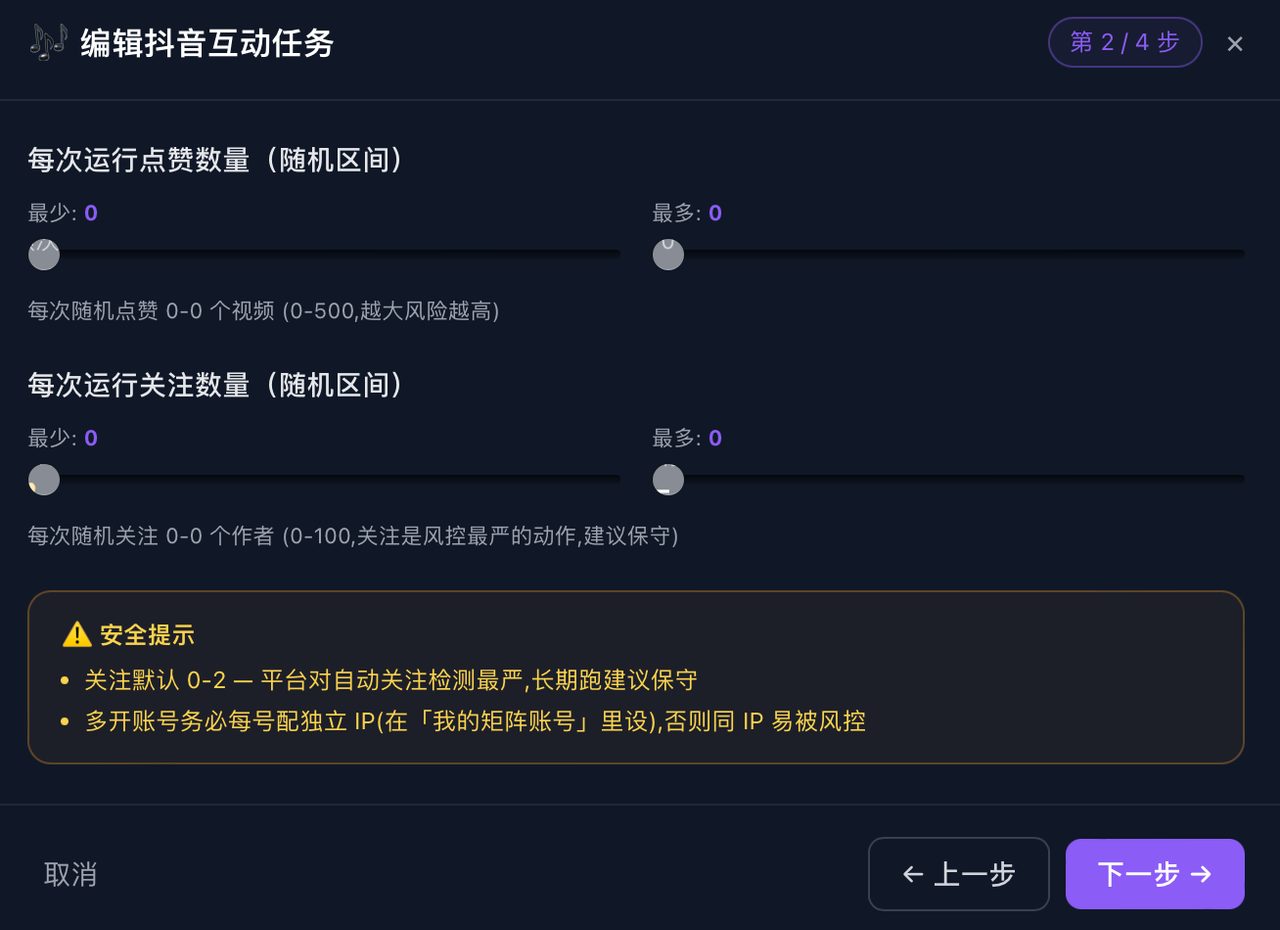
That shape wants a different meter entirely — per generated piece and per action, not per destination. NoobClaw prices that way and runs locally with a separate fingerprint browser and IP per account. It is not a scheduler and would lose every comparison on this page at scheduling. Which is the point of doing the unit exercise first: it tells you when you are shopping in the wrong aisle.
FAQ
Which scheduler is cheapest overall?
There is no overall. Per channel at scale, Postiz Ultimate at $0.99 leads this table. At two accounts with low volume, RecurPost's $9 is hard to beat. For one brand across 14 networks, Ayrshare's single profile may genuinely be cheaper than assembling 14 channels elsewhere. Define your unit, then the answer usually becomes obvious.
Why do prices in comparison articles disagree so much?
Three reasons, in order of frequency: articles mix monthly and annual columns; they copy "from" prices without the sub-ladder; and they reuse figures that were accurate months ago. All three are avoidable by re-fetching on the day, which is tedious and therefore rare.
Should I include analytics tools in this comparison?
Only if you need them, and then only by their own meter. Analytics-led tools price by brand rather than by channel, and brand-metered pricing has its own trap: tiers often contain sub-steps, so a "from €16" tier can mean €16 or €29 depending on brand count. We work through that specific case in the Metricool alternatives piece.
Do any of these limit how much I can publish?
Yes, and in different places: RecurPost per account per day, Buffer via a 5,000-posts-per-channel fair-use cap, Blotato via credits. But the harder ceiling is the platform's own — TikTok limits each user access token to 6 requests per minute with at most 5 pending shares per 24 hours, and Instagram's docs state a 24-hour publishing cap. Those follow your account, not your subscription.