Same Video on Two YouTube Channels: Upload vs Monetization
- Rights, monetization and spam rules answer different questions.
- A second upload has no blanket approval, automatic rejection or safe-editing percentage.
- The NoobClaw record demonstrates one local draft, not channel publication or approval.
Publishing your own video on two YouTube channels does not automatically settle copyright, monetization or spam questions. Start with the rights to every part of the file, the purpose of each destination and the original value of the channel's content. YouTube does not provide a blanket approval or automatic rejection for every duplicate upload.
The useful distinction is between a legitimate distribution decision and repetitive publishing that lacks a clear audience purpose. This article interprets the current official policies checked on 10 October 2026. It does not predict an enforcement outcome, identify a safe number of copies or promise that editing will secure monetization.
Rights, channel monetization and publishing behavior are separate checks. One positive answer does not substitute for the other two.
Ownership answers a rights question
If you recorded the video yourself, still review any music, supplied footage, images and contributions inside it. YouTube's copyright guidance distinguishes material protected by copyright and the permissions needed to use it. Owning the camera recording is not proof that every embedded element has the same permission.
An agency should also establish the client's authorization for each destination. Access to a channel is a technical and organizational arrangement; it does not, by itself, establish permission to republish the client's material elsewhere. Keep the approved destination and version with the editorial record.
A hypothetical company might own an interview and want to share an excerpt with a regional audience. That provides a concrete question about intended use, permissions and context. It is more useful than the general statement “we own the file,” which leaves embedded material and the second destination unresolved.
Monetization reviews the channel's original value
YouTube's channel monetization policies distinguish reused content and inauthentic content. Permission to use a source does not automatically resolve reused-content eligibility. The review concerns the channel and its original contribution, rather than a universal rule that owning a duplicate always makes it monetizable.
A changed title, thumbnail or border is not a documented safe editing percentage. A meaningful explanation, analysis or adaptation may add viewer value, but the existence of that contribution does not guarantee an approval. YouTube assesses the final content and the channel under its policies.
For example, an interview excerpt paired with your explanation of a specific decision can serve a different viewer need from an unchanged full interview. That is an editorial distinction to evaluate. It is not a policy exemption, and it does not replace checking the material's rights.
Do not turn a monetization question into a prediction about impressions. Eligibility, distribution and commercial results are different outcomes. A channel can need a monetization review even when an individual upload has views; a locally approved draft establishes neither.
Spam rules also apply outside monetization
The current YouTube spam policy covers coordinated channel networks and private or unlisted content as well as public posts. It distinguishes testing new tools or posting a few variations from flooding the platform with repetitive automated content. Its examples also discuss scraped material and manipulative editing intended to evade detection.
That context matters more than a simplistic statement that every second upload is prohibited. The policy does not establish a universal safe number of copies, a time gap that makes duplication acceptable or a percentage of changed pixels that removes the issue.
Keep the intent visible in your plan. If several channels exist only to distribute interchangeable files at volume, a new filename does not supply a different audience purpose. If a second channel serves a distinct audience, explain the actual editorial adaptation without calling it guaranteed compliance.
Evaluate the destination before copying the file
For two channels serving the same audience with the same promise, ask what the second upload contributes. You may decide the second destination is unnecessary. That is a strategy judgment about the work and audience, not a claim that YouTube automatically penalizes two particular uploads.
For another language or region, review more than the translated title. Does the explanation preserve the speaker's meaning? Are examples understandable for the intended viewers? Does the narration accurately describe the same evidence? Translation is an editorial task, not an automatic monetization guarantee.
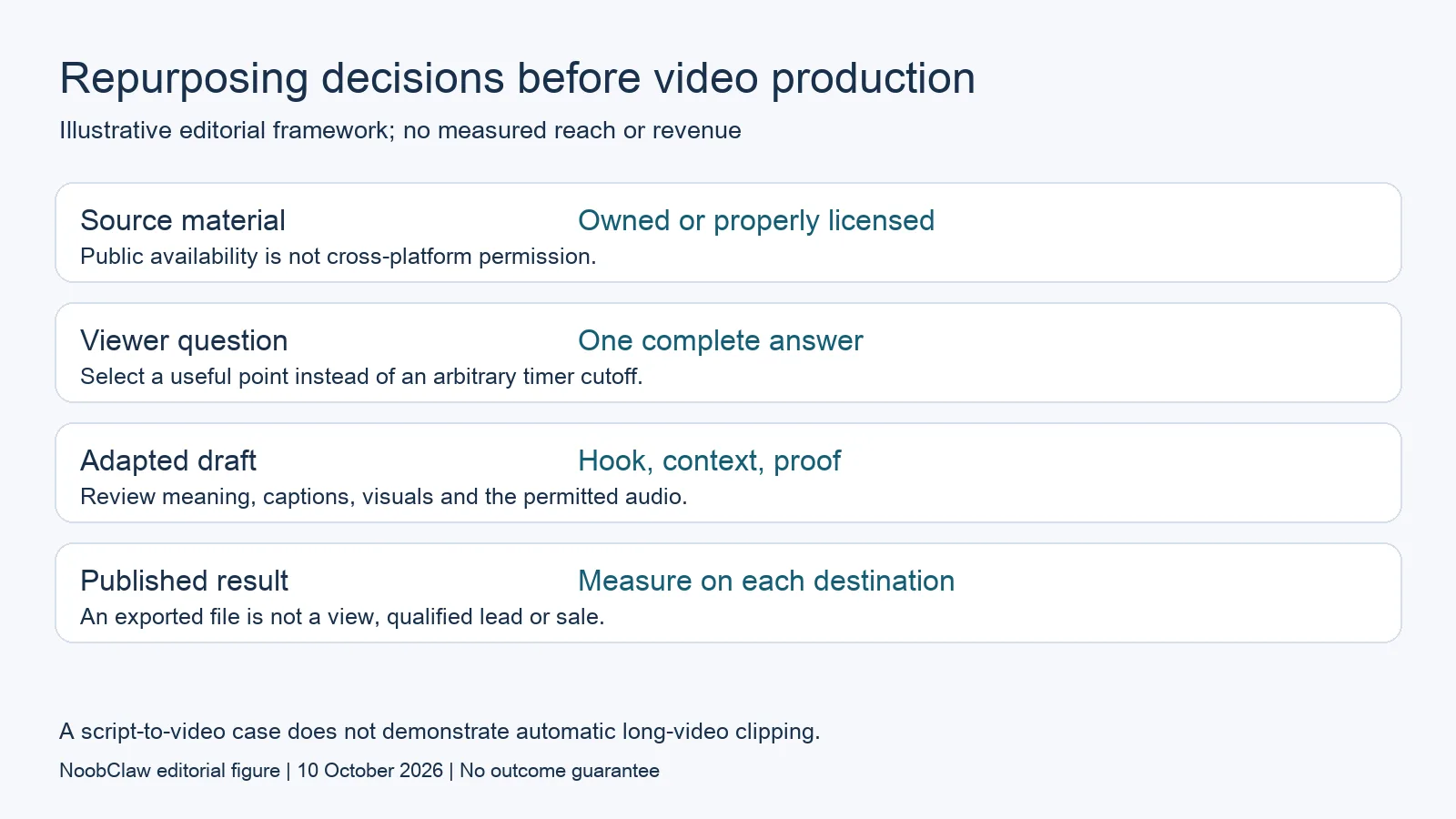
For a Short based on a longer original video, identify a complete answer that survives the shorter context. An isolated sentence can lose the qualification that made it accurate. Our video repurposing analysis addresses that decision and the limits of an AI-assisted draft.
For a backup, retain the original file in storage under your control. Private and unlisted YouTube content remains subject to the platform's policies, so those settings should not be treated as a general exemption. Storage and audience publication are different tasks.
A short review sheet can record the owning organization, source rights, intended audience, original contribution, approved version and publication destination. These fields support a concrete decision. They do not operate as a platform detector or certify that a channel will pass review.
Content tools do not supply platform approval
NoobClaw publishes this article and sells content tools. Our public execution record demonstrates one local script-to-video draft. It does not demonstrate two-channel publication, account protection, monetization or improved distribution. A different draft for each destination still needs factual, material and editorial review.
If you need operating instructions for that specific drafting stage, use the separate product guide. If you need to organize channel access, see YouTube's management capacity and permissions. More available channels do not establish more permission to reuse material.
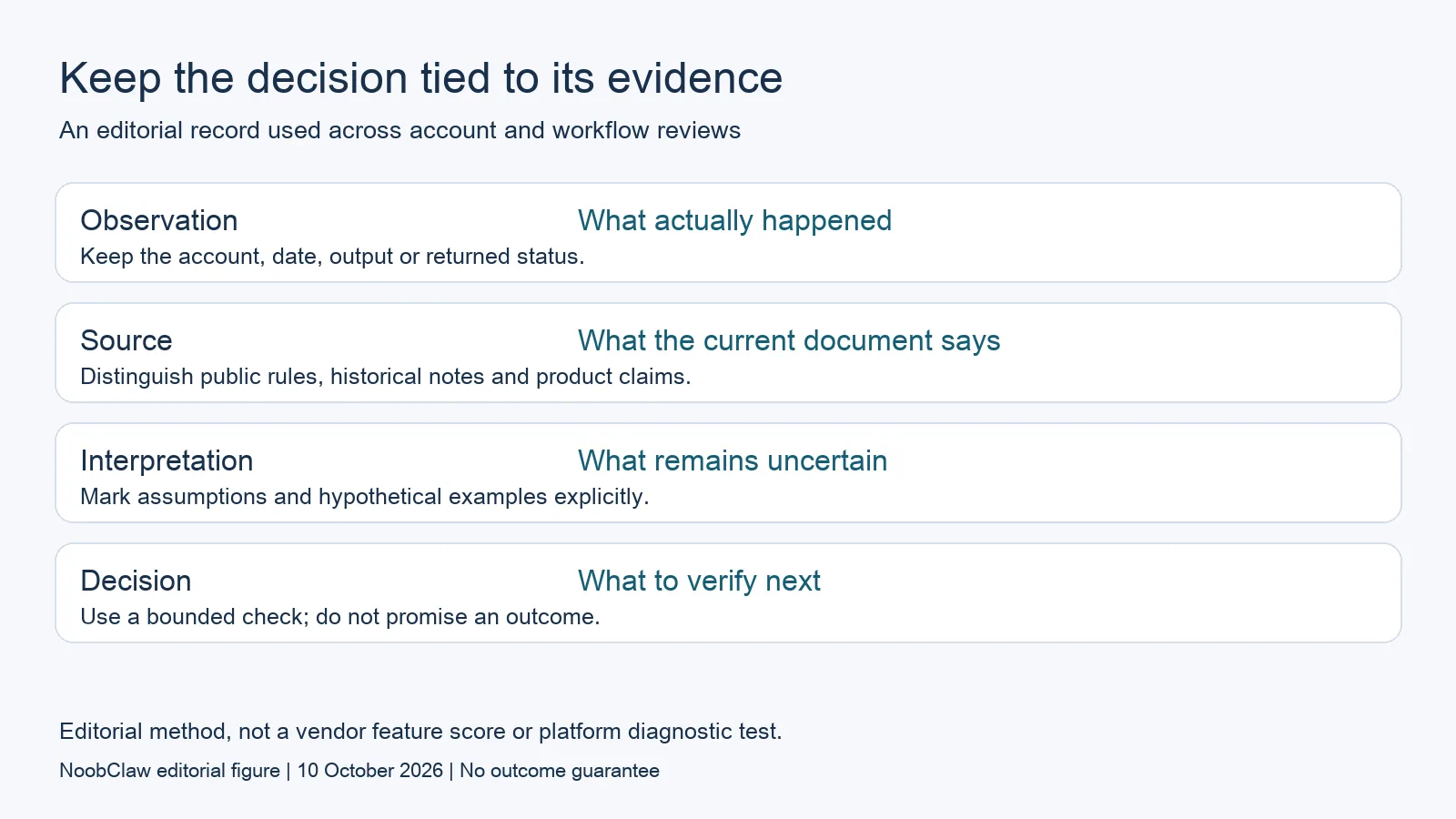
After publication, measure the actual destination and time period. Keep views, engaged responses, leads and purchases separate. Do not describe an upload or an impression as a paid conversion. A second channel supplies another context to evaluate, not a guaranteed second chance at the same commercial outcome.
FAQ
Can the same owner publish a video on two channels?
Ownership alone does not decide every relevant question. Establish rights to the material, the purpose of each destination and the applicable monetization and spam policies. This review does not supply a blanket approval or automatic rejection for every duplicate upload.
Will translation or a new thumbnail make it safe?
No published guarantee follows from those changes. Evaluate the substantive value for the audience, preserve the source's meaning and check rights separately. Avoid an invented safe percentage or a promise that packaging changes will secure monetization.
Do private copies avoid the publishing rules?
YouTube's spam policy explicitly covers private and unlisted content. Use appropriate storage for backups and treat account visibility as a setting, not a policy exemption or a guarantee of preservation.
Sources
Checked 10 October 2026: copyright guidance, channel monetization policies and spam policy. Examples are hypothetical editorial analysis. No two-channel publishing or enforcement experiment was performed.