X and Binance Square: Adapt Sources, Review Each Post
- Reuse researched facts and material you have rights to use; review the meaning of each destination draft.
- Use current supported publishing methods. X prohibits non-API website automation, and Square restricts bots and abusive bulk activity.
- Binance documents native Schedule Post. A scheduled entry and a publicly accessible post are different results.
- This is an editorial workflow, not an account-survival experiment or evidence of a cross-platform ranking penalty.
To schedule content for X and Binance Square, prepare a shared source brief, review a separate version for each destination, and use a publishing method supported for that destination. A calendar can coordinate your work; it cannot establish platform permission or promise distribution. The useful question is which part you need help with: research, drafting, approval, scheduling or confirmation that a post is public.
Keep one factual source record and two publishing records. A rewritten sentence or a different timestamp does not establish permission to automate either platform.
Start with the source, not a copied finished post
Create a brief before deciding whether a topic belongs on both platforms. Record what happened, when it happened, where the original statement appears, what remains uncertain and who owns the material. Include the exact scope of any announcement. A product launch in one country should not become a worldwide launch when a model condenses the text. If you cannot verify a claim, leave it out or identify the uncertainty instead of asking the model to make the summary more confident.
The same author can reuse their own research without pretending that both readers need the same explanation. Ask what each reader needs to understand the announcement. One version might introduce the change in plain language; another might explain a narrowly relevant technical detail. Neither version should add a price prediction, an endorsement or a result absent from the source. Adaptation should serve comprehension, rather than hide that the material came from another post.
Keep any third-party quotation short and distinguish it from your own explanation. Owning the destination account does not give you ownership of a source image or someone else's thread. An internal research link is also different from a link you are allowed to place in a public post. Before transferring a draft, review the destination's current link and attribution conditions as well as the underlying rights. This check belongs before scheduling, while the text can still be corrected. Binance’s AI Policy and Terms v2.1, effective March 25, 2026, requires appropriate disclosure of User AI shared on its platform. Its definition includes user-shared AI outputs. If AI contributes to a Square draft, include a truthful disclosure in the approval check and do not present AI output as wholly human-created. The policy does not establish a particular required composer button or universal label wording.
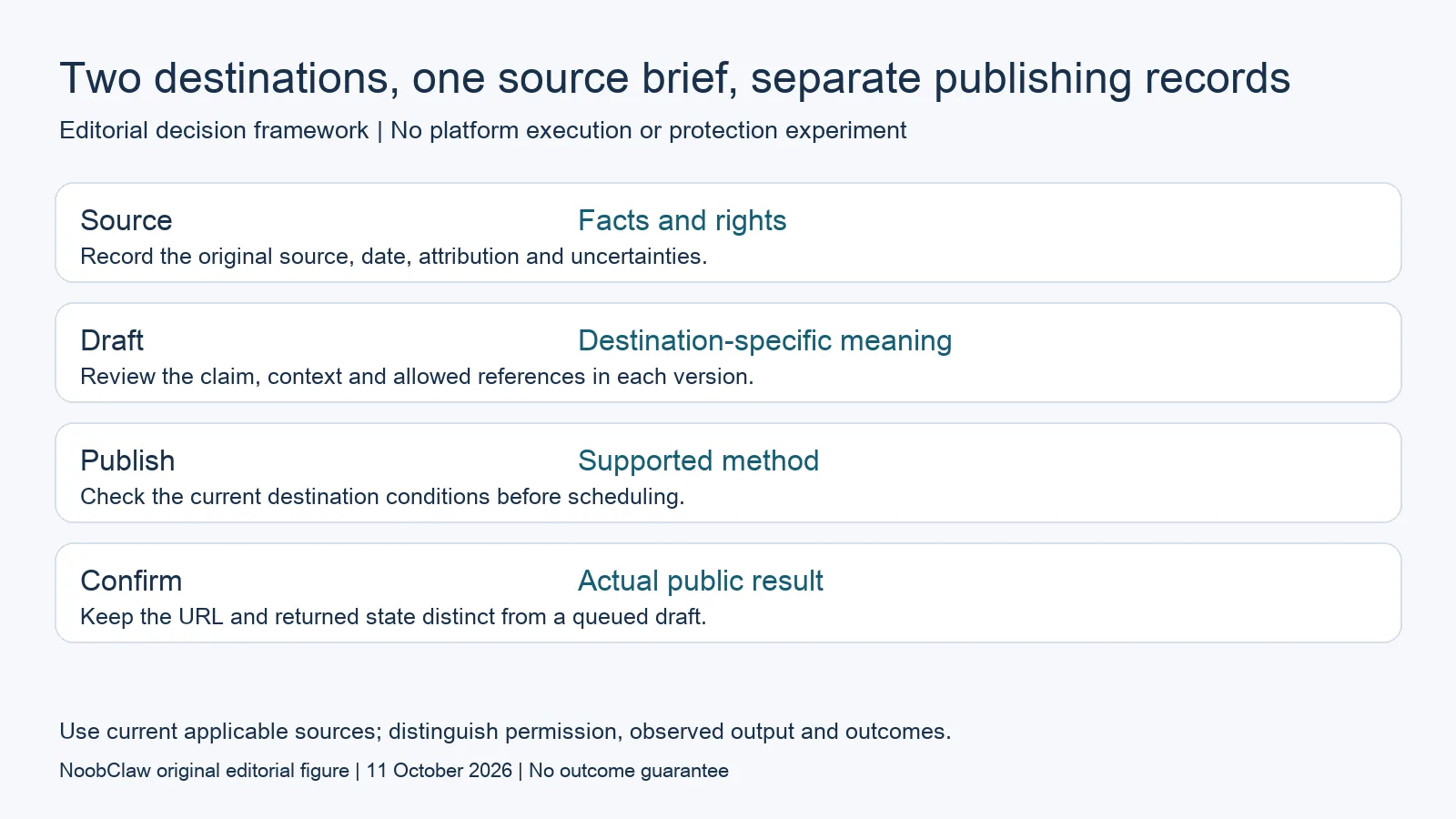
- Source: Facts and rights. Record the original source, date, attribution and uncertainties.
- Draft: Destination-specific meaning. Review the claim, context and allowed references in each version.
- Publish: Supported method. Check the current destination conditions before scheduling.
- Confirm: Actual public result. Keep the URL and returned state distinct from a queued draft.
Review the publishing method for each destination
The current X automation rules prohibit non-API website automation and restrict duplicate activity across accounts. Binance Square's community guidelines restrict bots and technical means used to post content or generate interactions, alongside abusive bulk activity. These rules do not establish that opening a logged-in browser is an approved alternative to an integration. Check the exact action and current conditions; a tool's ability to click a button is not evidence that the method is supported.
Binance's FAQ documents native Schedule Post. Its existence is useful when the actual need is to prepare an approved post now and choose its release time later. It does not certify every third-party tool that advertises Square scheduling. For X, evaluate a supported publishing method against the current rules and your account's available features. If a vendor cannot identify the method it uses for each destination, leave automated publication out of the proposed workflow until that question is answered.
Separate account access from permission for the action. Write down which account will publish, who can approve the draft and what the tool will do after approval. A connection test only establishes that a connection worked. It does not establish that retries, replies or publication to additional accounts were authorized. This distinction also prevents an editorial approval from quietly turning into consent for unrelated automated activity.
Use a calendar for coordination, not a safe-time formula
Choose release times around the reader's context and your ability to review an update. A hypothetical product-maintenance announcement might need the effective date, a correction contact and enough time for the owner to answer questions. Those are editorial reasons for scheduling. They do not establish a minimum gap between X and Square, a permitted daily quota or an interval that protects an account. We have no recorded experiment demonstrating such a formula.
A shared calendar should hold separate destination rows. For each row, keep the approved text version, account, requested time, time zone, supported method and responsible person. If the source changes before release, mark both rows for review. If only one draft needs correction, identify that version rather than discarding the whole source brief. This makes simultaneous planning possible without treating simultaneous publication as the default requirement.
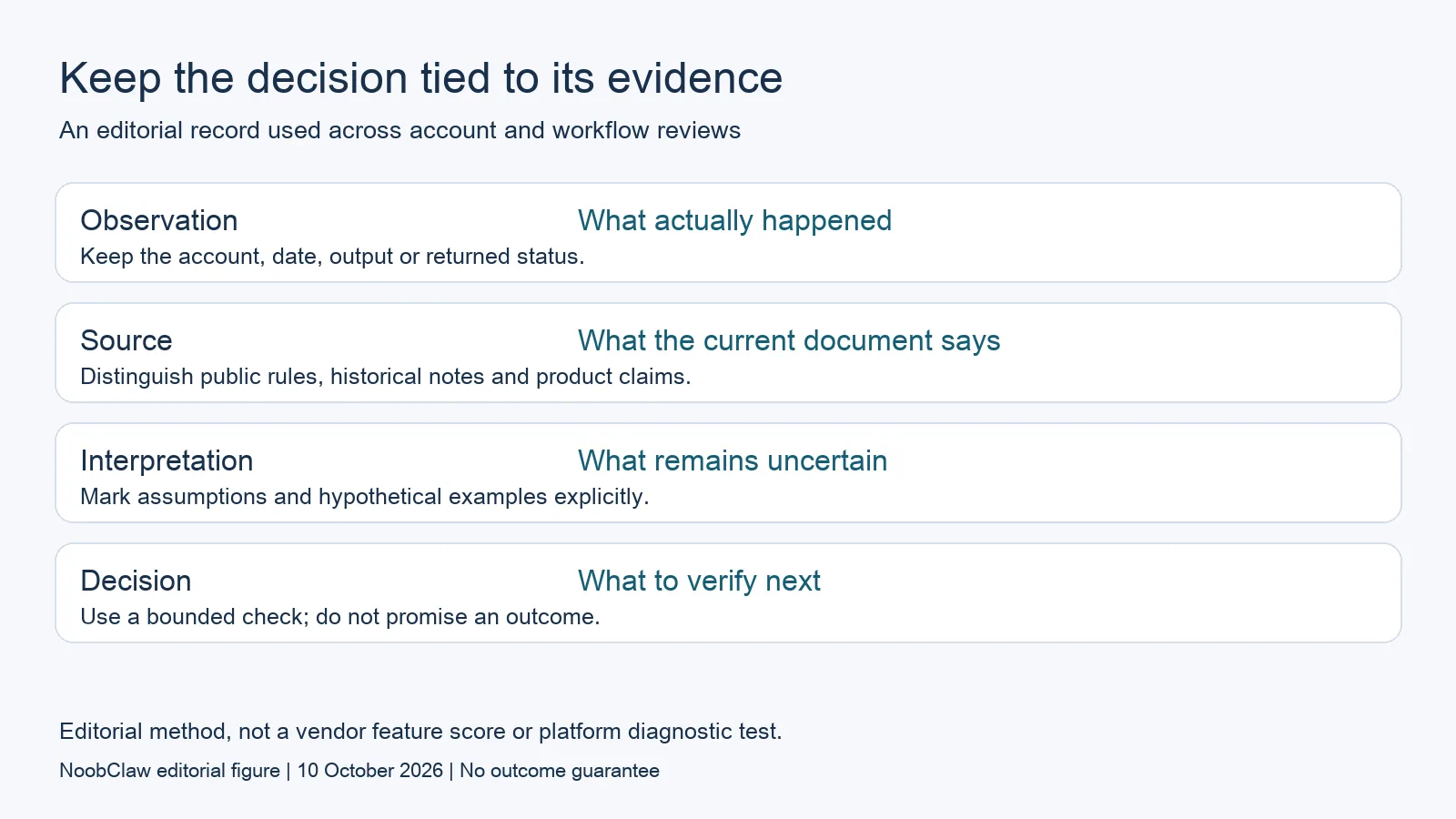
Inspect what the destination actually returns. A saved draft, a scheduled item and a public post are separate states. When a request fails or the result is unclear, inspect the destination before retrying; otherwise, a second attempt may duplicate a post that already exists. Preserve the returned state and any useful error message. Do not replace an unknown result with a claim that the platform silently penalized the account.
Measure what happened without inventing the cause
Record the public URL, actual publication time, final text and the metric's name when you later review performance. Compare views with views and impressions with impressions, using the same observation window where possible. A follower count, a link click and a purchase answer different questions. If one destination exposes a different metric or refreshes it later, record that limitation instead of filling the gap with an estimated conversion number.
An observed increase or decrease after changing a draft does not isolate the effect of its wording or scheduling. The topic, audience, account history, other posts and measurement window can also differ. Use a small sample to identify what to inspect next, not to claim that a timestamp caused a penalty. A longer record with consistent definitions is more useful than a dramatic account-survival story without preserved evidence.
NoobClaw publishes this review and has a commercial interest in content tools. Its current public script-to-video record demonstrates a local creative output, not a trial of publishing on X or Binance Square. When evaluating any proposed NoobClaw workflow for these destinations, require evidence for the specific publishing method and action. AI preparation can reduce drafting work while the final publication decision remains a separate check.
For the related content and workflow decisions, read Human-Like Automation: Execution Is Not Account Approval and X Account Warm-Up: No Proven Safe Automation Schedule. Each review has its own evidence and scope.
A worked handoff record for an announcement
Here is a hypothetical editorial handoff, not a campaign we ran. The source owner supplies an announcement and its effective date. The editor writes one brief containing the confirmed change and an unresolved regional detail. The X draft explains only the confirmed change; the Square draft adds relevant context without turning the regional unknown into a fact. Both are marked unapproved until the source owner checks them. After approval, the operator chooses supported publishing methods independently and records each destination's returned state. The record is complete when it shows what actually became public, not when a tool reports that two tasks were started. If the announcement changes, the editor can identify the affected sentences and pending destination rows without relying on an unsupported theory about account linkage.
NoobClaw publishes this article. Its script-to-video guide and public creative execution record document a local video result, not X or Binance Square publication. Check the current product offer against the supported action you need.
Frequently asked questions
Can I schedule both platforms for the same time?
A calendar can request the same time, but confirm that each destination supports the chosen method. We have no evidence that matching timestamps alone prove a penalty, or that a particular gap guarantees safety.
Do I have to rewrite every sentence?
No. Preserve accurate facts and material you can use. Review meaning, relevance, context, links and attribution for each destination. Synonym swaps do not establish originality or permission.
Does a lower view count mean the accounts were linked?
No. Keep the observed count and period, check the actual publishing result and any account notices, and avoid assigning a hidden cause without evidence.
Sources
Official material reviewed on October 11, 2026. Document conditions apply to their stated service and scope; the editorial examples are explicitly hypothetical.